


Scientists Discover How to Regrow Fingers: What It Means for Aging
Scientists have found how to regenerate the fingertips of mice, raising the question of whether regeneration-inducing interventions can lead to improved health and longevity.
Highlights
- By activating two signaling proteins, scientists have, for the first time, regenerated mouse fingertips.
- Aging can be thought of as an incomplete healing process, rather than faulty regeneration.
- Inducing tissue regeneration may one day improve the health and longevity of the aging population.
Why can some animals regenerate limbs, but not humans? Scientists from Texas A&M may have discovered the answer. In a new Nature Communications study, they show that it takes only two factors to regenerate the fingertips of mice. These findings may open the door for anti-aging techniques that regenerate entire organs.
Regenerating Fingers
During early development, frogs can regenerate their limbs, but this ability declines with age. In searching for factors that drive limb regeneration, researchers have landed on a family of signaling proteins called FGFs (fibroblast growth factors). Studies show that FGFs can stimulate limb regeneration in frogs even beyond the normal regenerative window. Studies have shown that FGFs induce limb regeneration in chickens, which do not naturally have this ability.
To test the effects of FGFs on regeneration in mammals, the Texas A&M researchers amputated the fingers of mice. The researchers treated the amputated fingers with an FGF called FGF2, leading to some regeneration but with little bone regrowth. Studies have shown that another signaling protein, known as BMP2 (bone morphogenetic protein 2), regenerates bone. With this in mind, the researchers subsequently treated amputated fingers with both FGF2 and BMP2, leading to a more complete regeneration of the mice’s fingertips, including bones, joints, ligaments, and tendons.
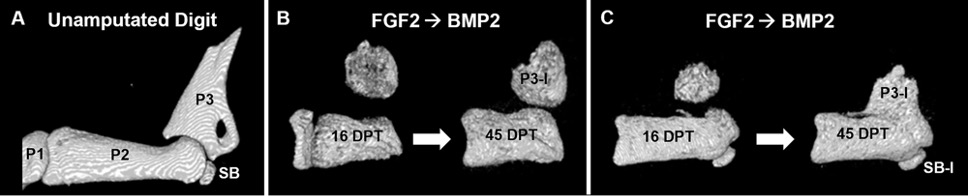
These groundbreaking findings suggest that the induction of tissue regeneration, which studies show declines with age, is possible in mammals. This opens the possibility that the induction of regeneration may apply to humans. However, with such a fresh discovery, the induction of tissue regeneration using FGF2 and BMP2 has not been tested against aging.
Targeting Aging: The Wound that Never Heals
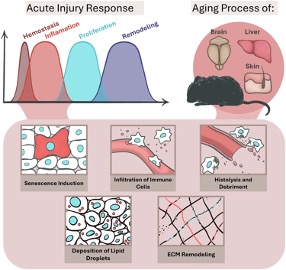
What is aging? One theory posits that aging is a “wound that never heals.” In response to injury, the body repairs itself to maintain survival. For example, under normal circumstances, if a finger is amputated, it will heal and form scar tissue rather than regenerate. This healing process occurs with our internal organs and tissues as well.
Targeting “Inflammaging”
There are four main stages to the healing process, including the inflammation stage. The inflammatory stage involves the recruitment of immune cells into the injured tissue. The immune cells contribute to tissue degradation, which is part of the repair process. Once the inflammatory response is over, healing normally continues. However, if the inflammatory response persists, as it often does with aging, it can damage tissues and organs, leading to disease, disability, and death.
There are several anti-aging agents that target the processes that occur during the inflammation stage of healing. For example, senolytics are compounds that target senescent cells, which are involved in the tissue remodeling process in response to injury. They secrete pro-inflammatory and tissue-degrading molecules that promote age-related diseases like cardiovascular and neurodegenerative diseases. However, more research is needed to determine how senolytics affect the healing process. In the future, new anti-aging interventions, such as advanced senolytics, could potentially target the healing process without hindering it.
Regenerating Tissues for Longevity
In the pursuit of anti-aging interventions, another possibility is finding interventions that maintain or induce regeneration. We may not be able to regenerate our limbs, but our organs and tissues have the capacity to regenerate via stem cells. Stem cells can become any type of cell and replace lost or damaged cells within a given tissue. However, with age, stem cells tend to become dysfunctional, meaning they can no longer replace damaged or lost cells. Stem cell exhaustion contributes to multiple age-related diseases, including age-related bone (osteoporosis) and muscle (sarcopenia) disease.
Promoting Regeneration with Anti-Aging Interventions
It follows that anti-aging interventions that rejuvenate stem cells may promote health and longevity. With age, some stem cells become senescent. This means that senolytics could be used to eliminate these senescent stem cells. Nevertheless, in the future, anti-aging interventions could potentially rejuvenate stem cells without eliminating them.
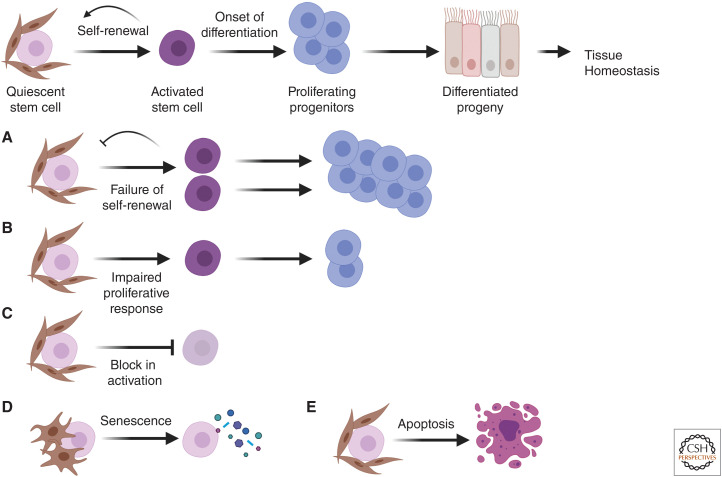
Moreover, the Texas A&M researchers found that FGF2 generated a mass of cells with stem cell-like properties at the site of amputation. Therefore, certain factors may induce the generation of stem cells or progenitor cells (stem cell-like cells that can only become a limited number of cell types). More studies are needed to determine if inducing regeneration with FGF2 is a feasible treatment for aging.
 Comments