


Can Microdosing Ozempic Slow Aging—Even If You Don’t Need to Lose Weight?
The push to turn weight-loss drugs into longevity treatments raises a question: How much of one of these drugs is enough?
Highlights
- Ozempic’s effects beyond weight loss are fueling interest in its potential for longevity.
- Lower-dose findings offer clues about how much semaglutide may be enough.
- The case for microdosing hinges on who takes it—and which benefits they hope to gain.
Why take a weight-loss drug if you don’t need to lose weight? Some longevity enthusiasts are experimenting with “microdoses” of GLP-1 drugs such as Ozempic, hoping to live a longer and healthier life. Research suggests that semaglutide, the active ingredient in Ozempic, can do more than just help shed pounds. However, whether smaller doses deliver meaningful benefits remains an open question. Answering this means separating the science from what microdosing advocates hope for.
Beyond Weight Loss: Why Ozempic Attracts Longevity Interest
Semaglutide has attracted the interest of longevity enthusiasts all over the world for its ability to reduce serious cardiovascular events. In the SELECT trial, researchers followed 17,604 overweight or obese adults with existing cardiovascular disease. Participants receiving semaglutide saw a 20% reduction in cardiovascular-related death, heart attack, and stroke. The findings suggest that semaglutide could lead to a longer life by reducing death from cardiovascular disease.
Another possible benefit of semaglutide is its suppression of inflammation. Reducing inflammation may be beneficial because, when elevated chronically, it is associated with many age-related diseases. An analysis of three clinical trials found that semaglutide reduced C-reactive protein, a blood marker of inflammation. However, the reduction was accompanied by weight loss, and whether the effect came from the drug itself could not be definitively determined.
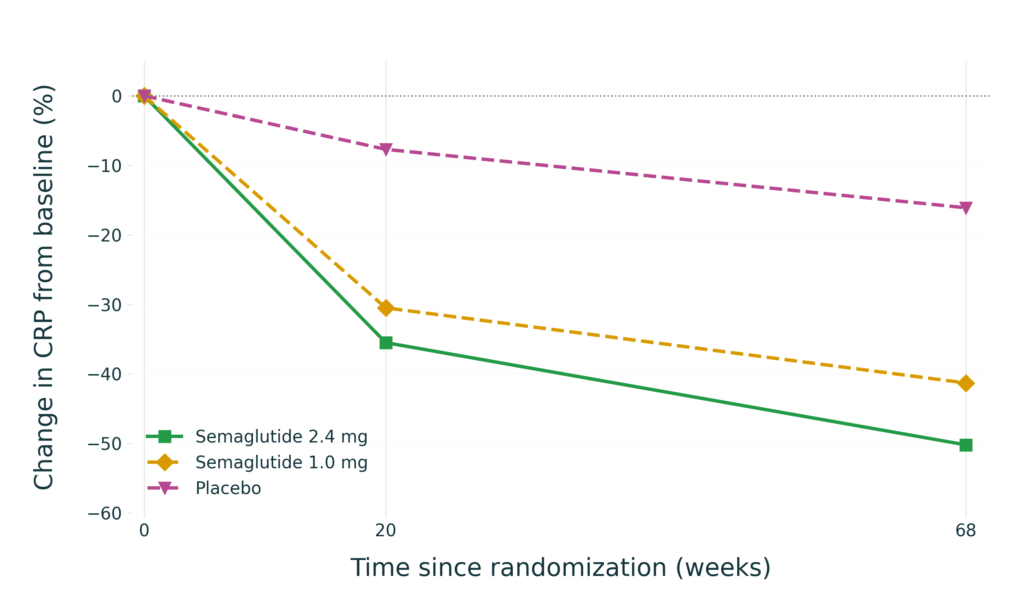
These results may help explain the appeal of repurposing semaglutide for health and longevity. However, both the SELECT trial and the inflammation analyses examined semaglutide at 2.4 milligrams (mg) weekly—not a microdosing regimen. Whether much smaller amounts offer meaningful benefits remains a separate question.
Could Microdosing Deliver Those Benefits?
“Microdosing” sounds precise, but it does not describe a standardized treatment. People use the term for taking small amounts of GLP-1 drugs, sometimes to reduce costs or side effects and sometimes to pursue longevity. Without a consistent definition, a claim that microdosing “works” leaves an important question unanswered: at what dose, and for which outcome?
There is evidence that lower doses of semaglutide can affect inflammation. As part of the inflammation analyses mentioned above, participants receiving 1 mg weekly had a 42% reduction in C-reactive protein compared with 49% among those receiving 2.4 mg. However, 1 mg is an approved Ozempic maintenance dose, not an experimental microdose, and the participants were not healthy.
Reducing Side Effects
Microdosing semaglutide could also reduce side effects. In adults with type 2 diabetes, gastrointestinal side effects occurred in approximately 33% of participants receiving 0.5 mg and 36% receiving 1 mg. It follows that lower doses may be easier for some patients to tolerate, but they do not eliminate adverse effects. The prescribing information also warns about pancreatitis, gallbladder disease, and dehydration-related kidney injury.
Animal Evidence That Semaglutide May Influence Aging
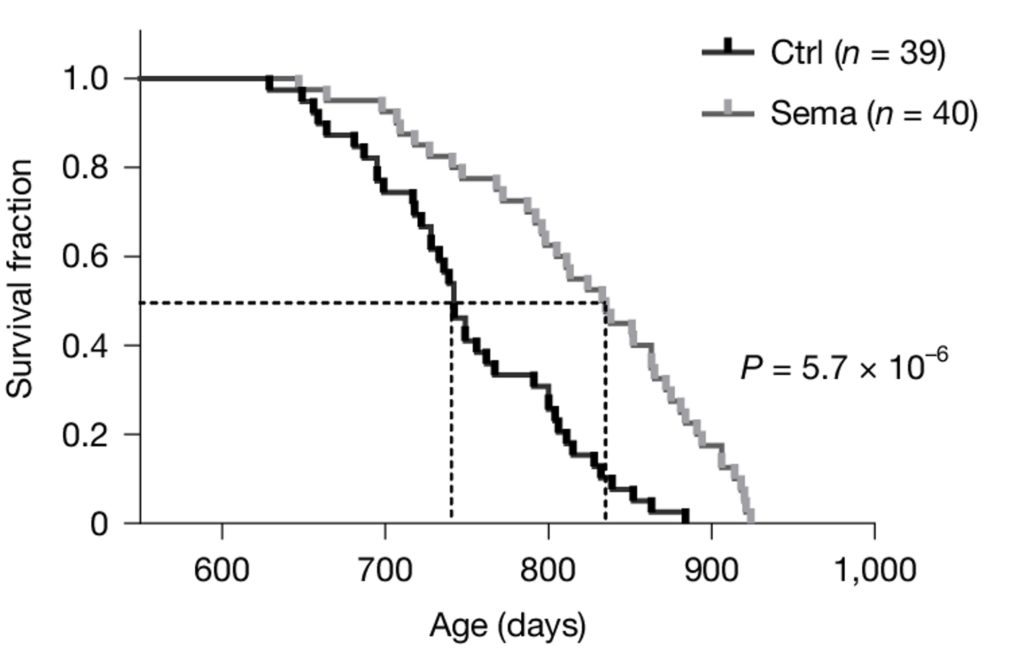
Research in aging mice offers a more direct reason to investigate semaglutide for longevity. In a study published in Nature, treatment increased the lifespan of mice by about 12%. Separate experiments found improvements in memory, coordination, and endurance, alongside reductions in senescent cells (the accumulation of which is associated with chronic diseases) and increased NAD+ levels in liver and muscle.
Another study tested a relatively low dose of exenatide, a different GLP-1 drug, in aging mice. Treatment counteracted age-related molecular changes across multiple tissues and improved selected physical functions, while minimally affecting food intake or body weight. Although the researchers did not demonstrate longer lifespan, the findings suggest that some aging-related effects of GLP-1 drugs may occur without substantial weight loss.
A Smaller Dose, an Unanswered Question
GLP-1 drugs have shown several effects that make them worth investigating for longevity. Semaglutide reduced serious cardiovascular events in people with existing cardiovascular disease, lowered an inflammation marker in clinical trials, and extended lifespan in mice. Together, these findings suggest that the drugs may have a role in healthier aging, but they do not establish that microdosing provides those benefits.
The lower-dose findings offer clues rather than a clear answer. A 1 mg weekly dose reduced inflammation in people with type 2 diabetes, while relatively low-dose exenatide improved selected measures of aging in mice without substantially changing food intake or body weight. Neither study identifies a microdosing regimen that slows human aging. Similarly, taking less semaglutide may improve tolerability, but it does not eliminate side effects or guarantee a favorable balance of benefits and risks.
The central question is therefore not simply whether a smaller dose has an effect, but whether it produces lasting health benefits in someone who does not otherwise need the medication. Answering that will require trials designed specifically to test low-dose treatment in that population. Until then, microdosing for longevity remains a plausible idea—not a proven way to live longer.
 Comments