


Fisetin Reverses Premature Blood Vessel Aging Caused by Chemotherapy
Study finds that fisetin restores healthy blood vessel function and reduces signs of premature aging caused by chemotherapy.
Highlights
- Fisetin restored healthy blood vessel function in mice treated with chemotherapy.
- The compound reversed arterial stiffening, a key feature of vascular aging.
- Fisetin reduced senescent cells and inflammatory signals linked to premature aging.
More than 18 million cancer survivors live in the United States, a number that continues to grow as treatments become more effective. While chemotherapy has saved countless lives, some cancer therapies can leave lasting effects on cardiovascular health. Doxorubicin, a commonly used chemotherapy drug, is particularly effective against a wide range of cancers but is also known to damage blood vessels and increase the long-term risk of heart disease.
Scientists have increasingly linked these complications to cellular senescence, a process in which damaged cells stop functioning normally and release inflammatory signals that can harm surrounding tissues. Senescent cells accumulate naturally with age, but chemotherapy can accelerate their formation, causing tissues to develop characteristics normally associated with aging.
In a recent study published in Aging Cell, researchers investigated whether fisetin, a natural compound found in strawberries, apples, onions, and other fruits and vegetables, could counter these effects. The researchers found that fisetin improved blood vessel function, reversed arterial stiffening, and reduced several biological markers of premature vascular aging caused by chemotherapy.
Fisetin Restores Blood Vessel Function After Chemotherapy
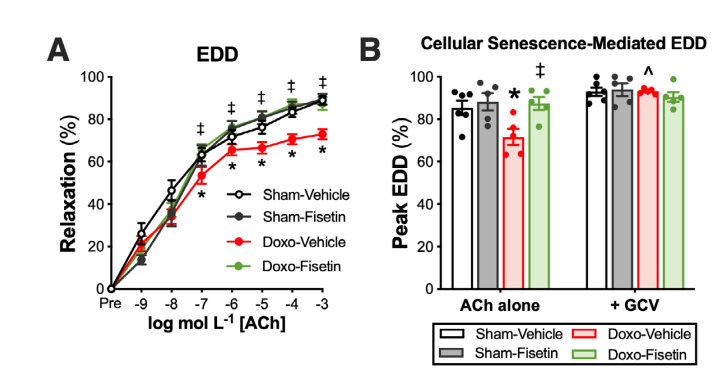
To determine whether fisetin could reverse chemotherapy-induced vascular dysfunction, the researchers measured endothelial function, a measure of how well blood vessels relax and widen in response to signals that increase blood flow. Healthy endothelial function helps maintain circulation and tends to decline with age and cardiovascular disease.
Mice treated with doxorubicin developed substantial impairments in blood vessel function. Their arteries became less responsive to signals that normally trigger relaxation, a hallmark of vascular aging. However, fisetin supplementation largely restored vascular responsiveness, bringing blood vessel function back to levels comparable to healthy control animals.
The researchers also found that fisetin restored nitric oxide availability. Nitric oxide is a signaling molecule that allows blood vessels to relax and maintain healthy circulation. Reduced nitric oxide activity is commonly observed in aging blood vessels and contributes to cardiovascular disease. By restoring this pathway, fisetin appeared to reverse one of the key biological drivers of chemotherapy-induced vascular dysfunction.
Fisetin Reverses Arterial Stiffening
The researchers next examined arterial stiffness, another hallmark of vascular aging. As arteries become less flexible, the heart must work harder to pump blood throughout the body. Increased arterial stiffness is associated with higher risks of heart attack, stroke, cognitive decline, and premature death.
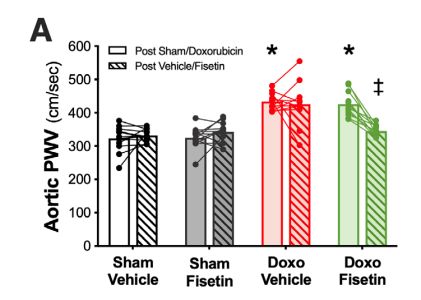
To assess arterial stiffness, the researchers measured pulse wave velocity, a commonly used indicator of how quickly pressure waves travel through the arteries. Higher values indicate stiffer blood vessels.
Doxorubicin treatment significantly increased arterial stiffness in young mice, causing their vascular systems to resemble those of older animals. Fisetin supplementation reversed much of this effect, restoring arterial flexibility toward normal levels. These findings suggest that fisetin not only improved how blood vessels functioned but also reversed structural changes associated with premature vascular aging.
Fisetin Reduces Cellular Drivers of Premature Aging
To understand why fisetin improved vascular health, the researchers examined markers of cellular senescence in both human endothelial cells and mouse blood vessels. Endothelial cells form the inner lining of blood vessels and play a central role in regulating circulation.
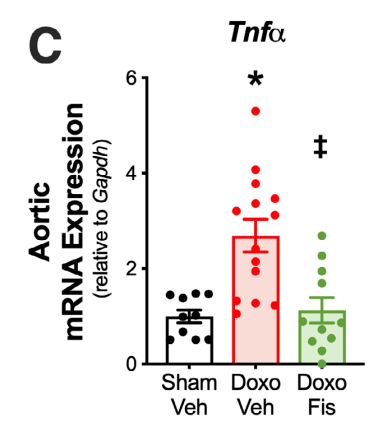
Exposure to doxorubicin increased multiple markers of cellular senescence, indicating that chemotherapy had accelerated the aging process at the cellular level. Fisetin reduced these markers and lowered levels of inflammatory molecules associated with the senescence-associated secretory phenotype (SASP), a collection of biologically active factors released by senescent cells that can promote inflammation and tissue dysfunction.
The researchers also observed lower levels of mitochondrial oxidative stress after fisetin treatment. Oxidative stress occurs when damaging reactive molecules accumulate inside cells and is thought to contribute to both vascular aging and cardiovascular disease.
Together, these findings suggest that fisetin improved blood vessel health by targeting some of the underlying biological processes that drive premature aging rather than simply treating the symptoms of vascular dysfunction.
Targeting Aging Biology May Help Protect Cancer Survivors
Cancer survival rates continue to improve, creating a growing population of people living for decades after treatment. However, many survivors face an increased risk of cardiovascular disease that can persist long after chemotherapy ends.
The findings from this study suggest that cellular senescence may be one of the biological mechanisms linking chemotherapy to long-term vascular damage. By reducing senescent cells and restoring blood vessel function, fisetin reversed several features of premature vascular aging that normally emerge over many years.
These results also place fisetin within a growing class of therapies known as senolytics, which are designed to selectively eliminate senescent cells. Senolytic compounds have attracted increasing attention because senescent cells accumulate with age and contribute to chronic inflammation, tissue dysfunction, and age-related disease.
Fisetin and quercetin, two flavonoids found naturally in fruits and vegetables, are among the best-studied natural senolytic compounds. Quercetin is perhaps best known as part of the dasatinib-quercetin (D+Q) combination, one of the most extensively studied senolytic interventions in preclinical aging research. The current findings suggest that fisetin may similarly help counter the accumulation of senescent cells that drives treatment-related vascular aging.
Although the study was conducted in mice and laboratory-grown human cells, the results add to growing evidence that some forms of treatment-related aging may be biologically reversible. The researchers conclude that targeting cellular senescence could represent a promising strategy for preserving cardiovascular health in cancer survivors and reducing some of the long-term consequences of chemotherapy.
Model: Young adult (4-month-old) male and female p16-3MR mice, a transgenic model of cellular senescence, treated with a single intraperitoneal injection of doxorubicin (10 mg/kg) to induce premature vascular aging.
Dosage: Fisetin was administered by oral gavage at 100 mg/kg/day using an intermittent regimen of 1 week on treatment, 2 weeks off treatment, followed by 1 additional week on treatment.
 Comments