


Five Life-Extending Interventions Share Metabolic Signatures, Highlighting Ergothioneine
Five interventions known to extend lifespan in male mice produced overlapping changes in levels of the antioxidant ergothioneine and types of fats (lipids), offering clues to the biology of longevity.
Highlights
- Five lifespan-extending interventions produced overlapping metabolic changes across multiple tissues in male mice.
- The antioxidant ergothioneine increased in the brain under all five interventions, making it a promising clue to their shared biological effects.
- Coordinated changes in lipid composition also emerged; however, future research will need to establish whether these metabolic shifts cause lifespan extension.
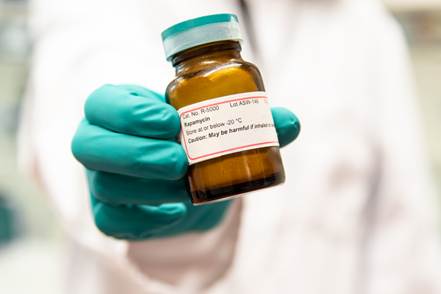
What do rapamycin, acarbose, 17α-estradiol, canagliflozin, and caloric restriction have in common? These five interventions, known to extend lifespan in male mice, appear to leave overlapping chemical fingerprints, including higher brain levels of the antioxidant ergothioneine and coordinated changes in lipid composition. A study from Richard Miller and colleagues at the University of Michigan, published in Frontiers in Aging, found that, despite their different modes of action, the interventions produced shared metabolic patterns across multiple tissues. The findings offer clues to biological processes that may link these treatments, although they do not establish whether the metabolic changes themselves help mice live longer.
Why This Research Matters
Interventions that extend lifespan do not necessarily work in the same way. By identifying metabolic changes shared by five different longevity interventions, this study helps narrow the search for biological processes that might connect them. Rather than examining one treatment or tissue in isolation, the researchers looked across multiple organs, revealing both common responses and tissue-specific differences. The findings also offer a possible starting point for developing biomarkers (measurable biological signals that could help researchers assess potential longevity treatments).
Five Different Longevity Interventions Produced Overlapping Metabolic Patterns
Because the large-scale assessment of metabolites in the blood gives a snapshot of cellular and systemic physiology, the researchers used metabolite levels to look for clues as to how longevity interventions may work. For this purpose, they tested the effects of the five longevity interventions, starting at four months of age (roughly equivalent to 23-year-old humans) and ending at 12 months of age (approximately equivalent to 43-year-old humans).
The five interventions produced overlapping metabolic changes across tissues, including blood, brain, liver, muscle, kidney, and two fat deposits in the body. Computer model training (where researchers used data to teach a computer program to recognize patterns) on four interventions could distinguish mice receiving a fifth intervention, left out during the computer model training, from untreated mice in 33 out of 35 tissue-intervention comparisons. These results suggested that the treatments share recognizable chemical signatures despite their different biological modes of action.
The antioxidant ergothioneine emerged as a particularly notable signal. Its levels rose significantly in the brain under all five interventions, reaching approximately 1.3 to 2.2 times higher than those of untreated mice, while ergothioneine levels in other tissues varied. The researchers also identified coordinated changes in lipid composition, including increased levels of certain long, highly polyunsaturated triacylglycerols (fat molecules with long chains of linked carbon atoms with many carbon-carbon double bonds) and decreases in many shorter, more saturated lipids (fat molecules with fewer carbon atoms and fewer carbon-carbon double bonds) in the blood.
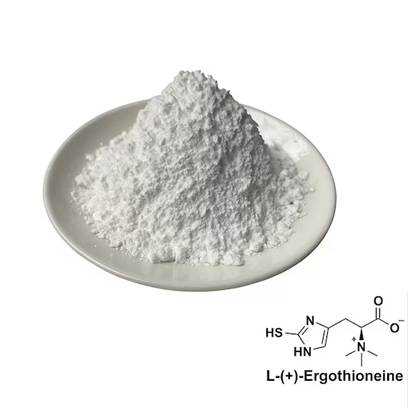
Together, these findings identify potential markers, such as ergothioneine and highly polyunsaturated triacylglycerols, for further investigation into their effects on lifespan extension. They do not establish, however, that supplementing with ergothioneine or highly polyunsaturated triacylglycerols (in the form of fish oil or algal oil) extends lifespan or that the findings translate to other species.
In search of evidence corroborating the notion that ergothioneine is tied to a youthful physiological profile, the researchers also measured blood ergothioneine levels in untreated young (four-month-old) and untreated older (12-month-old) mice. In all seven tissues assessed, younger mice had significantly higher levels of ergothioneine than older mice. This adds an age-related connection to the findings, in which it appears that ergothioneine levels drop with age across multiple tissues. However, this simple comparison of ergothioneine levels between younger and older mice does not establish that increasing ergothioneine levels with supplementation can reverse aging.
From Shared Signatures to Tests of Cause and Effect
Ergothioneine and the accompanying changes in lipid composition provide concrete targets for follow-up experiments. The critical question is whether these changes contribute to extended lifespan or simply accompany other beneficial processes. Answering that will require experiments that directly manipulate the suspected mechanisms, alongside studies testing whether the findings extend beyond male mice. For now, the study provides a clearer set of leads, not proof that an ergothioneine supplement or a particular lipid change can slow human aging.
The study’s central contribution is not a single explanation for longer life, but evidence that different longevity interventions can produce overlapping metabolic responses. At the same time, most of the metabolites that helped distinguish treated mice from controls were tissue-specific. This suggests that any shared biology may involve coordinated changes across organs rather than one uniform response throughout the body. Ergothioneine and the lipid patterns offer promising starting points for investigating those connections.
The next challenge is to separate markers of treatment response from mechanisms that actually contribute to lifespan extension. Experiments that raise or limit ergothioneine accumulation, or directly alter the implicated lipid pathways, could help determine whether these changes are necessary for, or capable of reproducing, some of the interventions’ benefits. Because the mice in this analysis were euthanized for tissue collection rather than followed until death, the findings cannot link an individual animal’s metabolic profile to its eventual lifespan.
The computer models also need a more demanding test: comparison with interventions that do not extend life. Without that comparison, the shared signatures might partly reflect general responses to sustained drug treatment or dietary change rather than longevity-specific biology. If validated, however, these metabolic patterns could help researchers prioritize candidate interventions for full lifespan studies, making the search more efficient without replacing the need to demonstrate longer, healthier lives.
For now, the results provide neither a recommendation to take ergothioneine supplements nor evidence that changing particular blood lipids will slow human aging. Their value lies in turning broad similarities among established mouse longevity interventions into specific, testable questions about how those interventions work and whether their shared chemical fingerprints can guide future discoveries.
Model: Four-month-old UM-HET3 mice
Dosage: 14.7 mg/kg of feed of rapamycin, 1,000 mg/kg of feed of acarbose, 14 mg/kg of feed of 17ɑ-estradiol, 180 mg/kg of feed of canagliflozin, or calorie restriction at 80% reduction of calories in the first month and then a 60% reduction thereafter, all administered from four months of age until 12 months of age
 Comments