


Focused Attention Modulates Brain Fluid Flow Linked to Memory Decline, New Study Shows
In healthy younger adults, a form of meditation called focused attention directs the brain’s flow of cerebrospinal fluid in the opposite direction of that previously seen in older adults.
Highlights
- Focused attention changes the flow of brain fluid in the opposite direction of that seen with aging.
- Additional assessments with MRI suggest that focused attention may also increase metabolic waste removal, which normally occurs during sleep.
Impaired brain fluid circulation is linked to aging, cognitive decline, and neurodegeneration. However, there is no pill to improve brain fluid circulation, and a new study published in the Proceedings of the National Academy of Sciences (PNAS) suggests that we can use our minds.
In the study, researchers from Vanderbilt University in Tennessee found that focused attention mindfulness meditation altered brain fluid circulation in the opposite direction of aging. Moreover, focused attention also appeared to improve metabolic waste removal.
“Findings suggest that mindfulness meditation may represent a nonpharmacological, waking state capable of modulating neurofluid dynamics in a directionally similar manner to sleep and opposite to aging and neurodegeneration,” said the authors of the study.
Measuring Brain Fluid Circulation
About 50 participants were included in the study: half were experienced meditators (with over 2000 hours of meditation), and half were novice meditators (with less than 25 hours of meditation). Changes to their cerebrospinal fluid (CSF) were measured using MRI (magnetic resonance imaging).
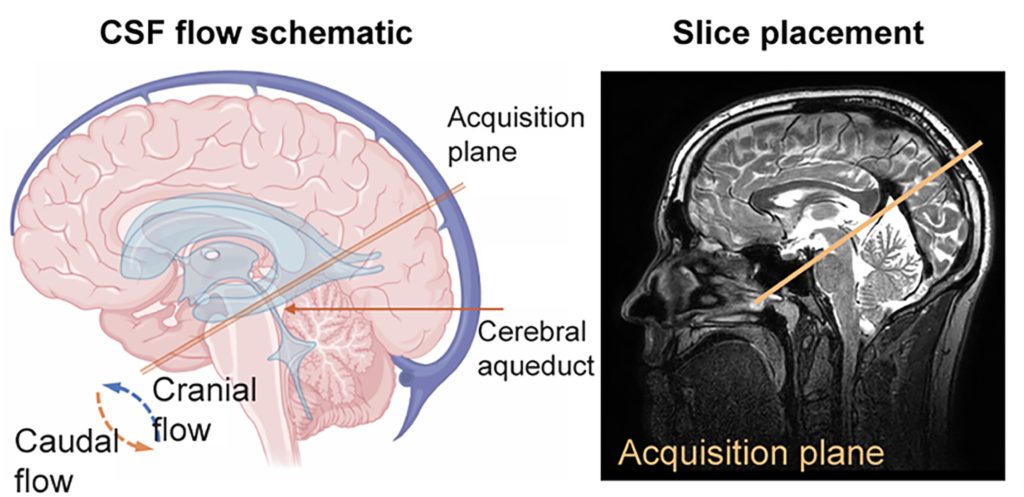
CSF circulates through four interconnected, fluid-filled cavities deep within the brain, called ventricles, and in the spaces surrounding the brain and spinal cord. The researchers measured the narrow channel connecting the third and fourth ventricles, known as the cerebral aqueduct.
Focused Attention Alters Brain Fluid Circulation
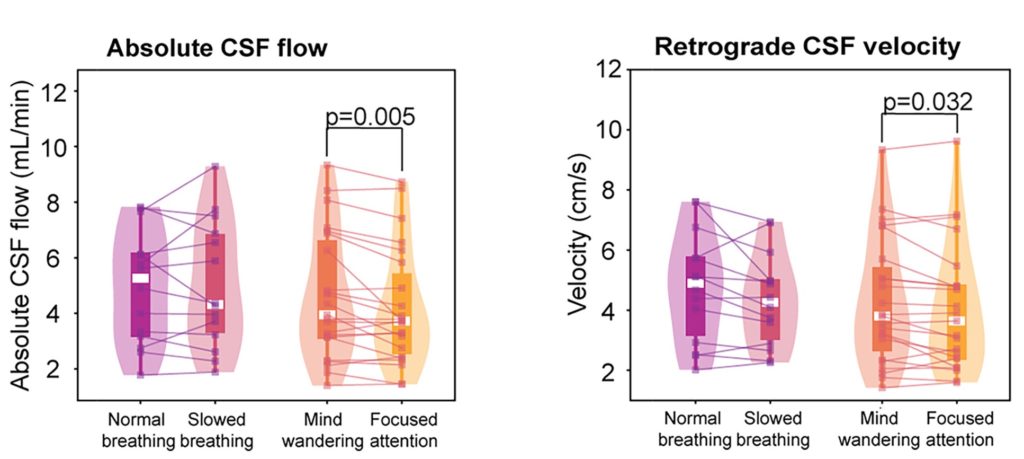
CSF flow was measured from all participants during two 25-minute blocks. For the first 25-minute block, all participants allowed their minds to wander. Mind wandering served as the baseline assessment of normal brain function. For the second 25-minute block, the novice meditators continued to mind wander but slowed their breathing. In contrast, the experienced meditators focused their attention on their breath—a technique called focused attention, which leads to slowed breathing.
The researchers found that total CSF flow was reduced when the experienced meditators switched from mind wandering to focused attention. Moreover, this switch also led to a reduction in retrograde CSF flow, which is the flow of CSF back up towards the top of the head. Further analysis revealed that total CSF flow was reduced when the experienced meditators focused their attention compared to when the novice meditators slowed their breathing.
These findings suggest that total CSF flow is reduced during focused attention due to less retrograde flow. In a previous study, CSF flow was shown to increase with age, suggesting that focused attention mitigates age-related disruptions in brain fluid circulation.
Focused Attention May Improve the Brain’s Waste Removal
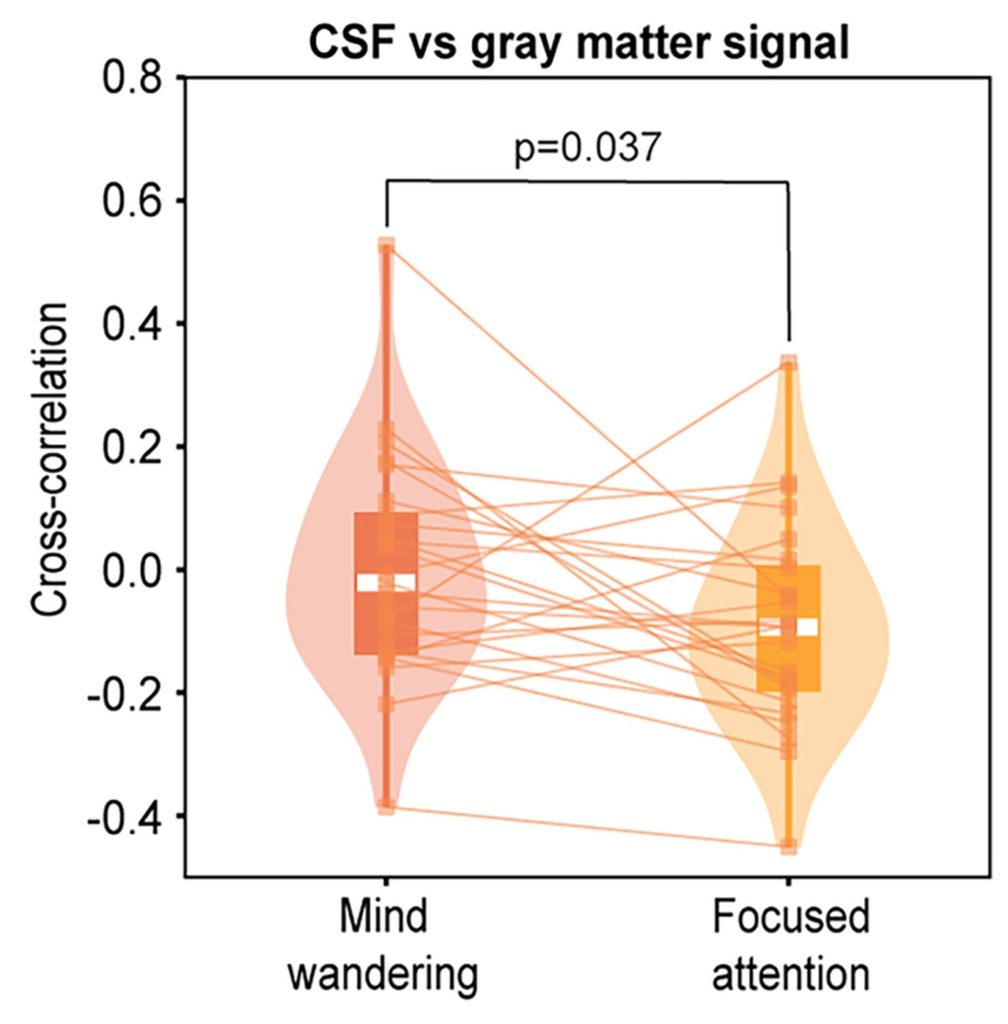
CSF and other brain fluids help carry metabolic waste away from the brain. The researchers examined an MRI signal near the base of the skull, where the brainstem meets the spinal cord (cervicomedullary junction), as an indirect marker of CSF movement. During focused attention, this signal showed stronger fluctuations than during mind wandering. These fluctuations were inversely linked to fluctuations in a brain-wide blood-oxygenation signal—a pattern previously seen during deep sleep. Together, the findings suggest that focused attention may shift CSF dynamics in a way that could support the brain’s waste-clearance system.
Practicing Focused Attention to Delay or Prevent Brain Aging
Mindfulness is a cognitive skill which involves becoming aware of how thoughts and senses (including the visual field, sounds, and bodily feelings) interact within the same mental space. Focused attention is a specific form of mindfulness, whereby attention is focused on a single anchor, such as an external object, the breath, or physical sensation.
“The converging evidence suggests that mindfulness and particularly focused attention styles of mindfulness meditation may reveal a plausible, nonpharmacologic route for enhancing neurofluid circulation and, by extension, complement the neurofluid benefits attributed to sleep,” said the authors.
Both mindfulness and sleep have been shown to reduce inflammation, which is considered an underlying biological driver of aging. Moreover, metabolic waste removal and efficient brain fluid circulation are associated with a healthier brain and may counteract neurodegenerative disorders like Alzheimer’s disease. Mindfulness and sleep also reduce stress, which accelerates aging when experienced chronically.
Together, the research suggests that focused attention can counteract brain inflammation and fluid stagnation, leading to improved brain health. Such a healthy brain may be less prone to the cognitive impairments and neurodegeneration often associated with aging.
 Comments