


GLP-1 Drug Alleviates Age-Related Dry Eye Disease, New Study Shows
The GLP-1 receptor activator (agonist), semaglutide, alleviates dry eye and modulates age-promoting senescent cells in aged mice.
Highlights
- Cellular senescence—a phenomenon associated with many age-related diseases—was reduced by semaglutide within the tear glands of aged mice.
- Fibrosis (tissue scarring)—another phenomenon associated with many age-related diseases—was also reduced by semaglutide within the tear glands of aged mice.
- Semaglutide rejuvenated the tear glands of aged mice, as shown by measurements like increased tear volume.
When our cells are healthy, so are we. With time, however, they gradually accumulate damage, and some become detrimental. These detrimental cells, known as senescent cells, stop serving their particular function and begin to spew detrimental molecules. These detrimental molecules promote inflammation, fibrosis, and tissue damage. In this way, these detrimental senescent cells promote physiological aging.
A growing body of research suggests that senescent cells are involved in many age-related diseases. Now, scientists from the Guangdong Eye Institute in China have found that senescent cells may be involved in age-related dry eye disease. As published in Free Radical Biology and Medicine, they show that semaglutide reduces cellular senescence and fibrosis, while increasing tear volume and improving the cellular architecture of tear glands.
Semaglutide Reduces Cellular Senescence
To study dry eye disease, the Guangdong scientists examined the lacrimal glands of aged mice. The lacrimal glands secrete a mixture of water, electrolytes, and proteins, which contribute to the formation of tears. Lacrimal glands are composed of several different cell types, the majority of which are acinar cells. Acinar cells serve the main function of lacrimal glands, which is to secrete the watery portion of tears. Fibroblasts, another key cell type, support acinar cells by maintaining the structure of the lacrimal glands.
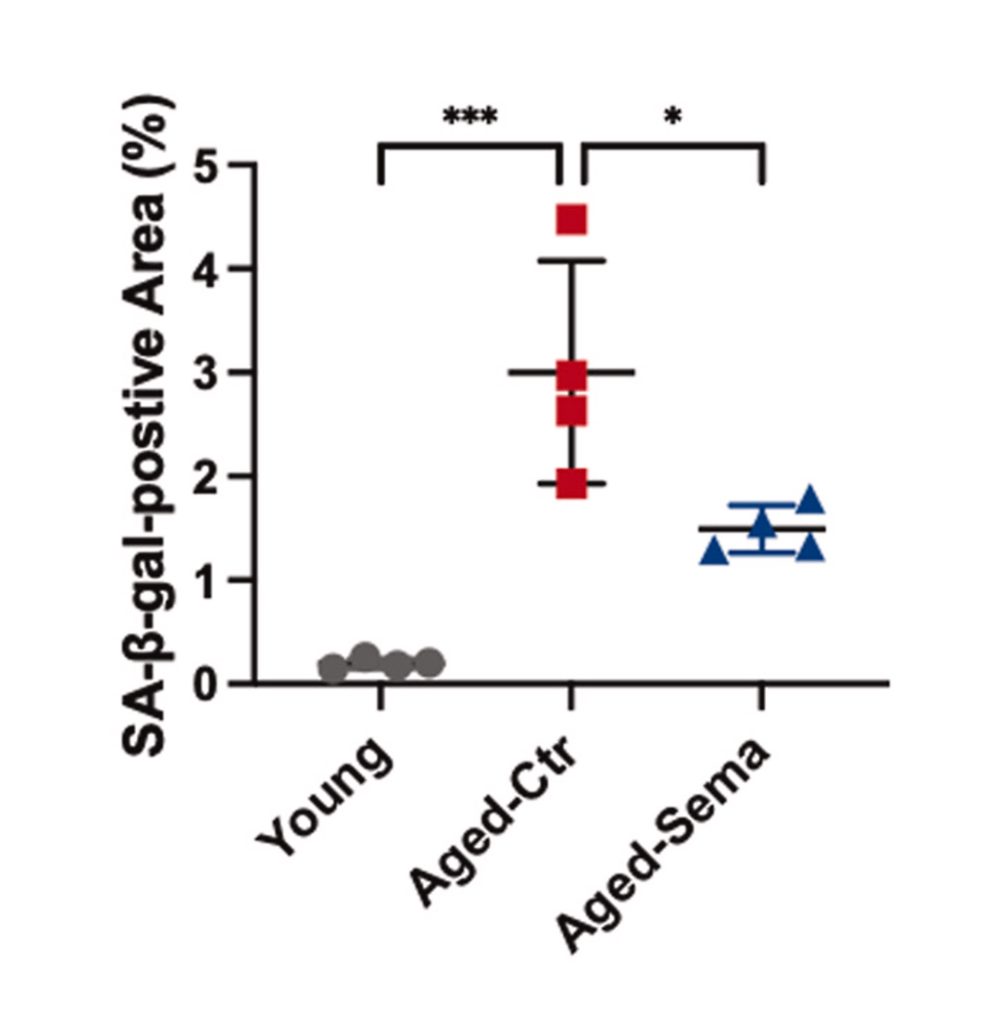
As suspected, the researchers found that aging leads to an increase in cellular senescence within the lacrimal glands. Aged mice also exhibited elevated levels of the detrimental molecules spewed by senescent cells, called the SASP (senescence-associated secretory phenotype). While all cell types were affected, senescence was most pronounced in the acinar cells and fibroblasts. Strikingly, however, the researchers found that semaglutide treatment reduced both cellular senescence and the SASP.
Semaglutide Reduces Fibrosis
The structure of our organs and tissues depends on the extracellular matrix (ECM), which acts as a scaffold and support system for our cells. Fibroblasts contribute to the construction of the ECM by synthesizing and depositing proteins such as collagen. When tissues are damaged, normal tissue architecture may be replaced by excess ECM, a process called fibrosis. Fibrosis disrupts normal organ function and can lead to disease and death.
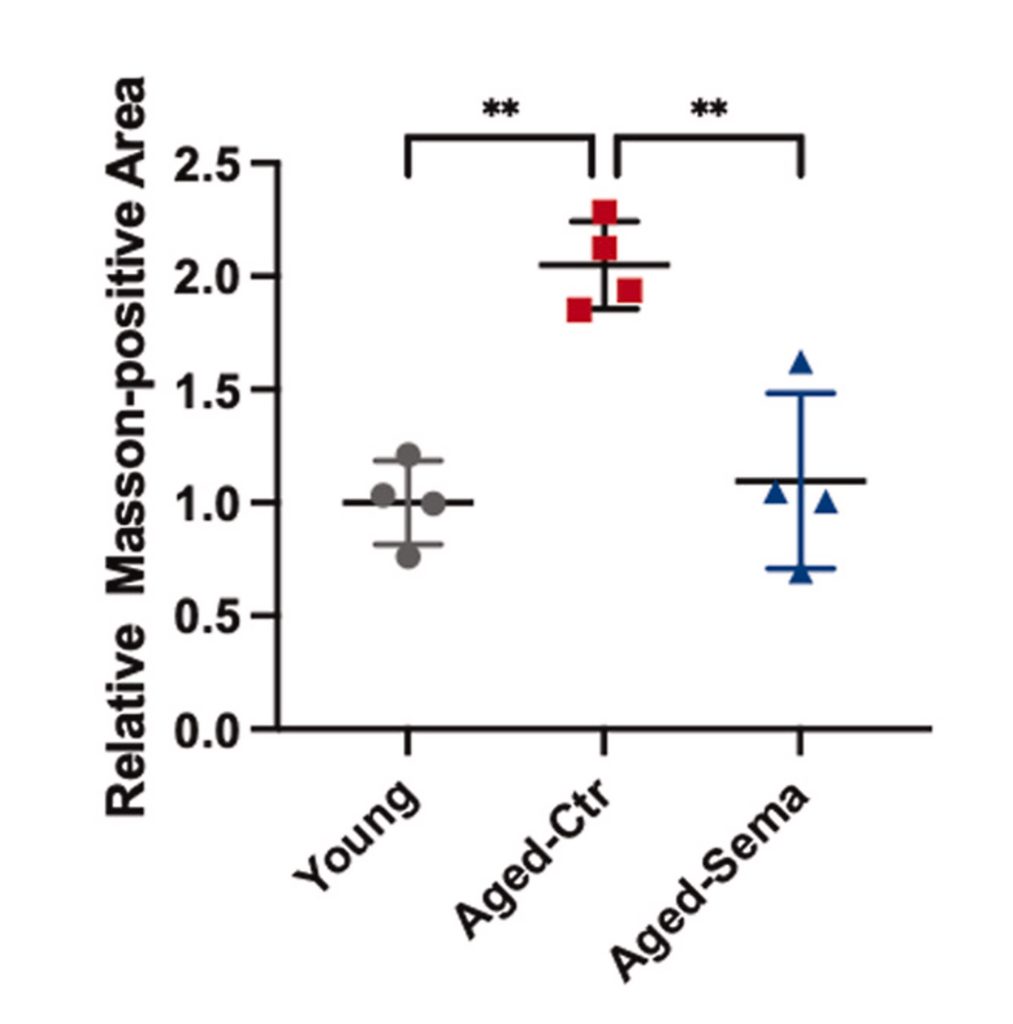
In the lacrimal glands of the aged mice, the Guangdong researchers found an increase in pro-fibrotic fibroblasts. While healthy fibroblasts maintain healthy tissue structure, pro-fibrotic fibroblasts support fibrosis. Along those lines, the researchers observed an increase in lacrimal gland fibrosis in untreated aged mice. However, with semaglutide treatment, they observed a reduction in pro-fibrotic fibroblasts and fibrosis.
Semaglutide Increases Tear Volume
Our tears are made of three layers:
- Oil layer: This oily layer, composed of lipids (wax, cholesterol, and fat), is secreted by the meibomian glands in the eyelids. This layer helps keep the aqueous layer from evaporating.
- Aqueous layer: This is the watery layer secreted by the lacrimal glands above the eyes, as mentioned earlier.
- Mucin layer: This layer, made of proteins called mucins, is secreted from cells in the eye and helps anchor tears to the eye.
The aqueous (watery) portion of tears produced by the lacrimal glands makes up the majority of our tears’ volume. It follows that rejuvenating the lacrimal glands by correcting the function of the acinar cells can restore tear volume in dry eye disease. Remarkably, the Guangdong scientists found that semaglutide restored the tear volume of aged mice. That is, the aged mice treated with semaglutide exhibited a tear volume similar to that of young mice.
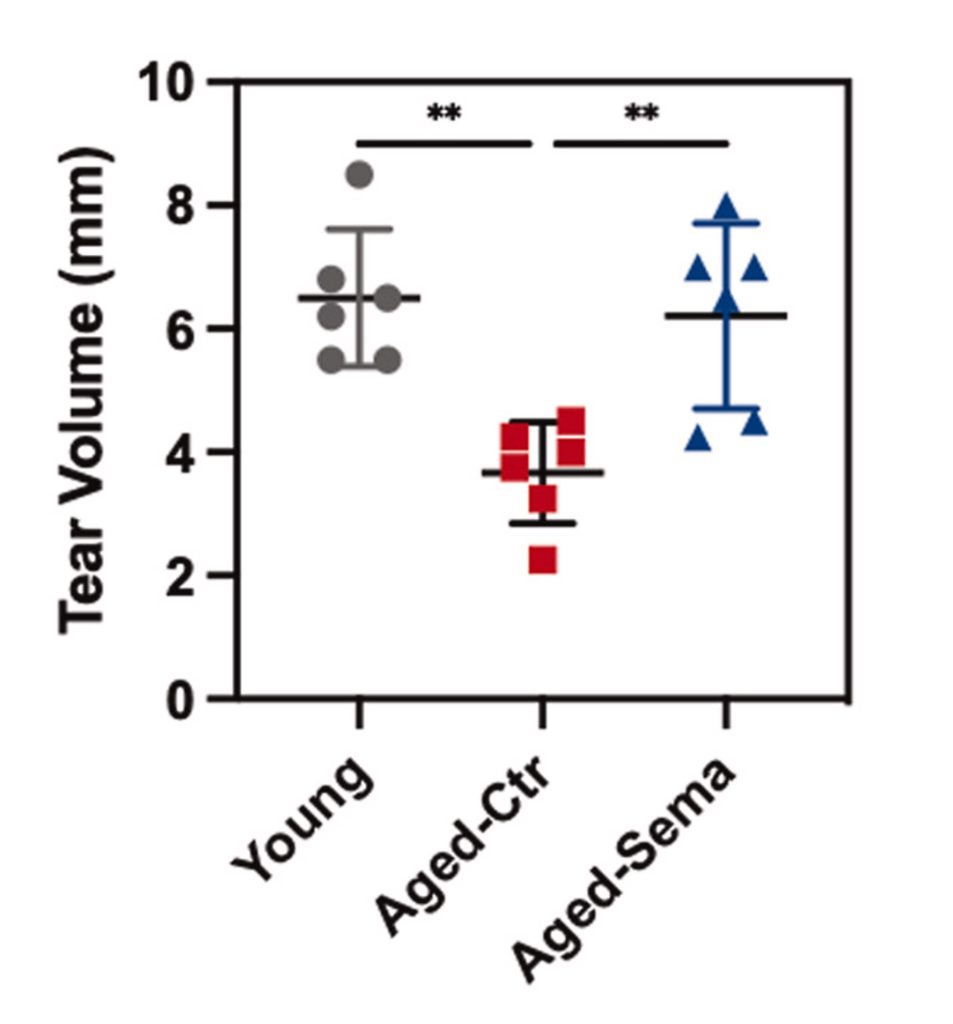
The researchers also showed that semaglutide reduced corneal damage and eye cell death. Moreover, the lacrimal glands of untreated aged mice exhibited atrophied acinar cells and increased inflammation, which were both reduced with semaglutide treatment. Additionally, semaglutide reduced oxidative stress, which is when highly reactive molecules cause damage to DNA, proteins, and other cellular components. Together, these findings suggest that semaglutide rejuvenates the lacrimal glands of aged mice, leading to improved tear production.
Is Semaglutide an Anti-Aging Agent?
Age is the predominant and most significant risk factor for dry eyes, making dry eye disease an age-related disease. Scientists are finding that several “hallmarks of aging” underly most, if not all, age-related diseases. These hallmarks include cellular senescence, inflammation, and oxidative stress, which were all reduced by semaglutide treatment. By targeting these aging hallmarks, semaglutide may potentially provide a viable treatment for several diseases.
GLP-1 receptor agonists are drugs that bind to GLP-1 receptors, mimicking the effects of GLP-1. GLP-1 is a naturally occurring hormone that plays a vital role in regulating blood glucose levels while making us feel satiated. GLP-1 receptor agonists like semaglutide already show promise in alleviating diseases in healthy older adults, including cardiovascular disease and neurodegenerative disease.
Its effects on these diseases can be attributed to reducing aging hallmarks like senescent cells and inflammation. Whether altering one’s diet to modulate blood glucose levels and abstaining from excess calories has the same effects is still being investigated. Still, whether semaglutide alleviates dry eye disease in humans remains to be tested. Still, as more clinical studies test the effects of semaglutide on age-related diseases, we may find that this GLP-1 receptor agonists to be a true anti-aging agent.
Model: Female C57BL/6J mice aged 18 months
Dosage: 3 micrograms of semaglutide injected every other day for two months
 Comments