


Harvard’s David Sinclair Explores the Science and the Hype Behind Peptides
Harvard’s David Sinclair reviews the peptides GHK-Cu, epitalon, and apelin against the hallmarks of aging, and cautions that most of the data come from cells and animals.
Highlights
- David Sinclair reviews GHK-Cu, epitalon, and apelin as potential aging interventions, but most supporting research comes from cells and animals—not human clinical trials.
- Each peptide targets different aspects of aging biology, from inflammation and tissue repair to telomere maintenance and muscle function, but these findings do not establish longevity benefits in people.
- Growing popularity has outpaced evidence on effectiveness and long-term safety, with many unapproved peptides sold through a gray market.
Peptides, short chains of protein building blocks (amino acids), have moved from niche biohacking into everyday conversation, according to Harvard Medical School geneticist David Sinclair. To illustrate this, in an episode of his podcast, he describes being asked about them constantly. Sinclair said strangers, including a border agent he encountered when leaving Canada, now ask him things like, “Which peptide should I take for sleep?” He compared the shift to earlier waves of questions about purported aging intervention compounds resveratrol and NMN.
Why the Boom, and Why the Gray Zone
Sinclair credits GLP-1 drugs (commonly used for weight loss) such as semaglutide (e.g., Ozempic and Wegovy) with making home injection socially acceptable. He argued that this opened the door for people to try unproven peptides, most of which are injected.
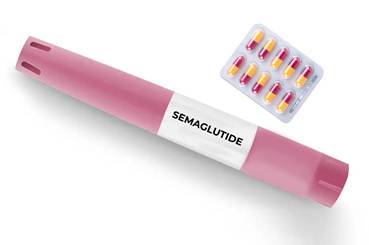
He said peptides are hard to study for several reasons:
- Delivery: Most must be injected, because they rarely survive digestion.
- Animal studies: Repeatedly handling and injecting mice stresses them, and stressed mice live shorter lives. Sinclair said this explains why few peptide longevity experiments exist, since shorter lifespans from stress would complicate the interpretation of the effects of peptides on lifespan.
Dr. Sinclair also relayed how changing a single amino acid can produce a technically novel molecule that practically has the same function. Sinclair said this makes peptides easy to patent but also easy to design around, which fuels a gray market.
He described a market where many peptides are sold “for research purposes,” and people effectively run uncontrolled experiments on themselves. Sinclair said that on July 24, 2026, an FDA compounding advisory committee voted to place at least six peptides on the agency’s 503A bulks list, a step he said would make them less illegal to sell. He also said most peptides enter the US from China.
The Three Peptides David Sinclair Reviewed
Dr. Sinclair mapped each peptide to specific hallmarks of aging. He excluded GLP-1s, which Sinclair has previously called longevity drugs.
GHK-Cu: This three-amino-acid (glycine, histidine, and lysine) peptide binds copper (Cu). Sinclair said it may help cells take up the metal, which is needed for the antioxidant enzyme SOD1 and the stability of collagen (a structural scaffolding protein that gives strength and support to tissues like the skin). Through its antioxidant-promoting activity, GHK-Cu may reduce chronic inflammation, a hallmark of aging, by reducing harmful, reactive molecules called reactive oxygen species.
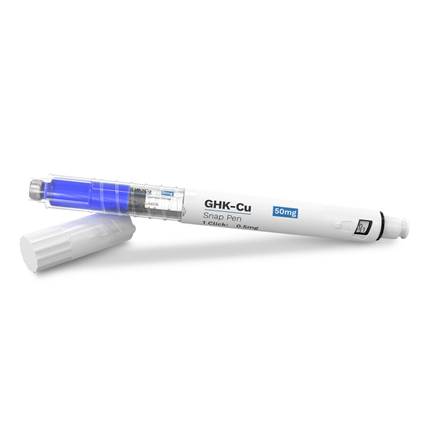
Like many of the peptides on the market today, GHK-Cu is produced naturally in the body. Dr. Sinclair said blood levels of GHK-Cu fall from about 200 ng/mL in youth to about 80 ng/mL later in life. That figure matches a 2018 review of the peptide, which puts the decline at about 200 ng/mL at age 20 and 80 ng/mL by age 60. The same review, along with an earlier 2015 review, covers GHK-Cu’s proposed roles in skin repair, stem cell function, and the cell’s protein-recycling machinery. Both reviews come from the researchers who discovered the peptide and are not independent trials. Sinclair said GHK-Cu sits in the “lighter gray” FDA category, where regulators tend to look the other way, and in the closing summary he described it as commonly used for skin and tissue repair.
Epitalon: This four-amino-acid peptide originated in Eastern Europe. Sinclair said it has substantial cell culture data but limited animal and human data. The best-known epitalon-related finding comes from a 2003 study, which reported that epitalon induced the elongation of telomeres (the repetitive DNA sequences at the ends of chromosomes that act as protective caps) in human cells grown in a dish. In doing so, epitalon may help with gradual telomere shortening, another hallmark of aging.
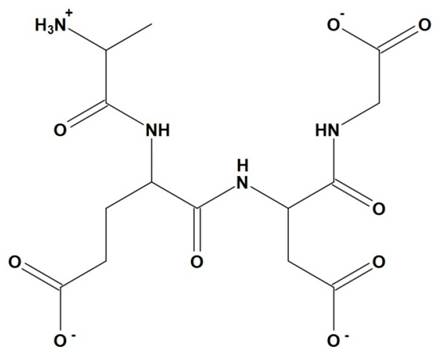
Sinclair said the peptide may also bind proteins on which DNA wraps (histones) and help remove the methyl marks (molecular tags on DNA) that silence the telomerase gene (the gene encoding an enzyme that extends telomeres). These effects, he said, have so far only been observed in a laboratory dish. To his knowledge, no long-term safety studies of epitalon exist.
Apelin: This peptide is released during exercise and acts through the apelin receptor, a signaling pathway involved in cardiovascular regulation, blood sugar metabolism, and blood vessel growth. Sinclair highlighted a 2018 Nature Medicine study, which found that apelin production falls with age in humans and rodents. In old mice, restoring apelin signaling improved muscle function, with the authors citing mitochondrial biogenesis (the production of mitochondria), autophagy (the cell’s mechanism by which it cleans up dysfunctional components), anti-inflammatory effects, and muscle stem cell regeneration. The human data on apelin are from association studies and do not provide causal evidence that apelin confers pro-longevity effects.
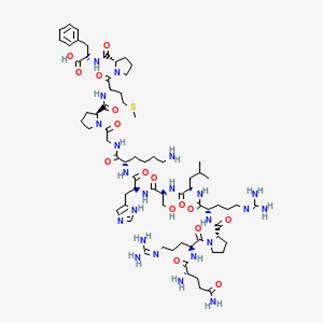
Sinclair said the 2018 rodent paper inspired drug development, though one trial testing it has failed. He called this “an engineering problem” because the biology looks sound. He said the peptide engages AMPK (a cell energy-sensing enzyme that supports metabolic health) and ULK1 (an enzyme that acts as the master initiator of autophagy), and reduces the activity of mTOR (an enzyme that acts as a master regulator of cell growth, metabolism, and survival, and, in part through ULK1, triggers autophagy.
Dr. Sinclair cited studies suggesting it preserves mesenchymal stem cells (cells that can self-renew and become multiple different cell types), improves cell-to-cell communication, and dampens the inflammatory signals from senescent cells (dysfunctional cells that accumulate with age). A late-2025 mouse study, he said, showed protection of spinal discs with apelin treatment. Documented side effects in trials include low blood pressure, rapid heart rate, and dizziness. Apelin is not FDA-approved and is sold on the gray market.
Collagen peptides
Sinclair also revised an earlier skeptical view of collagen supplements. He said small collagen-derived peptides, particularly those containing hydroxylated proline (a type of amino acid that acts as a major structural component of collagen proteins), appear bioactive, meaning that they have effects on the whole organism, cells, and/or tissues. They may activate cellular survival pathways and the enzymes that make hyaluronic acid (a sugar molecule produced in organisms like humans that gives skin elasticity and flexibility and helps cushion joints). He said there is “decent science” behind them but did not cite specific trials.
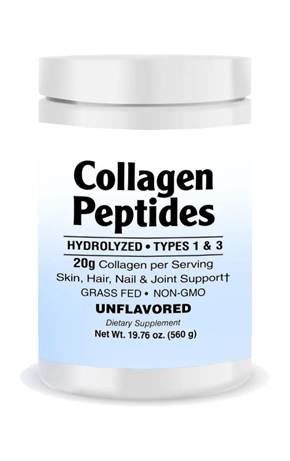
Published trial data support part of that view. A 2023 analysis pooled 26 human trials with 1,721 participants. It found that hydrolyzed collagen improved skin hydration and elasticity versus placebo. A 2026 analysis of oral and topical peptides found collagen improved skin hydration and brightness, had a modest effect on wrinkles, and conferred inconsistent effects on elasticity and density.
Takeaways
Dr. Sinclair concluded that peptides are not new, since insulin, oxytocin (a hormone with roles in social bonding), and glucagon (an appetite-suppressing hormone similar to GLP-1 that prevents blood sugar levels from falling too low) are all peptides. What is new is the surge in experimentation for recovery, body composition, metabolism, and possibly longevity. Sinclair said most of the supporting evidence comes from animals, human data are limited, and long-term safety is largely unknown. He advised talking to a doctor and said a physician who refuses to discuss peptides is not helping patients make informed decisions.
 Comments