


Inexpensive FDA-Approved Drug Prolongs the Life of Mice, New Study Shows
The FDA-approved drug, mianserin (MIA), moderately prolongs the lifespan of naturally aged mice while countering decrements in movement, hair, and other signs of aging.
Highlights
- MIA prolongs the lifespan of naturally aged mice by over 17%, while improving posture, activity levels, and hair.
- It also extends the lifespan of age-accelerated mice by 28%, while improving heart, lung, and muscle function.
- MIA appears to promote longevity, in part by reducing age-promoting cells called senescent cells.
In a new study reported in Nature Communications, researchers from Northeast Normal University in China have discovered a new way to prolong the lifespan of mice. They took naturally aged mice, roughly equivalent in age to 60-year-old humans, and injected them with the antidepressant MIA. This led to a 17.5% increase in their median lifespan.
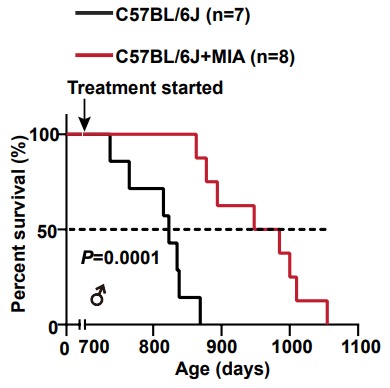
MIA treatment also reduced hunching and bone weakness while increasing the movement and activity levels of the aged mice. Additionally, the treated aged mice had glossier and denser fur. These findings suggest that MIA can improve the health and longevity of aged mice.
The Road to Discovery
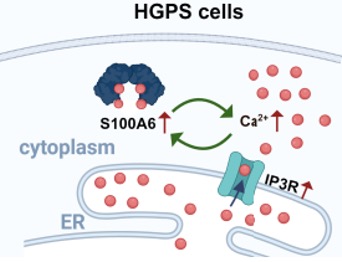
From high blood pressure to Alzheimer’s disease, multiple age-related conditions are associated with dysregulated calcium (Ca2+). Calcium isn’t just a mineral; it serves as a powerful signaling molecule that our brain, heart, and muscles need to function. Within cells, calcium is stored in a structure called the ER (endoplasmic reticulum). The ER keeps calcium from interacting with specific proteins located in the cytoplasm. Upon release from the ER, calcium binds to these proteins, which can regulate processes linked to aging, such as inflammation and cell death.
Studies have shown that calcium is elevated within the cells of individuals with an age-accelerating condition known as HGPS (Hutchinson-Gilford progeria syndrome). To uncover the role of calcium in this age-accelerating condition, the Northeast Normal University researchers examined skin cells from HGPS patients. They found that the calcium-binding protein, S100A6, was elevated in the HGPS cells. Further experiments revealed that calcium was leaking from the ER, which the researchers surmised was the cause of S100A6 accumulation in the cytoplasm.
MIA Prolongs the Lifespan of Age-Accelerated Mice
Calcium is released into the cytoplasm from the ER through a channel called the IP3 receptor. To prevent the ER from leaking calcium, the researchers blocked the IP3 receptor with a drug. They did so by injecting the drug into mice that model HGPS. This increased the locomotor activity of the HGPS mice and prolonged their median lifespan by 14%. However, prolonged treatment with the drug caused tremors in the HGPS mice. Since this drug was not suitable for a potential human therapy, the researchers moved on to MIA.
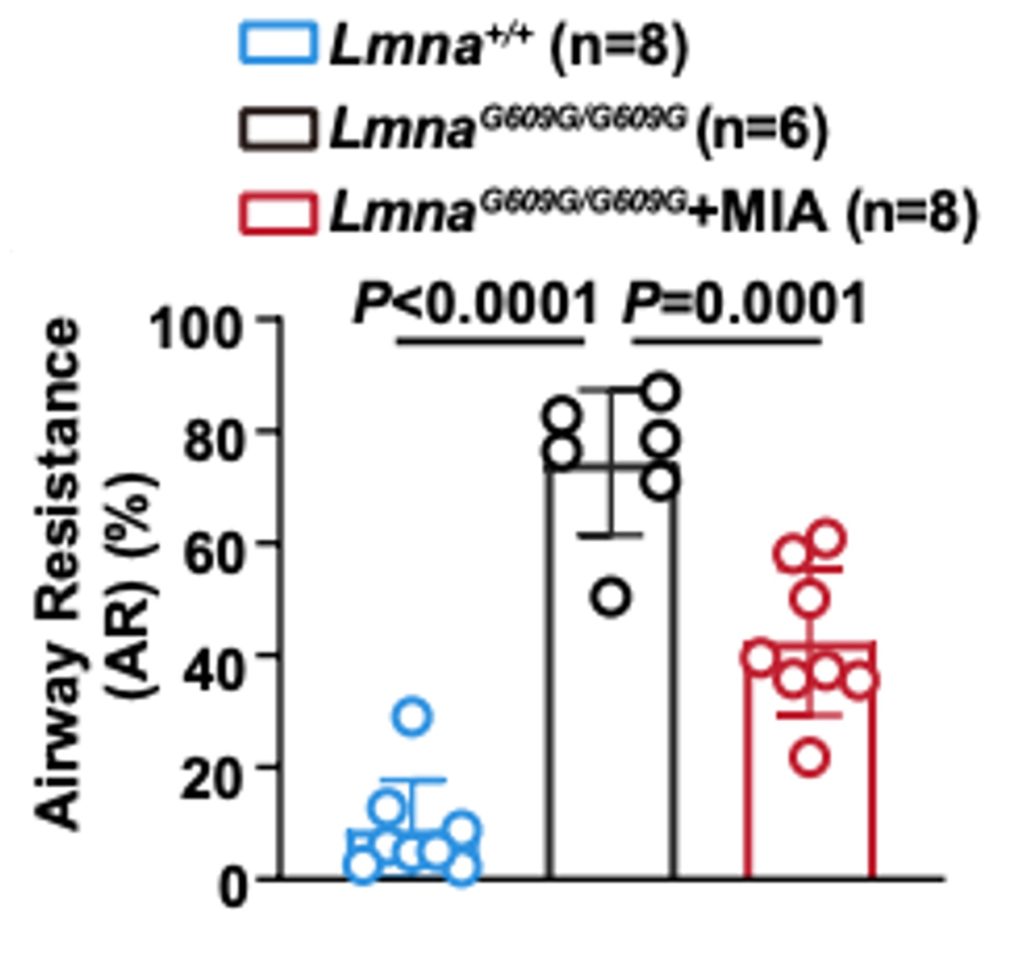
MIA, a drug approved by the FDA for the treatment of depression, can also block the IP3 receptor. Remarkably, MIA increased the median lifespan of HGPS mice by 28%. It also improved heart, lung, and muscle function. Besides improving vital organ function, such as increasing muscle strength, MIA increased muscle mass and reduced S100A6 levels in multiple tissues, including heart, lung, muscle, and skin tissue. These findings prompted the researchers to test the effect of MIA on naturally aged mice.
How Might MIA Improve Health and Longevity?
In addition to improving health and longevity, MIA reduced S100A6 levels in multiple tissues of the naturally aged mice. The researchers also found that S100A6 leads to the degradation of an enzyme called PARP1, which repairs DNA. By reducing PARP1, elevations in S100A6 promote cellular senescence, a biological driver of aging. Senescent cells secrete molecules that accelerate the aging process by increasing inflammation and tissue damage. Thus, by balancing calcium levels within cells, MIA may support health and longevity by counteracting DNA damage and cellular senescence.
Targeting Senescent Cells to Slow Physical Aging
The study suggests that MIA improves the health and longevity of mice, in part, by alleviating cell senescence. However, other studies exploring the effects of MIA on ageing are lacking. Future research testing the effects of MIA on animal aging may support the notion that MIA improves health and longevity. Until then, it may be possible to prevent the accumulation of senescent cells by consuming fewer calories per day. The metabolic stress from overeating can lead to the accumulation of senescent cells. Moreover, exercise has been shown to reduce cellular senescence. Additionally, supplements like Restorin provide natural senolytics, which are compounds that eliminate senescent cells.
Model: 20-month-old C57BL/6J mice
Dosage: 10 mg/kg injections of mianserin every other day for 4 months
 Comments