


Alpha-Ketoglutarate Protects Against Brain Aging, New Study Shows
Alpha-ketoglutarate improves memory-formation capacity in mice that model brain aging.
Highlights
- Alpha-ketoglutarate restores the memory formation capacity of mice that model brain aging.
- When combined with another life-extending molecule called rapamycin, alpha-ketoglutarate may have more potent effects on memory formation capacity.
- Alpha-ketoglutarate enhances a key process for brain health, known as autophagy, in mice that model brain aging.
At any given moment, measurable electrical currents flow through our nervous system, heart, and muscles. In key brain regions, electricity plays a crucial role in strengthening the connections between our neurons. Indeed, many scientists believe our memories can be found somewhere within the electrical signals flowing through our brains.
However, the capacity to strengthen memory formation via electricity, known as long-term potentiation (LTP), declines with age. This leads to decrements in cognitive function associated with dementia and Alzheimer’s disease. Nevertheless, researchers Sheeja Navakkode, PhD, and Brian Kennedy, PhD, may have discovered a method for mitigating impaired LTP.
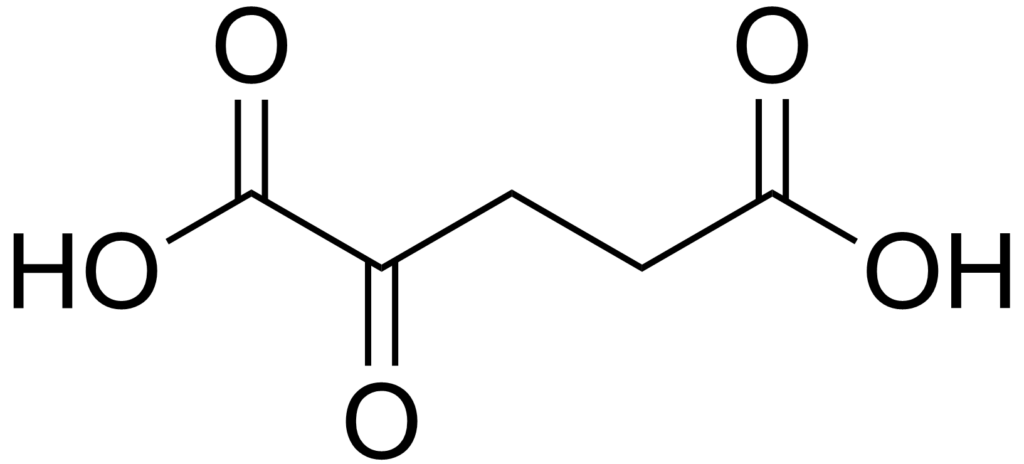
Alpha-ketoglutarate is a naturally occurring metabolite, previously shown to prolong the lifespan of mice, making it a life-extending molecule. Alpha-ketoglutarate is implicated in neurodegenerative disorders like Alzheimer’s and Parkinson’s disease. For these reasons, Dr. Navakkode and Dr. Kennedy, in a new study published in Aging Cell, explored the effects of alpha-ketoglutarate on memory formation in mice.
Alpha-Ketoglutarate Restores Memory Formation Capacity
Mice that model Alzheimer’s disease, called here APP mice, also model brain aging, as they exhibit dysfunctional neuronal connections. In fact, these dysfunctional neuronal connections are more closely related to memory loss than the “hallmarks” of Alzheimer’s disease (amyloid-beta and tau tangle accumulation).
With this in mind, Navakkode and Kennedy examined brain slices from APP mice. They examined the brain region responsible for consolidating memories, called the hippocampus. As expected, they found that, compared to normal mice, the APP mice showed deficits in the electrical signaling associated with LTP.
In normal mice, the electrical signal associated with LTP was sustained for four hours. In contrast, the electrical signal of male APP mice declined after 45 minutes. Moreover, female APP mice exhibited a weaker electrical signal at all time points. However, treating the brain slices with alpha-ketoglutarate restored the electrical signals in both male and female APP mice.
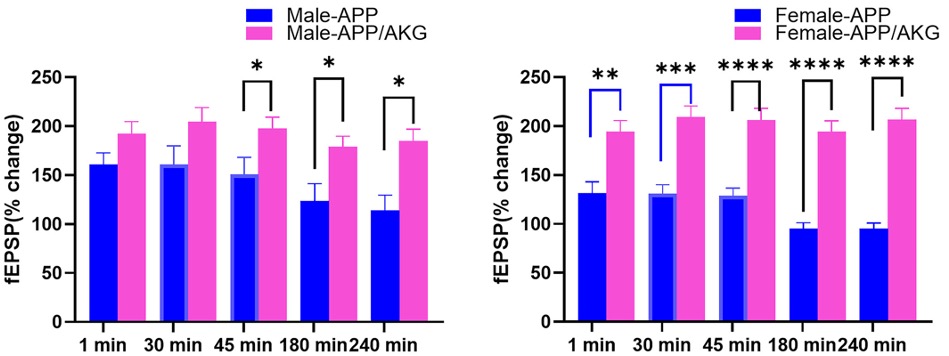
These findings demonstrate that treatment with alpha-ketoglutarate can restore the electrical signals associated with LTP. Furthermore, the effects seem to be stronger in females than in males. This sex difference may be due to the stronger electrical impairments exhibited by females compared to males. Still, alpha-ketoglutarate mitigated the impairments in LTP in all APP mice, suggesting it restores the capacity to form new memories.
Rapamycin and Alpha-Ketoglutarate May Synergistically Promote Memory Formation
One of the key processes protecting our brain from neurodegeneration and cognitive impairment is autophagy. Autophagy is the system our cells use to degrade and recycle unwanted biological material, such as broken proteins. The life-extending molecule rapamycin is known to increase autophagy by inhibiting a protein called mTOR (mammalian target of rapamycin).
Similar to alpha-ketoglutarate, the researchers showed that rapamycin restored LTP in the hippocampus of APP mice. They attributed these beneficial effects to rapamycin increasing autophagy. Interestingly, however, unlike alpha-ketoglutarate, rapamycin did not increase LTP in normal mice. Furthermore, combining alpha-ketoglutarate with rapamycin heightened the electrical signal associated with LTP a bit further than rapamycin alone, but this did not reach statistical significance.
“The effects of [alpha-ketoglutarate] and rapamycin in enhancing autophagy may be additive or synergistic,” said the authors.
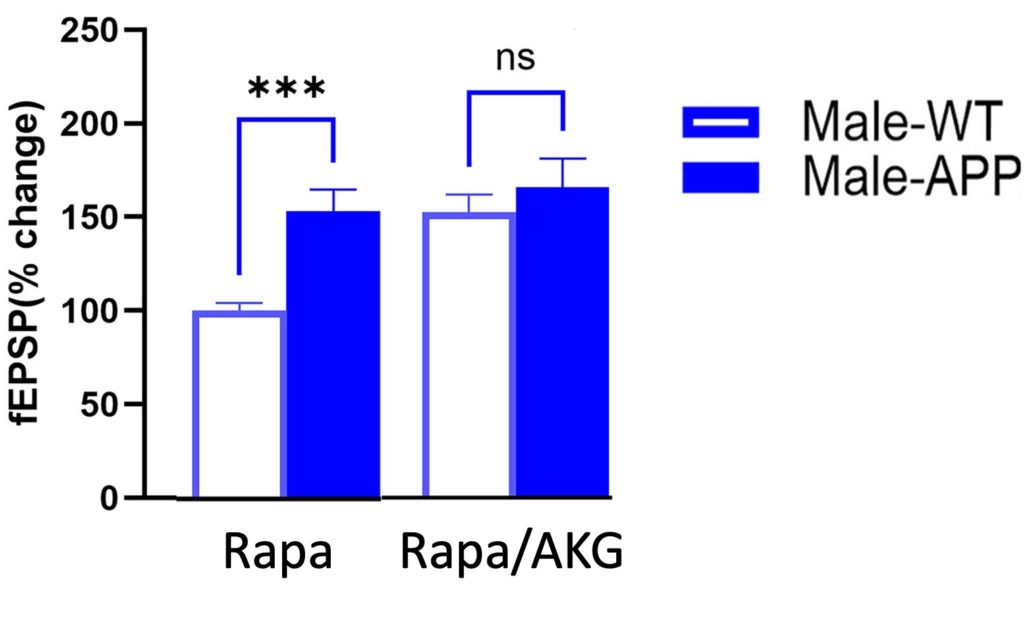
Studies more thoroughly examining the effects of combining rapamycin and alpha-ketoglutarate may confirm their synergistic properties. Interestingly, a recent study showed that alpha-ketoglutarate improves the memory of aged mice by inhibiting mTOR, suggesting that alpha-ketoglutarate and rapamycin have similar targets.
Alpha-Ketoglutarate Increases Autophagy
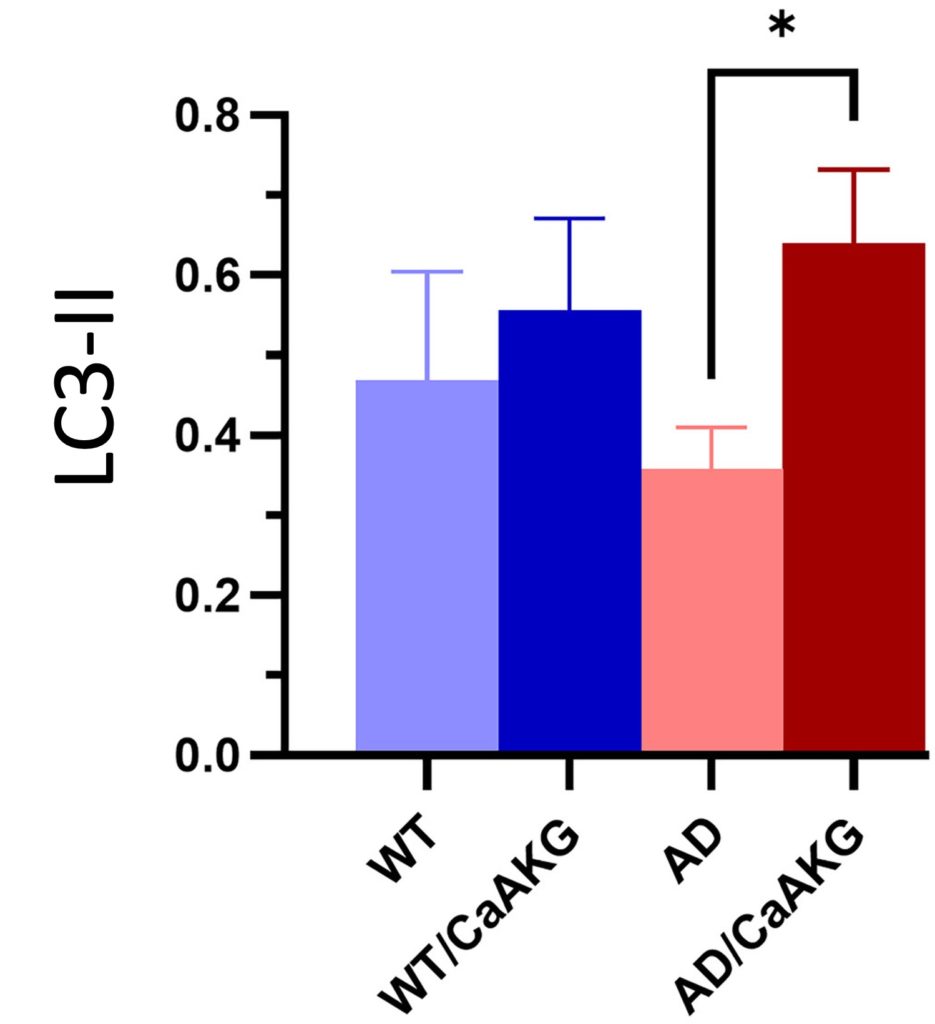
To further evaluate the impact of alpha-ketoglutarate on autophagy, Navakkode and Kennedy measured a protein called LC3-II. LC3-II is a crucial component of the cellular structures involved in autophagy, widely used as a marker for autophagy. By measuring LC3-II protein levels from brain slices, the researchers found that alpha-ketoglutarate can elevate autophagy in APP mice. However, LC3-II was not elevated in normal mice in response to alpha-ketoglutarate.
Can Taking Alpha-Ketoglutarate Slow Aging?
The study suggests that compounds like alpha-ketoglutarate and rapamycin can promote memory formation, in part, by increasing autophagy.
“The research suggests that safe, natural compounds like [alpha ketoglutarate] may one day complement existing approaches to protect the brain and slow memory loss. Because [alpha-ketoglutarate] is already present in our bodies, targeting these pathways may offer fewer risks and broader accessibility. Thanks to that, we may have a powerful new strategy to delay cognitive decline and support healthy brain ageing,” said Dr. Kennedy.
Kennedy and other researchers are working on a clinical trial involving older adults consuming 1 gram of alpha-ketoglutarate for six months. The study will assess whether alpha-ketoglutarate reduces biological age. Inflammation, metabolic health, strength, cardiovascular health, skin health, and exercise capacity will also be measured.
Since this study will not measure cognitive health or mortality rates, it will neither confirm nor deny what Navakkaode and Kennedy found in mice. With that said, a study testing the effects of alpha-ketoglutarate supplementation on cognitive performance in older adults would help confirm alpha-ketoglutarate’s potential anti-brain aging effects.
 Comments