


Longevity Supplement Spermidine Rejuvenates Stem Cells Killed by Chronic Stress, New Study Shows
Supplementing mice with the naturally occurring molecule spermidine counters stem cell death and alterations to immune cells triggered by chronic stress.
Highlights
- Chronic stress leads to a reduction in hematopoietic stem cells, which are the stem cells found in bone marrow that give rise to blood cells, including red and white (immune) blood cells, and platelets.
- Spermidine supplementation prevents hematopoietic stem cell death and the resulting alterations to the immune system that can make the body more susceptible to infections.
- The reduction in spermidine is mediated by a specific strain of gut bacteria that produces spermidine, which is depleted in response to chronic stress and gut inflammation.
Today’s societal pressures may contribute to chronic stress—a consistent state of worry. Alarmingly, by inducing a cascade of physiological changes, chronic stress contributes to several deadly diseases, including cardiovascular disease. For example, psychological stress elevates blood pressure, which strains the heart and increases the risk of stroke and heart attack.
Still, the extent to which chronic stress negatively impacts the body remains incompletely understood. Now, researchers from China have found that chronic stress induces stem cell death by altering a gut bacterium that synthesizes spermidine. As published in Cell Reports, they also show that spermidine supplementation replenishes these stem cells, suggesting the age-accelerating effects of stress can be mitigated.
Chronic Stress Alters Immune System Stem Cells
To model chronic stress, the researchers subjected mice to different stressful situations:
- Chronic mild stress (CMS): Mice were exposed to one type of stress each day, such as food deprivation, water deprivation, a dirty cage, or lights on while sleeping.
- Chronic variable stress (CVS): Mice were exposed to three types of stress per day, such as 100 electric shocks, being suspended by the tail, or being trapped within a tube.
- Chronic restraint stress (CRS): Mice were trapped inside a highly restrictive tube for 2 hours each day.
- Spared nerve injury (SNI): A hindlimb nerve was severed to induce chronic pain.
All four mouse models exhibited features of chronic stress, such as anxiety-like behavior. For example, when placed into an open field, the stressed mice stayed away from the center, suggesting they have anxiety.
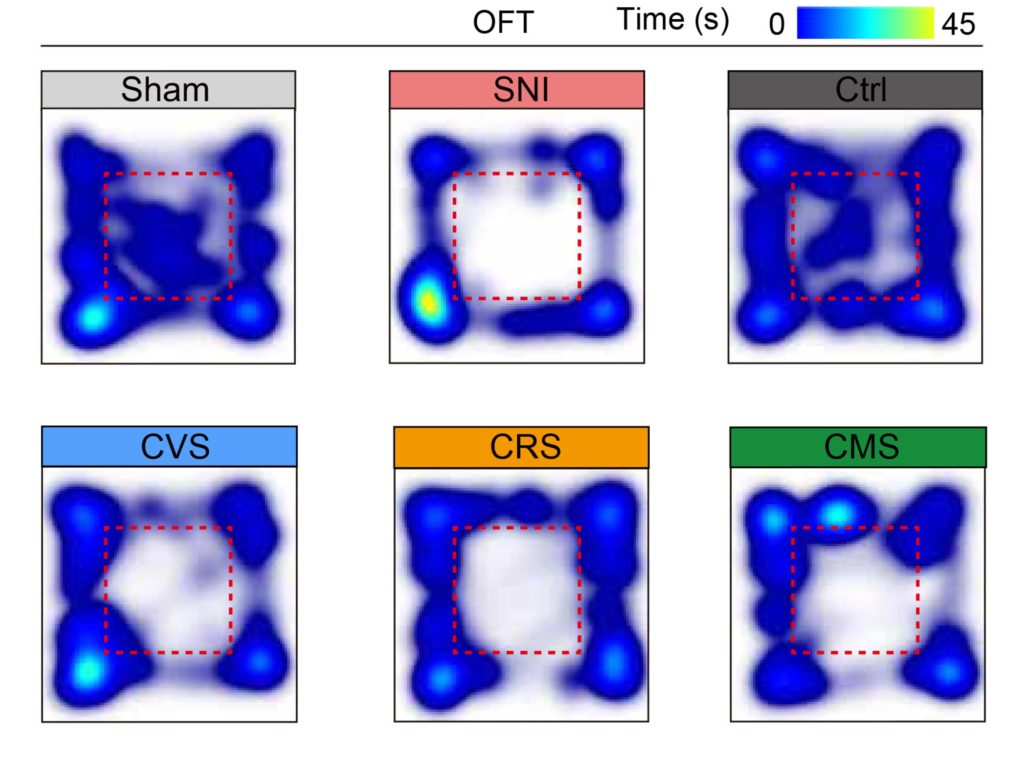
Remarkably, the researchers found that stressed mice had fewer hematopoietic stem cells, which are the stem cells that give rise to red and white blood cells. Stressed mice also had fewer T cells and B cells, which are immune cells that help protect against infections. Notably, the hematopoietic stem cells from stressed mice resembled hematopoietic stem cells from aged mice, suggesting that chronic stress accelerates stem cell aging.
Spermidine Prevents Stem Cell Death
To assess how chronic stress could be affecting bone marrow stem cells, the researchers measured the activity of multiple brain regions associated with stress. They found that chronic stress reduced neuronal activity in the medial prefrontal cortex (mPFC), which regulates higher-order thinking, such as decision-making. Chronic stress also reduced neuronal activity in the periaqueductal gray (PAG), a brain region involved in risk assessment and modulating pain.
Furthermore, by inhibiting the mPFC and PAG of mice, the researchers recapitulated the hematopoietic stem cell death observed in the CMS, CVS, CRS, and SNI mouse models. These findings suggest that inhibiting these brain regions mimics chronic stress. For this reason, the researchers used mPFC and PAG inhibition to model chronic stress in subsequent experiments.
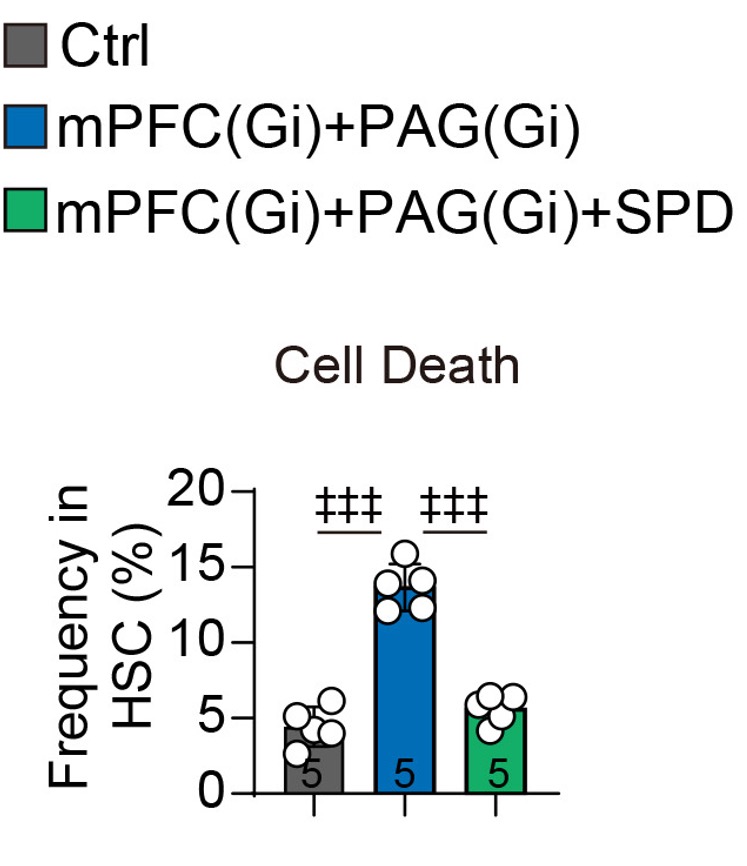
With that said, the researchers went on to find that circulating spermidine levels were reduced in the mPFC- and PAG-inhibited mice. Spermidine levels were also low in the chronic stress mouse models, further suggesting that mPFC and PAG inhibition models chronic stress. Furthermore, supplementing the mPFC- and PAG-inhibited mice with spermidine prevented hematopoietic stem cell death.
Stress Kills Stem Cells within 28 Days
Studies have shown that certain gut bacteria can synthesize spermidine. Building on this idea, the researchers found that levels of Lactobacillus reuteri—a spermidine-producing bacterium—fell in stressed mice and in mice whose mPFC and PAG activity were inhibited. Feeding L. reuteri to mice with inhibited mPFC or PAG activity restored both spermidine levels and hematopoietic stem-cell numbers.
Similarly, naturally aged mice showed reduced neuronal activity in the mPFC and PAG, along with lower levels of spermidine and L. reuteri. The researchers also found that the mPFC and PAG communicate with the intestines through the sympathetic, or “fight-or-flight,” nervous system. Reduced activity in these brain regions was associated with intestinal inflammation and a decline in L. reuteri.
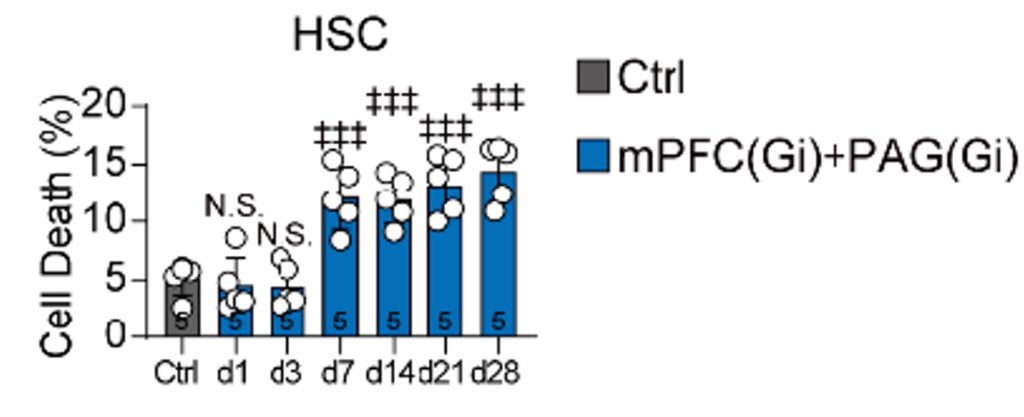
A time-course analysis revealed that these changes unfolded in sequence. Inhibiting the mPFC or PAG lowered L. reuteri levels within one day and reduced spermidine levels within three days. By day 7, hematopoietic stem cells showed clear signs of damage. Their numbers declined measurably by day 14, and by day 28, the stem cells had dropped to levels seen in aging.
Taking Spermidine to Prevent Stem Cell Death
Hematopoietic stem cell aging, or loss, can lead to chronic inflammation, which underlies several age-related conditions, including cardiovascular disease, neurodegenerative disorders, and cancer. Hematopoietic stem cell aging can also alter the immune system, making it more difficult to defend against antigens. It follows that maintaining a healthy pool of hematopoietic stem cells, which are found in our bone marrow, may counter age-related disease and early death.
Spermidine is a naturally occurring polyamine found in foods such as wheat germ, legumes, mushrooms, soy products, aged cheeses, and some fermented foods. It is frequently grouped with longevity supplements because animal studies link it to autophagy—the cellular recycling process that often becomes less efficient with age—as well as mitochondrial function. Corroborating spermidine’s effects, it was shown to induce autophagy and improve mitochondrial function in the current study.
However, human research on spermidine remains preliminary. Higher dietary spermidine intake has been associated with lower mortality, and small supplementation studies suggest that it is generally well tolerated over a few months. Still, there is currently no clinical evidence that spermidine supplementation maintains stem cells, slows aging, or extends human lifespan.
Model: Mice that model chronic stress
Dosage: 40 mg/kg/day of spermidine injected
 Comments