


NAD+ Supplement and Exercise Move Aging Clocks in Opposite Directions, New Study Shows
An analysis of three human studies reveals that nicotinamide riboside (NR) and high-intensity interval training (HIIT) move biological aging in opposite directions.
Highlights
- NR reduces biological (epigenetic) age estimates in muscle tissue, according to two aging clocks.
- HIIT increases biological age estimates in muscle, according to one clock.
- A higher muscle age estimate correlates with a lower level of physical fitness.
While aging affects every organ, muscle is particularly crucial for allowing us to move. It also largely determines how many calories we burn at rest. Age-related muscle loss can impair mobility, raising the risk of falls, while also contributing to metabolic changes associated with higher mortality risk. It follows that maintaining muscle mass into old age may contribute to a longer life without mobility issues, disability, and metabolic abnormalities.
Because NAD+ (nicotinamide adenine dinucleotide) plays an essential role in mediating energy production, a process that maintains muscle function, scientists in a new study published in Aging Cell examined two proposed methods for supporting NAD+ levels:
- High-intensity interval training (HIIT): an exercise method that alternates short bouts of near-maximal effort with periods of lower-intensity activity or rest.
- Nicotinamide riboside (NR): A naturally occurring molecule that can be isolated or synthesized and sold as a supplement to elevate NAD+ levels.
Since NAD+ may help preserve muscle health, the researchers investigated whether HIIT and NR could influence molecular measures of aging in muscle tissue. Interestingly, NR was associated with lower biological-age estimates, whereas HIIT increased one measure of aging pace. The contrasting findings suggest that these interventions may affect muscle aging in different ways.
NR Reduces Epigenetic Age
The researchers analyzed muscle-biopsy samples from participants in three separate studies. In one study, participants took 1 gram of NR daily for five months. In the other two, participants completed HIIT programs lasting either four or six weeks. The team used these samples to estimate the participants’ epigenetic age—a measure based on chemical tags attached to DNA that tend to change in recognizable patterns as we grow older.
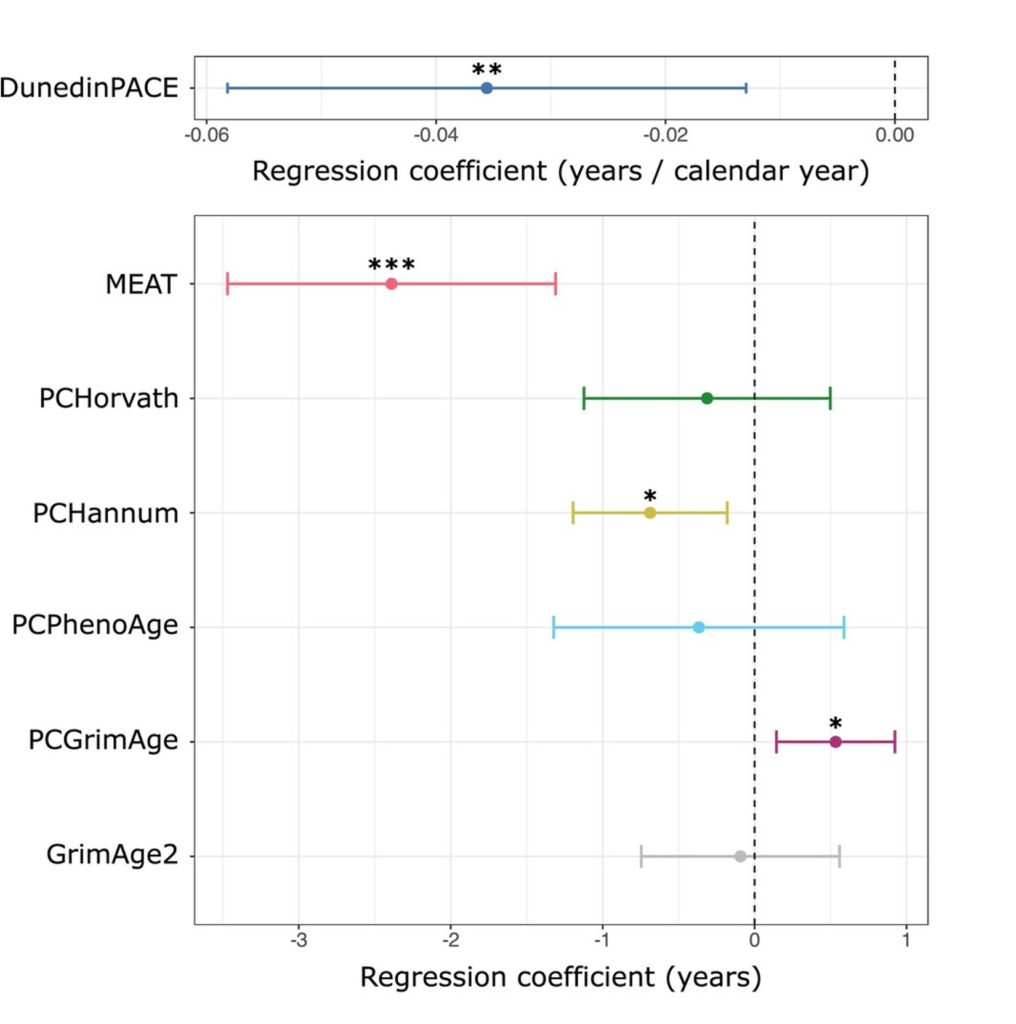
Several epigenetic clocks are available, including the Muscle Epigenetic Age Test (MEAT), which was designed specifically to estimate aging in muscle. The researchers found that the age estimates from MEAT closely tracked participants’ chronological ages, with relatively little error. Another clock, GrimAge2, performed similarly. Together, these results suggest that both MEAT and GrimAge2 can provide useful estimates of epigenetic age in muscle tissue. Moreover, the MEAT clock, along with two other clocks, showed that NR was associated with a reduction in epigenetic age.
HIIT Alters Epigenetic Age
When the researchers applied the epigenetic clocks to muscle samples from the HIIT studies, they found significant changes only in the longer, six-week trial, known as EpiH. The four-week GeneSMART trial showed no significant changes. In EpiH, one clock indicated that HIIT increased epigenetic age, while another suggested that it reduced epigenetic age. Notably, these were not the MEAT or GrimAge2 clocks—the two measures that most accurately tracked participants’ chronological age in muscle tissue.
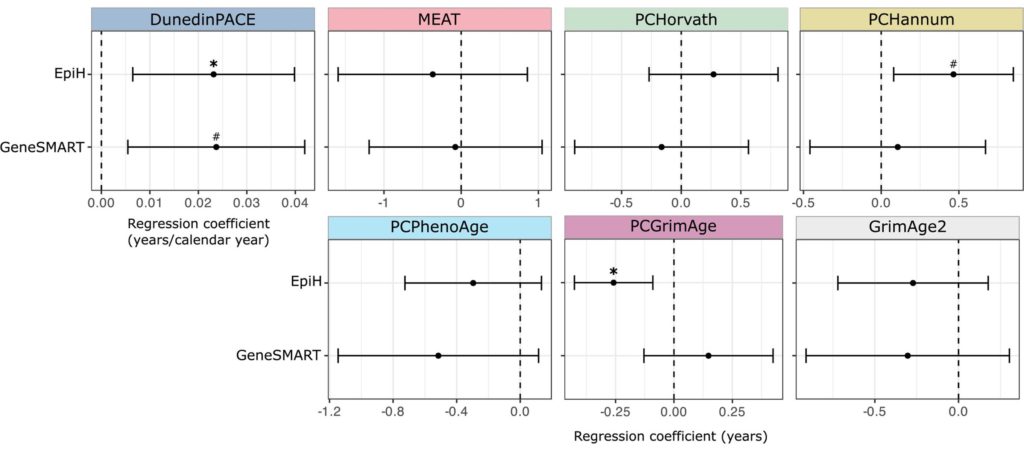
Interestingly, DunedinPACE—the clock that indicated HIIT increased epigenetic age—suggested that NR reduced it. PCGrimAge showed the opposite pattern: HIIT was associated with a lower epigenetic-age estimate, whereas NR was associated with a higher one. Together, these results suggest that NR and HIIT shifted these two aging-clock measures in opposite directions.
Increased Epigenetic Age Correlates with Worsened Physical Fitness
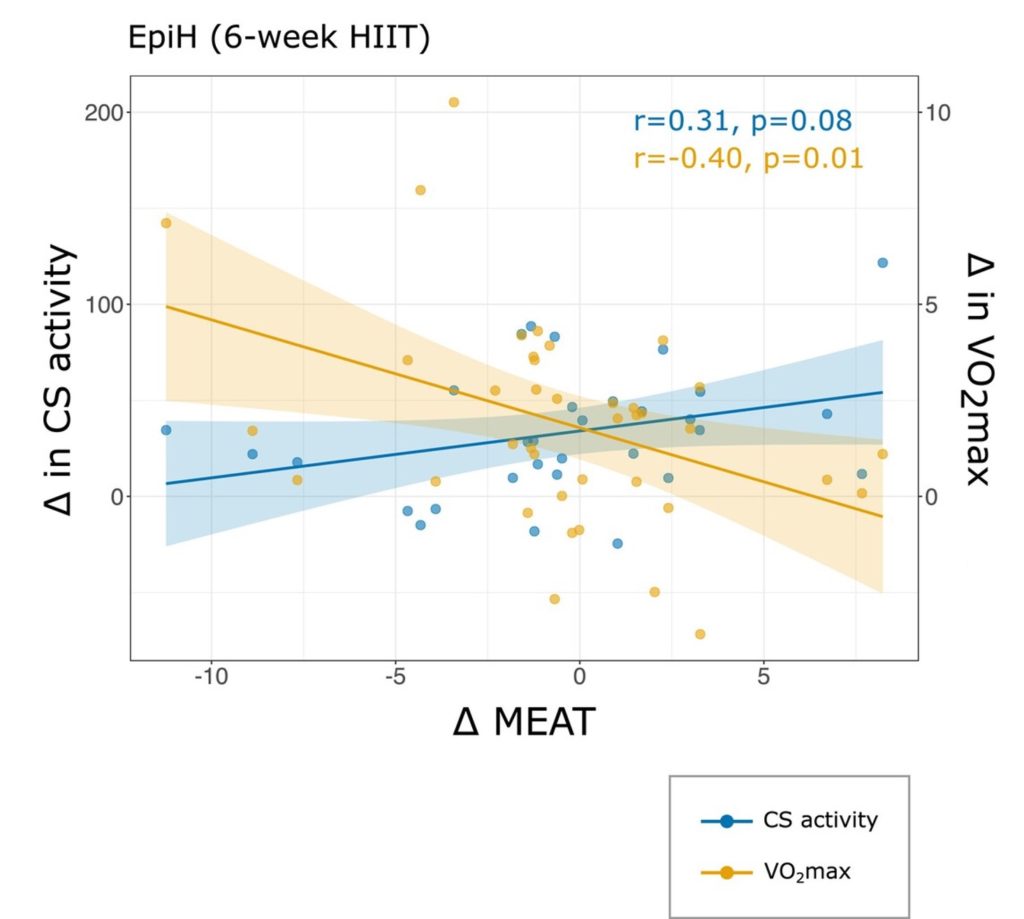
For participants in the HIIT studies, the researchers also measured maximal oxygen uptake (VO₂ max), an indicator of cardiorespiratory fitness, and citrate synthase activity, a commonly used marker of mitochondrial content in muscle. They then examined how changes in these measures related to epigenetic age as estimated by the muscle-specific MEAT clock.
In the six-week EpiH trial, participants with higher epigenetic-age estimates had lower VO₂ max and tended to have higher citrate synthase activity. From the NR study, the researchers also measured mitochondrial DNA content in muscle, which increased with epigenetic age. These findings suggest that, as muscle age increases, mitochondrial content increases and physical fitness decreases.
Which Aging Clock Knows the Truth?
Do epigenetic clocks ever give misleading results? This depends on what they were designed to measure and the tissue in which they are used. Each clock is trained on a particular set of data to predict a particular outcome, such as chronological age, mortality risk, or the pace of aging.
Because epigenetic patterns differ among tissues, a clock developed using blood or other tissues may not perform as well in muscle. The MEAT clock was designed specifically using muscle samples and therefore appears better suited to estimating chronological age in muscle than many general-purpose clocks.
Assuming MEAT is the most accurate clock in this study, the findings suggest that NR may reduce epigenetic-age estimates in muscle tissue. In contrast, HIIT did not significantly affect muscle epigenetic age as measured by MEAT. The researchers note, however, that the epigenetic changes seen immediately after HIIT could reflect early adaptations to exercise rather than a lasting effect on aging. If muscle samples had been collected several weeks after training ended, the changes might have looked different—and could potentially have indicated a lower biological-age estimate.
 Comments