


NAD+ Transporter Prevents Obesity Caused by Aging: New Study Shows
Japanese scientists have found that reducing NAD+ (nicotinamide adenine dinucleotide) transport into mitochondria within the fat tissue of mice induces metabolic dysregulation and obesity.
Highlights
- Scientists induced obesity in mice by reducing a transporter that allows NAD+ into mitochondria.
- Without this transporter, the mitochondria became dysfunctional and unable to burn as much fat.
- There were signs of the transporter declining with age in human participants.
- Elevating the transporter in aged, but not young, mice prevented obesity.
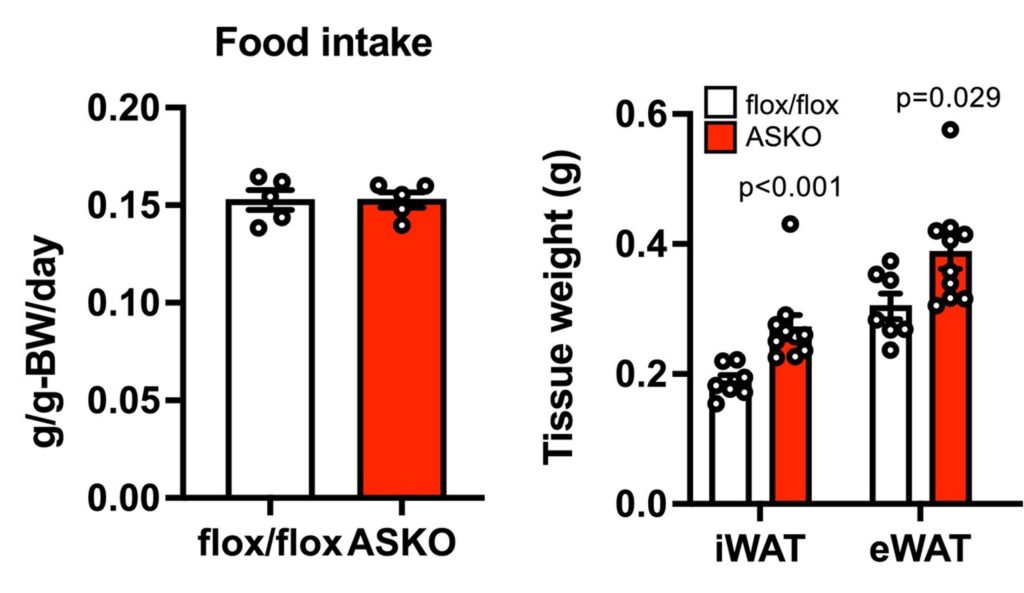
Obesity isn’t always caused by eating excess calories. In a recent study from Aging Cell, researchers from Keio University in Tokyo induced obesity without altering food intake. Instead, they genetically engineered mice to lack an NAD+ transporter, specifically in fat cells, which are also called adipocytes. This led to an increase in body weight and fat, also known as white adipose tissue (WAT).
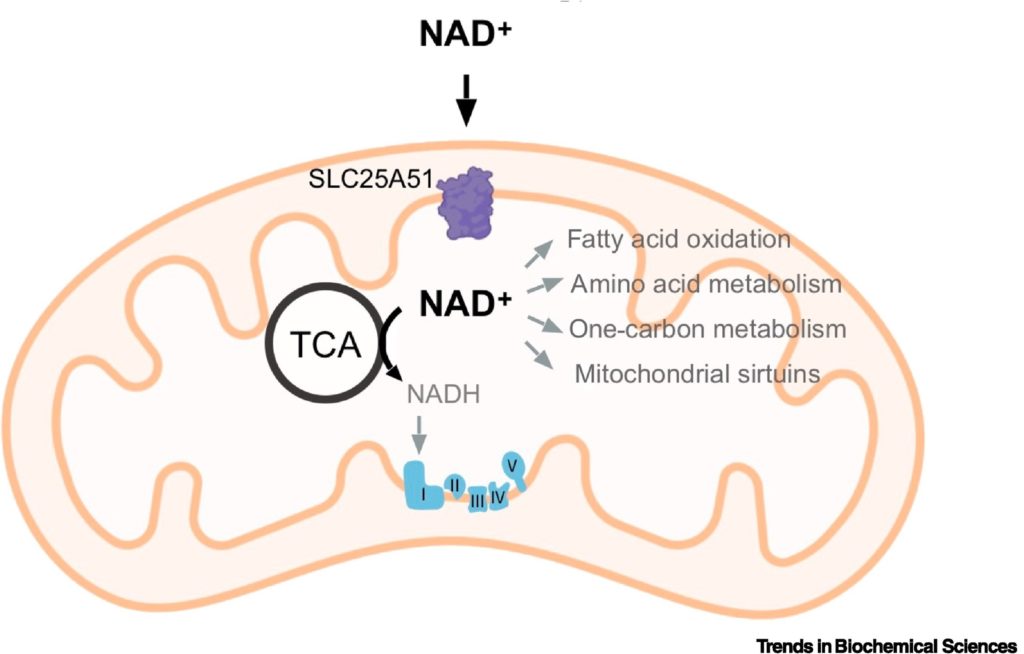
The NAD+ transporter under investigation is called SLC25A51(solute carrier family 25 member 51). Discovered only a few years ago, this NAD+ transporter allows NAD+, a molecule essential for energy production, to enter mitochondria.
Mitochondrial Impairment Triggers Impaired Fat Burning Capacity
The mice lacking the SLC25A51 mitochondrial NAD+ transporter, specifically in fat tissue, were named adipocyte-specific knockout (ASKO) mice. The researchers found that these mice had about half the NAD+ in their mitochondria as normal mice. Low NAD+ typically leads to mitochondrial impairment, which the researchers subsequently confirmed.
Our mitochondria generate cellular energy by utilizing the oxygen we breathe and the carbohydrates, proteins, and fats we eat. The researchers found less oxygen utilization and cellular energy generation in ASKO mouse fat tissue, indicating mitochondrial impairment. Oxygen utilization was also reduced in a fat found in vegetable oil (palmitate), suggesting impaired fat-burning capacity.
Mitochondrial NAD+ Transport May Decline with Age in Humans
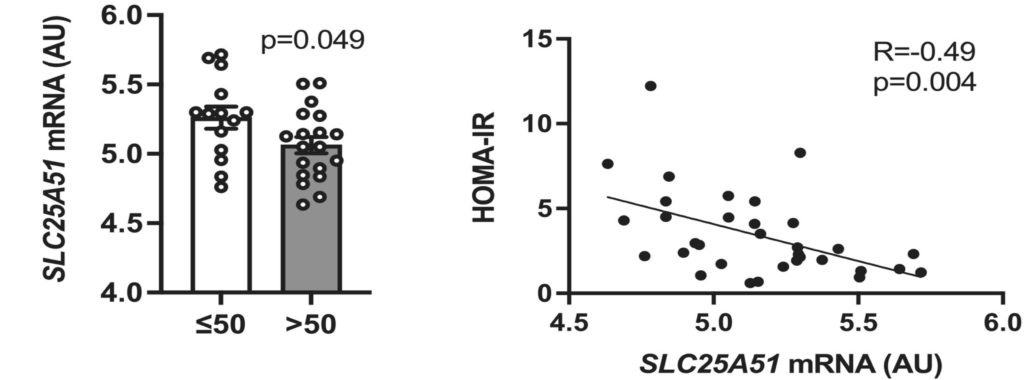
To determine the relevance of their findings in humans, the Keio University researchers studied fat samples from a previous study. The previous study involved individuals with a range of body weights, including individuals with obesity. The Keio researchers then analyzed the genes from their fat samples. Interestingly, they found that SLC25A51 mRNA was reduced in individuals over the age of 50. These findings suggest that mitochondrial NAD+ transport may potentially decline with age in humans.
Furthermore, the researchers found that reduced SLC25A51 mRNA was associated with elevated blood glucose and blood insulin levels. Normally, our cells uptake glucose in response to insulin, but eating too much saturated fats, processed foods, and added sugars can lead to insulin resistance. Insulin resistance, a precursor to diabetes and obesity, occurs when our cells cannot efficiently uptake glucose in response to insulin, leading to elevated blood glucose and insulin levels.
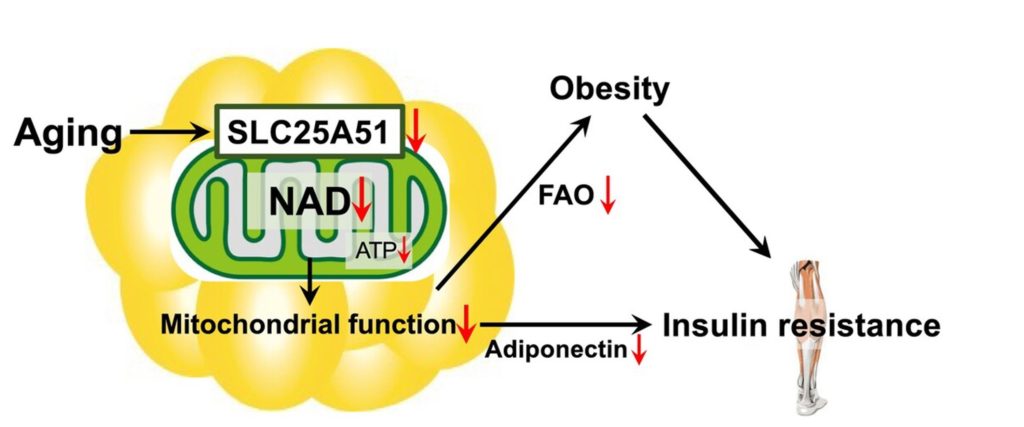
Insulin resistance is concerning because our cells need glucose to make ATP. With that said, the researchers found that reduced SLC25A51 mRNA was associated with an increase in insulin resistance. Notably, the researchers also found that the AKSO mice had increased insulin resistance, blood glucose, and blood insulin. These findings suggest that impairments in mitochondrial NAD+ transport may promote insulin resistance, which in turn could give rise to diabetes, obesity, and other metabolic diseases.
Preventing Obesity by Increasing Mitochondrial NAD+ Transport
The Keio University researchers next sought to determine if increasing mitochondrial NAD+ transport in fat tissue prevents obesity. They again used genetic engineering, but this time they increased SLC25A51 to increase mitochondrial NAD+ transport. The increase was above normal levels and similar to the increase observed in response to fasting for 24 hours.
Namely, the researchers hyperactivated SLC25A51 in both young and older mice, which were roughly equivalent in age to 25-year-old and 55-year-old humans, respectively. Remarkably, increased SLC25A51 led to a decrease in body weight and WAT in the older, but not the younger mice. The increase in SLC25A51 also prevented insulin resistance and elevated a molecule called adiponectin. Obese individuals typically have lower levels of adiponectin, which is a hormone that regulates glucose and insulin levels.
Boosting NAD+ to Combat Obesity and Metabolic Aging
The findings of the Keio University researchers suggest that SLC25A51 declines with age in the WAT of humans. However, they measured mRNA, which codes for SLC25A51 proteins, but doesn’t necessarily equate to a reduction in NAD+ transport into mitochondria. More studies will be needed to confirm a reduction in mitochondrial NAD+ transport in the fat tissue of older adults. Besides, studies suggest that mitochondria can synthesize NAD+ without SLC25A51.
Nevertheless, the crux of the problem may be a disruption in NAD+ metabolism. Boosting NAD+ may be a potential remedy for this disruption. NAD+ boosts can be achieved with NAD+ precursors like niacin, NMN (nicotinamide mononucleotide), and NR (nicotinamide riboside). An analysis of 18 studies showed that these precursors reduce BMI and increase adiponectin levels in adults. One study showed that NMN reduces insulin resistance in prediabetic women. Another study showed that NMN reduces body weight, but not insulin resistance, in overweight and obese adults. Considering the mixed results, more studies are needed to determine which individuals would benefit the most from the anti-obesity effects of boosting NAD+.
 Comments