


New Study: Alpha-Ketoglutarate Shows Potential to Lower Biological Age in Humans
In 4,260 health enthusiasts, taking a delayed-release alpha-ketoglutarate supplement was tied to lower biological age.
Highlights
- Supplement users in the study used an average of about four supplements, and they showed a significantly lower biological age compared to participants who did not use supplements.
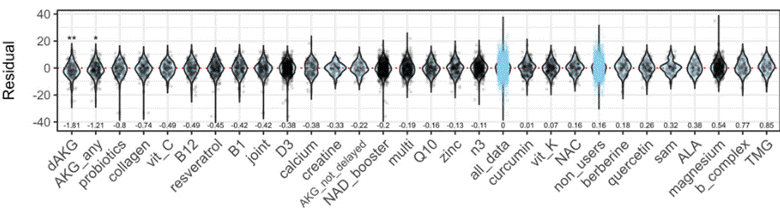
- Among the supplements taken, those who took a delayed-release alpha-ketoglutarate supplement showed the most significantly lowered biological age.
In a study published in Aging Cell, Brian Kennedy and colleagues from the National University of Singapore show that taking supplements is associated with a lower biological age than no supplement usage in health enthusiasts. Also, the researchers analyzed the usage of 84 supplements, and, among them, alpha-ketoglutarate use was associated with the most significant effect in lowering biological age. Moreover, Kennedy and colleagues detected no adverse effect on biological age from taking multiple supplements, challenging the notion that taking more than one supplement can be detrimental. These findings underscore the potential of analyzing readily available biological age assessments in the general population and associating lower biological age measurements with taking certain supplements. Identifying certain supplements with this method can point to which supplements to investigate for their potential effects against aging.
Background on Biological Age
Biological age is an estimate of how old your body is, based on the functioning of cells and tissues, rather than just the number of years one has lived. It reflects accumulated cellular and tissue damage, which is why two people with the same chronological age can have different biological ages.
The Means of Assessing Biological Age in This Study
In Kennedy and colleagues’ study, the researchers used aging clocks based on molecular tagging patterns on DNA (methylation), where they measured age-related methylation at nine specific sites on the DNA. They combined their analyses of methylation at these nine sites to obtain a single biological age estimate.
What Differentiates This Study From Similar Ones
A key attribute of the study from Kennedy and colleagues that differentiates it from others that are similar is that the researchers used an observational approach. In their observational approach, the investigators measured biological age and the usage of supplements without assigning any drugs, devices, or procedures to the study participants. In other words, the researchers simply collected biological age estimates from methylation-based clocks that study participants utilized and associated these estimates with supplement use, without intervening in the participants’ daily routines. This makes observational studies cheaper and faster than other types of human trials, since observational studies simply record what participants already do.
Another attribute of the study is that the participants involved were health enthusiasts, who were less likely to smoke than the general population and who had lower rates of having a disease or medical condition. This attribute made it less likely that aspects of certain medical complications contributed to any effects on biological age.
Alpha-Ketoglutarate Supplementation Was Significantly Associated With Lower Biological Age
Out of 4,260 health enthusiasts who took at least one methylation-based biological age assessment, 1,762 supplement users took 7,662 different supplements (averaging about four supplements per supplement user). The five most common supplements used were vitamin D, NAD+ boosters (like NMN or NR), omega-3 fatty acids, magnesium, and multivitamins.
To find whether using supplements was associated with biological age reduction, Kennedy and colleagues analyzed biological age assessments in supplement users. Notably, compared to health enthusiasts who did not take supplements, supplement users showed a significantly lower biological age. Furthermore, heavy supplement use was not found to be either beneficial or harmful compared to moderate supplement use. These findings suggest that using supplements may have an effect in lowering biological age.
Among the supplements taken, a delayed-release alpha-ketoglutarate supplement was the most significantly associated with lowered biological age. As such, alpha-ketoglutarate is a metabolite central to cellular energy production, and its delayed-release form is engineered to slowly release into circulation over time, rather than being absorbed immediately. This finding underscores the potential of delayed-release alpha-ketoglutarate to lower biological age and warrants further investigation into this prospect.
Further Research Required to Confirm the Effects of Alpha-Ketoglutarate
One major drawback to the findings from this observational study is that it only shows an association between delayed-release alpha-ketoglutarate supplementation and lower biological age, not causation. Thus, future human trials investigating the potential of this supplement to lower biological age should randomly assign participants to either a group receiving the supplement or a group that receives a placebo. If a significant effect on biological age is found, where the group that takes delayed-release alpha-ketoglutarate has a significantly lower average biological age, this would add some degree of confirmation to this supplement’s potential to help against aging.
A key takeaway from Kennedy and colleagues’ study is that analyzing methylation-based biological age tests in observational studies can serve as a cost-effective way to quickly identify pharmaceutical agents or supplements with potential against aging. As such, human trials comparing two groups that take either a supplement or a placebo can cost a lot (i.e., for hiring researchers) and take time to complete (sometimes lasting a year or more). In this way, observational studies use data collected from what people have already done in their day-to-day lives and only require data collection, analysis, and writing up findings. For this reason, future observational studies of people can help elucidate other ways, such as diet plans or exercise regimens, that may counteract the effects of aging.
 Comments