


New Study: Berberine Protects the Heart by Increasing Klotho, a Pro-Longevity Protein
New research shows that berberine increases the longevity protein Klotho in cardiac tissue and eliminates susceptibility to abnormal heartbeats in obese rats.
Highlights
- A high-fat diet induces obesity-related structural, electrical, and molecular alterations in the heart tissue of rats.
- These alterations increase susceptibility to abnormal heartbeat patterns (arrhythmias).
- Berberine stabilizes the progression of these heart tissue alterations and eliminates susceptibility to arrhythmias, and these actions depend on the pro-longevity protein Klotho.
About 40% of adults over the age of 20 in the US have obesity, and about 70% are considered overweight. Obesity is strongly linked to accelerated aging, shifting cells toward an older state earlier in life.
Obesity-associated accelerated aging has adverse effects on the heart, remodeling its structure, electrical activity, and molecular composition in ways that favor abnormal heartbeat patterns (arrhythmias). Accordingly, arrhythmias also raise the risk of heart attack and sudden cardiac death.
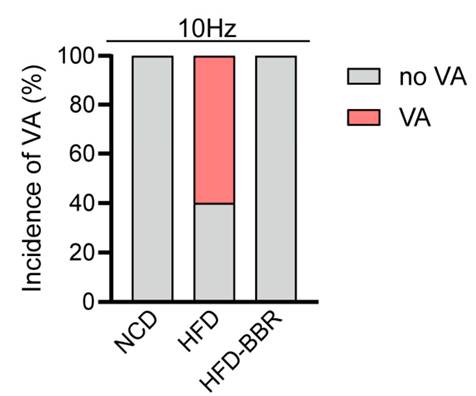
Now, as published in the International Journal of Molecular Sciences, researchers from Peking Union Medical College in China show that obesity contributes to structural, electrical, and molecular alterations in cardiac tissue (referred to as cardiac remodeling), which predispose to arrhythmias in rats. They found that berberine, a yellow, bitter-tasting substance found in several plants (i.e., Oregon grapes), eliminated arrhythmia susceptibility—60% of non-treated obese rats exhibited arrhythmias, while none of the treated ones did. Moreover, berberine showed antioxidant activity, suppressed inflammation, and increased cardiac tissue levels of Klotho, a pro-longevity protein. In rat cardiac cells, genetically reducing Klotho levels abolished berberine’s antioxidant and anti-inflammatory properties, suggesting Klotho is required for berberine’s cardioprotective actions. These findings suggest that berberine may alleviate obesity-related cardiac remodeling and protect against one hazardous aspect of obesity-associated accelerated aging: arrhythmias.
More Information on Klotho
Klotho is called a pro-longevity protein because genetic and animal model data show that higher levels of circulating and tissue Klotho are associated with a longer, healthier life. Contrastingly, less Klotho is associated with premature aging and early death. Additionally, increasing Klotho via gene therapy in mice extended their average lifespan by 15% to 20%. Also, Klotho gene therapy improved muscle, bone, and brain function in aged mice. Together, these data have led researchers to consider Klotho a promising therapeutic target in the fight against aging.
Berberine Attenuates Susceptibility to Obesity-Related Cardiac Arrhythmias and Raises Klotho
To evaluate the susceptibility of obese rats to arrhythmias, the researchers subjected isolated hearts from the rats to electrical pulses, thus inducing electrical stress. In three of five hearts from non-treated obese rats, the researchers detected arrhythmias. In hearts from obese rats treated with berberine, electrical stress did not induce arrhythmia. These results demonstrate that berberine reduces the inducibility of arrhythmias from electrical stress. According to the researchers, these results reflect an improvement in heart electrical stability with berberine treatment.
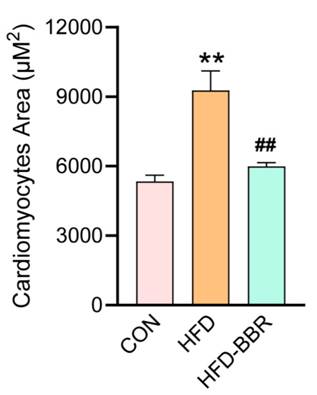
Cardiac remodeling, in the form of abnormal heart cell structure and increased scar tissue, promotes arrhythmias. For this reason, the researchers analyzed berberine’s effects on cardiac remodeling, specifically focusing on heart cells and cardiac tissue scarring. The researchers found that heart cells were enlarged, and the abundance of scar tissue in the heart increased significantly in obese rats. Importantly, berberine treatment significantly attenuated the heart cell enlargement and scar tissue. These findings suggest that berberine attenuates obesity-associated cardiac remodeling.
Oxidative stress (where reactive molecules overwhelm antioxidant defenses) and inflammation are key contributors to cardiac remodeling, which can lead to the aforementioned arrhythmias. Thus, the researchers hypothesized that berberine counters cardiac remodeling through increasing antioxidant enzymes, which have effects against oxidative stress, and reducing inflammation.
To assess whether berberine counters oxidative stress, the researchers measured antioxidant enzymes in cardiac tissue. Obese rats exhibited reduced levels of antioxidant enzymes compared to non-obese rats, and berberine partially restored them. These data support that berberine partially restores antioxidant enzymes in the cardiac tissue of obese rats to counter oxidative stress.
To then evaluate whether berberine has anti-inflammatory effects, the researchers measured the abundance of inflammatory molecules in circulation. They found that, as expected, non-treated obese rats showed significantly elevated inflammatory molecules compared to non-obese rats. However, berberine significantly lowered the inflammatory molecules in obese rats. Together with the data on antioxidants, this finding suggests that berberine attenuates obesity-associated cardiac oxidative stress and inflammation, which could help explain how it counters cardiac remodeling.
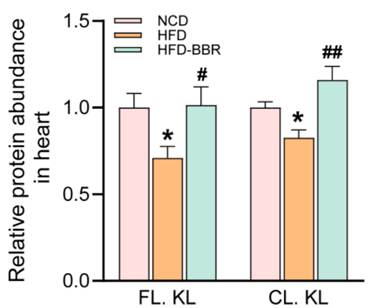
Because increased Klotho levels in cardiac tissue have been tied to reducing the occurrence of arrhythmias, the researchers sought to determine whether berberine increased cardiac tissue Klotho. To do so, they analyzed Klotho protein levels in cardiac tissue and found that in obese rats, Klotho was significantly lower compared to non-obese rats. However, berberine treatment significantly restored Klotho levels in obese rats. These data support that berberine’s antioxidant and anti-inflammatory effects, which may, in part, attenuate cardiac remodeling, require Klotho to do so.
To further dissect whether berberine’s antioxidant and anti-inflammatory effects require increased Klotho levels, the researchers tested rat heart cells. They injured cells by exposing them to oxidized LDL (ox-LDL), a molecule that increases cardiovascular disease risk. After doing so, they found that the cell injury significantly reduced Klotho levels but that treating with berberine restored Klotho. They also found increased oxidative stress and inflammatory responses in the injured cells; however, berberine reduced these effects. Nonetheless, berberine’s effects were abolished when Klotho levels were lowered with genetic inhibition of Klotho. These results suggest that Klotho is required for the antioxidant and anti-inflammatory effects of berberine and that Klotho plays a critical role in mediating berberine’s cardioprotective actions.
Hedging Your Bet on Animal Model Data Supporting That Berberine Reduces Arrhythmia Susceptibility in Obesity
Since a large portion of adults in the US are obese, berberine supplementation could serve as a way to alleviate the associated cardiac remodeling, which predisposes to arrhythmias. In essence, reducing the risk of arrhythmias may serve to help lower the risk of sudden cardiac death or a heart attack.
Human trials show that berberine improves cardiovascular risk factors like high blood sugar, high blood fats (lipids), and some inflammatory markers; however, as of yet, there is no direct evidence that it alleviates the risk of arrhythmias in obese individuals. All the same, for anyone wanting to hedge their bet on the data from this study using obese rats, berberine supplements are available for purchase online and cost about $20 to $45 for a month’s supply.
Model: Eight-week-old Sprague-Dawley rats fed a high-fat diet for eight weeks
Dosage: 100 mg/kg/day of berberine via oral gavage
 Comments