


New Study Explains How NR Supplement Improves Memory
The NAD+ (nicotinamide adenine dinucleotide) precursor NR (nicotinamide riboside) improves the memory of Alzheimer’s mice by counteracting the accumulation of age-promoting senescent cells.
Highlights
- NR restores NAD+ levels within the brain’s blood vessels and prevents the death of blood vessel cells in Alzheimer’s mice.
- Supplementing with NR reduces blood vessel senescence in the brain, which is thought to drive brain aging by supporting tissue degradation and inflammation.
- NR improves learning and memory while increasing blood flow within the brain.
The decline of our brain’s circulatory system plays a crucial role in cognitive decline and dementia. A new study, published in Alzheimer’s Dementia, helps to explain how disruptions in the brain’s vascular system may lead to memory loss. In the study, researchers from Nanchang University in China also show that NR, an NAD+ boosting compound, counteracts the cascade of cellular events leading to memory loss.
NR Restores NAD+ Levels and Prevents Cell Death
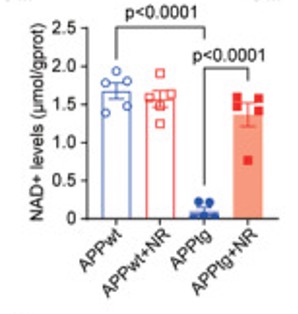
To explore the effects of boosting NAD+, the Nanchang University researchers placed NR into the drinking water of mice that were engineered to model Alzheimer’s disease (AD). In the brain vasculature of these AD mice, the researchers found low NAD+ levels. The AD mice also had fewer endothelial cells, which are the cells that line the inner walls of blood vessels. Three months of NR supplementation led to a restoration in NAD+ levels and endothelial cells.
NR Reduces Cellular Senescence
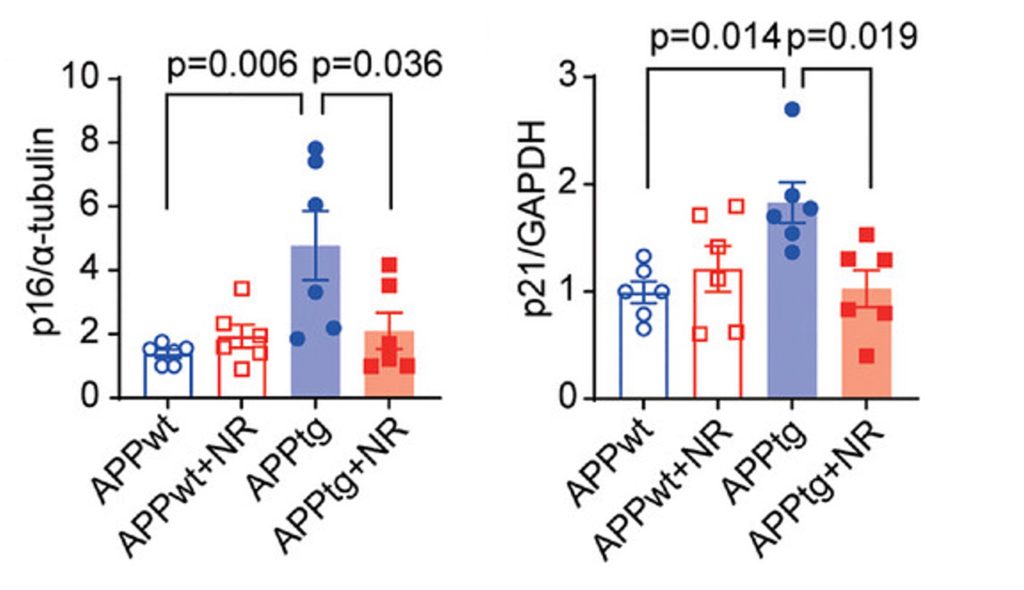
The researchers next examined a phenomenon known as cellular senescence. When our cells encounter enough stress, such as from DNA damage or inflammation, they become senescent cells. The accumulation of senescent cells is associated with many age-related diseases, including cardiovascular disease and neurodegenerative disorders. What’s more, removing these senescent cells is associated with alleviating said age-related diseases.
Senescent endothelial cells promote inflammation and tissue breakdown. This includes the breakdown of the blood-brain barrier (BBB), which protects the brain from pathogens and toxins in the bloodstream. The researchers found increased signs of inflammation and cellular senescence in the brain vasculature of AD mice, which was reversed by NR treatment. Moreover, NR reinforced the protective BBB, as shown by less leakiness.
NR Improves Memory and Brain Blood Flow
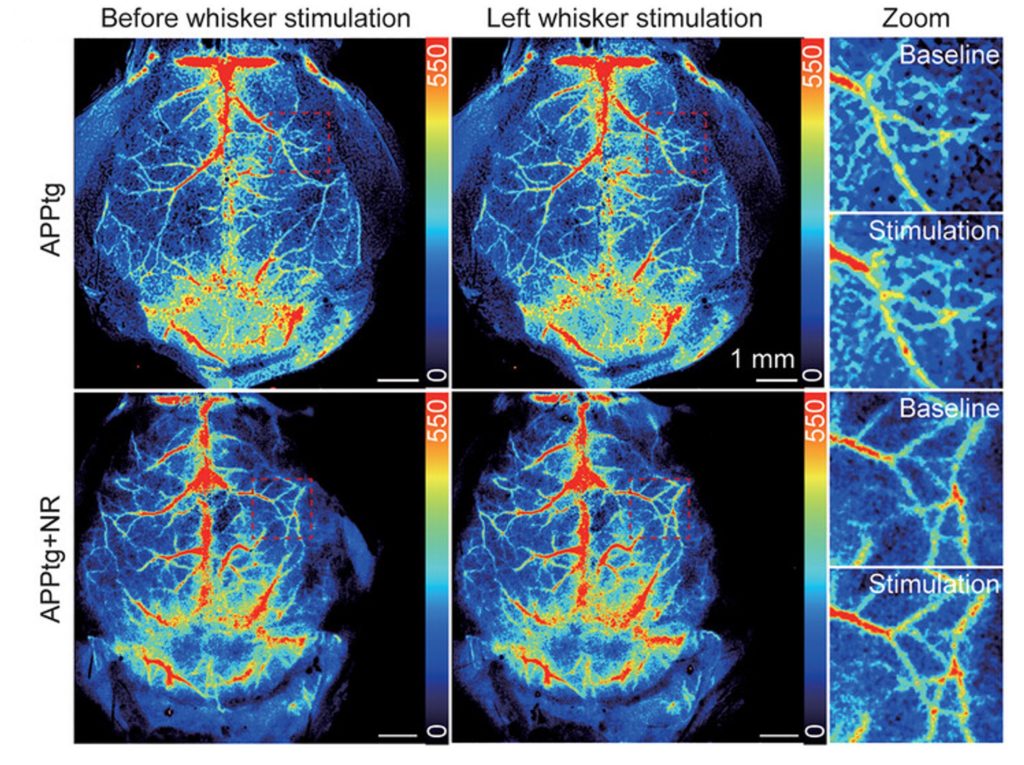
To determine whether NR improves cognition, the researchers subjected the AD mice to several learning and memory tests. They found that NR improves the learning and memory of AD mice, a finding also observed in naturally aged mice. The researchers also found that NR improves blood flow within the brain. When they stimulated the mice’s whiskers, blood flow was elevated, suggesting an improvement in the coupling between neurons and blood vessels.
How NR May Improve Memory in Aged Brains
Through further experimentation, the researchers found a possible mechanism for how NR improves memory and brain circulation. They showed that NAD+ depletion prompts a channel to open within mitochondria. Mitochondria, which power cells, have their own DNA, which leaks out through this channel. When mitochondrial DNA leaks out of mitochondria and into the cytoplasm, a cellular pathway (cGAS/STING pathway) is activated that triggers cellular senescence.
On their own, senescent endothelial cells promote inflammation and the breakdown of surrounding tissues, such as the BBB. They do so by secreting molecules that signal the immune system to mount an immune response towards the area they reside (within blood vessels). One of these molecules, IL-6 (interleukin-6), was shown to be secreted by senescent endothelial cells. In turn, the researchers found that IL-6 turned on the pro-inflammatory form of microglia, the brain’s immune cells.
NR was shown to reduce the leakage of DNA from mitochondria, preventing the pathway needed to trigger cellular senescence. NR also reduced the activation of pro-inflammatory microglia by decreasing the secretion of IL-6. Moreover, NR reduced an enzyme called CD38, which normally reduces NAD+ levels. Overall, the study suggests that NR improves memory by blocking the degeneration of the brain’s circulatory system, which may be induced by mitochondrial dysfunction, senescent endothelial cells, and neuroinflammation.
Taking an NAD+ Supplement to Support Healthy Brain Aging
Animal studies have shown that boosting NAD+ can counteract dementia. Multiple NAD+ precursors, including NR, NMN (nicotinamide mononucleotide), and nicotinamide, which boost NAD+, have been shown to improve learning and memory in AD mouse models. However, human studies testing the effects of boosting NAD+ on cognition have been mixed.
The neurodegenerative process is complex and encompasses multiple drivers of aging, including mitochondrial dysfunction and inflammation. It is therefore possible that a multi-component intervention is necessary to alleviate neurodegeneration and cognitive impairments. Supporting this notion, a clinical trial showed that a combination of NR and other compounds, including antioxidants, slowed neurodegeneration and cognitive decline in AD patients.
However, before taking a supplement to support healthy brain aging, it is important to first adhere to the fundamentals of brain health. These fundamentals include adequate sleep, a diet that favors nutrient-dense whole foods over convenient processed foods, avoiding alcohol, and exercising regularly. Once the fundamentals have been at least partially met, compounds like NR can be taken to supplement the behaviors necessary to maintain a healthy brain.
Model: APP/PS1 Alzheimer’s model mice
Dosage: 12 mM NR administered in drinking water, with the consumed dose not specified
 Comments