


New Study Finds Astronauts May Be Ideal Aging Models for Therapeutic Testing
Spaceflight exposes astronauts to age-inducing environmental stressors, and a new study finds that, on average, it accelerates biological age—an assessment reflecting how well cells are aging.
Highlights
- Using 32 different assessments, scientists found that biological age acceleration increased by an average of 1.91 years after seven days of spaceflight.
- Upon returning to Earth, biological age decreased in all crew members, closer to pre-flight values.
- The findings suggest that astronauts in space may serve as valuable aging models on which to test aging interventions, such as nutraceuticals like NMN.
During their time in space, astronauts experience exposure to several environmental stressors, such as ionizing radiation, microgravity, and social isolation, all of which elicit hallmark features of aging on Earth. For example, ionizing radiation induces DNA damage and increases susceptibility to cardiovascular disease and cancer, similar to aging. Similarly, microgravity accelerates muscle atrophy and bone demineralization, mimicking the degeneration of physical function often observed in aging populations. However, despite the remarkable similarities between the effects of environmental exposures during spaceflight and aging on Earth, whether spaceflight influences biological age (an assessment reflecting how well cells and tissues are aging) has remained unclear in humans.
Now, as published in Aging Cell, Furman and colleagues from the Buck Institute for Research on Aging report evidence for the first time supporting that spaceflight indeed accelerates biological aging. In that regard, biological age assessments based on DNA molecular tagging patterns (epigenetic age measurements) indicated that after seven days of spaceflight, astronauts exhibited, on average, 1.91 years of accelerated biological age. After returning to Earth, biological age measurements decreased in all space crew members, with older crew members returning to their pre-flight estimates and younger crew members having significantly lower estimates than before their flight. These findings suggest that spaceflight environmental exposures induce rapid, yet reversible, changes to biological age, positioning astronauts in space as models for studying human aging and testing aging interventions, such as NAD+ precursors like NMN and NR.
The Axiom-2 Space Mission
The Axiom-2 mission was the company Axiom Space’s second spaceflight to the International Space Station in May 2023, carrying four astronauts. Astronauts on the mission engaged in 10 days of research and technology demonstrations. Accordingly, the mission, launched on a SpaceX Falcon 9 rocket, was done in preparation for Axiom’s planned commercial space station by testing space technology devices.
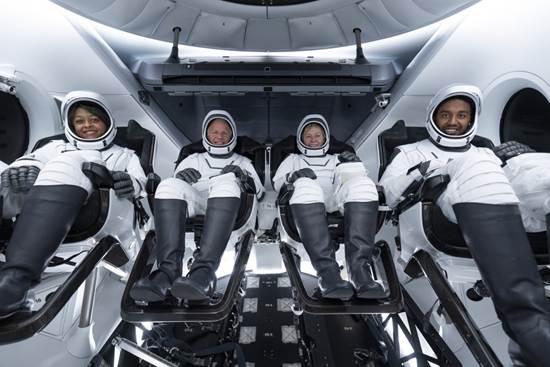
Scientists from the Buck Institute Applied Biological Age Assessments to Axiom-2 Crew Members
To assess whether spaceflight triggers an acceleration in biological age, Furman and colleagues employed 32 epigenetic age-based clocks to assess biological age. These clocks provide estimates of biological age based on troves of DNA molecular tagging pattern data (epigenetic data) that help estimate whether subjects have a biological age greater or less than their age in years (referred to as chronological age). Thus, subjects with a biological age estimate greater than their chronological age would exhibit a predicted age acceleration, while those with estimated biological ages less than their chronological age would have a predicted slower pace of aging in comparison to their chronological age.
The research team used these epigenetics-based assessments of biological age because research suggests that they may gauge how many healthy years those tested have left. Thus, due to their potential to gauge aging by assessing the number of healthy years left, these clocks may be useful for detecting accelerated biological age during spaceflight, which would coincide with fewer healthy years remaining. Hence, Foreman and colleagues utilized 32 epigenetics-based biological aging clocks to find whether spaceflight accelerates aging.
To this end, the scientists administered the biological age assessments from blood samples provided by four Axiom-2 crew members. These samples were taken at 45 days before liftoff, during spaceflight, and after the return to Earth.
Interestingly, on average, the assessments estimated that biological age acceleration increased 1.91 years by flight day seven, compared to pre-flight day 45. Furthermore, upon returning to Earth, biological age decreased in all crew members, with two older astronauts (in their 60s) returning close to pre-flight estimates and two younger astronauts (in their 30s) showing biological age estimates significantly lower than pre-flight measurements. These results suggest that older astronauts may exhibit more pronounced biological age fluctuations during spaceflight, a notion supported by the idea that aging impinges on age-related physiological factors like resilience to environmental stressors.
“The modest but rapid fluctuations in biological age observed during and after spaceflight documented here highlight the potential of space missions as a platform to test interventions that may slow aging and functional decline,” say Furman and colleagues in their publication. “Thus, spaceflight countermeasures could serve as candidate antiaging therapies on Earth, while geroprotective interventions could be repurposed to support astronaut health.”
Testing Aging Intervention Therapeutics in Future Space Missions
Furman and colleagues’ study has some limitations. For starters, biological age estimates were done on only four astronauts, limiting the statistical power and potential real meaning of the findings. Another limitation was that the study did not include an Earth-bound group without exposure to environmental elements of space for comparison, an important aspect of determining whether the space environment truly influenced biological age estimates. Moreover, the astronauts ate freeze-dried food, had altered sleep schedules, and engaged in less physical activity, all factors that could have influenced biological age estimates, making it more difficult to tell whether space-related environmental factors accelerated biological age.
All the same, this study from the Buck Institute provides some of the first data supporting the notion that environmental factors experienced during spaceflight accelerate aging in humans. Future studies still need to confirm that accelerated biological aging is triggered by spaceflight by including an Earth-bound group assessed for comparison, perhaps eating a diet similar to the astronauts, with an altered sleep schedule and less physical activity.
If future studies help confirm that the environment in space indeed accelerates biological aging, astronauts in spaceflight could become a testing platform for aging intervention therapeutics. In that sense, researchers could have them use nutraceuticals, such as the NAD+ precursors NMN and/or NR, or other therapeutics to find whether they slow the acceleration of biological age in space. This means that utilizing astronauts as test subjects could become a new, quick, and efficient way to assess the efficacy of aging intervention therapeutics for human use, an intriguing prospect.
 Comments