


New Study Reveals How a Next-Generation Supplement May Slow Multi-Organ Aging
Piceatannol, a plant-derived substance chemically related to resveratrol, improved motor coordination and memory while reducing systemic inflammation in a mouse model of aging.
Highlights
- Piceatannol improved motor coordination and the memory of places, locations, and layouts, suggesting multi-organ benefits against aging.
- In the kidney and heart, piceatannol reduced the burden of senescent cells (non-dividing cells that remain metabolically active and can release inflammatory molecules).
- The reduction of senescent cells with piceatannol coincided with lowered levels of inflammatory proteins associated with systemic inflammation.
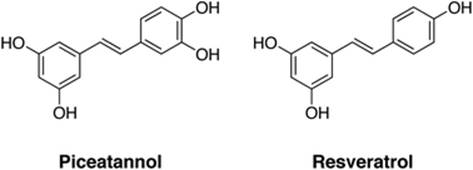
Piceatannol is a plant-derived compound found in grapes, passion fruits, and peanuts, which is chemically similar to resveratrol (a compound intensively investigated for potential pro-longevity effects). Besides having a slightly altered molecular structure, what differentiates piceatannol from resveratrol is that it has a markedly higher bioavailability, meaning that it remains stable for longer durations in circulation for absorption into cells. Piceatannol’s higher bioavailability could confer greater efficacy against aging than resveratrol at much lower doses. However, no study to date had tested piceatannol’s effects against aging in a living organism.
Now, as published in Cell Death Discovery, scientists from the University of Campania in Italy unveil evidence for piceatannol’s senomorphic effects (where it suppresses the actions of inflammatory molecules from senescent cells) in a male mouse model of aging. With its senomorphic effects, the compound lowered senescent cell numbers in the heart and kidney, likely, in part, by preventing the spread of senescence induced by inflammatory molecules from senescent cells. Moreover, piceatannol lowered systemic inflammation and improved motor coordination and memory related to places, locations, and layouts (spatial memory). These findings provide the first animal model evidence that piceatannol serves as a senomorphic agent that can deliver broad, multi-organ benefits against aging.
“Our findings position piceatannol as a mechanistically validated senotherapeutic candidate,” say the researchers in their publication.
Senomorphics Explained
Senomorphics are compounds that do not eliminate senescent cells but instead blunt their harmful effects. They do so by reducing the inflammatory secretions from senescent cells, known as the SASP. In practice, aging researchers use senomorphics to make senescent cells less damaging and keep normally functioning cells from becoming senescent (as occurs from the spread and actions of the SASP from senescent cells). Hence, in blunting the harmful effects of senescent cells, senomorphics differ from other anti-senescence compounds called senolytics, which clear senescent cells outright.
Regarding its senomorphic effects, piceatannol has been reported in cell-based research to act as a senomorphic at low concentrations. In this research, piceatannol reduced senescence without causing cell death; however, researchers have posited that at higher concentrations, it may shift toward killing senescent cells.
Comparing Resveratrol With Piceatannol
As mentioned, resveratrol and piceatannol are closely related plant compounds, but piceatannol has one extra hydroxyl group (an additional chemical group consisting of one oxygen atom bonded to a hydrogen atom). The added chemical group has led some researchers to propose that piceatannol has better antioxidant effects than resveratrol and a higher capacity to reduce the formation of fat cells, both effects having the potential to counteract aspects of aging. At the same time, resveratrol has been better established in human studies as having protective properties against age-related conditions like cardiovascular disease, cancer, liver diseases, diabetes, and Alzheimer’s disease.
Thus, in providing the first evidence of piceatannol’s multi-organ effects against aging in a living organism (in this case, a mouse model), the Italian researchers have begun taking the first steps toward applying piceatannol supplementation for humans. This is the case because demonstrating the safety and efficacy of a substance against age-related conditions in animals usually precedes its use as a supplement and its incorporation into human trial testing.
The Development of a Mouse Model of Aging
To assess piceatannol’s potential effects against aging, the researchers established a mouse model of aging. To do this, they exposed eight-week-old male mice (roughly equivalent to 17-year-old humans) to a substantial single dose of X-ray radiation. The researchers subsequently performed experimentation on their mouse model of accelerated aging until the mice reached approximately 40 weeks of age (roughly equivalent to 38-year-old humans). Although, by definition, the mice assessed at the end of experimentation were roughly 40 weeks old, their biological age (an age assessment based on cell and tissue function) was likely well beyond that of 40-week-old mice.
In contrast to the natural process of aging, where cells, tissues, and organs age at different rates, the radiation exposure caused a more uniform process of multi-organ aging, all the while avoiding the faltering function of any particular organ. As such, the researchers observed no significant functional changes in the hearts, livers, kidneys, lungs, or brains of the radiation-exposed mice. Nonetheless, they found significantly higher levels of protein markers of cellular senescence in the hearts and kidneys of these animals. These findings suggest that the mouse model of accelerated aging used had mostly preserved organ function but had significantly higher cellular senescence in the heart and kidney.
The researchers also proposed that this physiological state, with a higher abundance of senescent cells without overt organ dysfunction, recapitulates early aging patterns in humans during middle-aged years. Accordingly, available evidence points to a gradual process of aging where senescent cells accumulate in tissues and organs over time. Then, when senescent cell accumulation crosses a certain threshold, age-related organ dysfunction becomes more likely.
This may happen due to a high senescent cell burden, which overloads the immune system, rendering the immune system’s capacity to clear senescent cells less effective. The reduced capacity to clear senescent cells allows senescent cells to incrementally increase in abundance, driving systemic inflammation from the SASP. The resulting scenario can encompass single- or multi-organ dysfunction.
“Importantly, our model reflects a stage comparable to healthy middle-aged humans who retain functional organ reserve but already show increased senescent cell burden, senescence-associated tissue remodeling, and low-grade inflammation,” say the Italian scientists in their publication.
Piceatannol Reduces Senescent Cells, Lowers Systemic Inflammation, and Improves Motor Coordination and Memory
Once the researchers established their mouse model of aging, they assessed how piceatannol influenced multiple aspects of aging in the model. For starters, they examined the effects of radiation-induced accelerated aging and piceatannol on fur quality. They also compared piceatannol’s effects in mice modeling aging with those of ABT-263 (a senolytic agent that reduces senescence markers in aged mice). They compared piceatannol to ABT-263 because, as a senolytic, ABT-263 was expected to confer anti-senescence and pro-longevity effects.
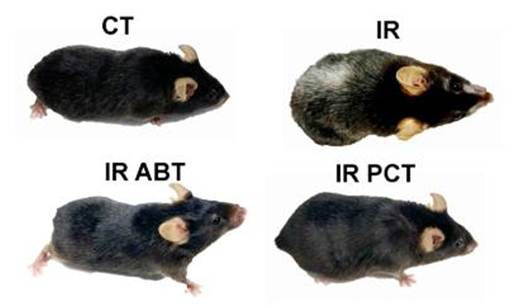
In that respect, they found that radiation induced a higher abundance of gray hairs, along with a disheveled appearance to the fur. However, piceatannol or ABT-263 treatment substantially alleviated this effect, lowering the prevalence of gray hairs. This finding suggests that piceatannol can significantly reduce the occurrence of hair graying.
The researchers also evaluated piceatannol’s effects on other facets of physiological function, such as motor coordination, spatial memory, and strength in radiation-exposed mice. They found that piceatannol significantly enhanced motor coordination and spatial memory and that it trended toward improving strength (albeit a non-significant improvement). These findings suggest that piceatannol significantly improves some facets of physiological function.
To then assess whether these improvements in physiological function may, in part, stem from piceatannol’s purported senomorphic effects, the researchers measured senescent cell abundance in heart and kidney tissues (the two organs with significantly increased senescent cells in the aging model). They found that while the mouse model of aging showed significantly higher levels of protein markers for senescence in these organs, piceatannol or ABT-263 markedly reduced their levels. These results suggest that, through its possible senomorphic effects, piceatannol prevents the initiation and spread of senescence in the cells of heart and kidney tissues.
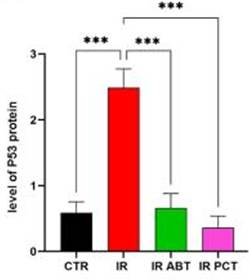
To assess whether piceatannol’s effects against cellular senescence help reduce systemic inflammation, known to drive aging, the scientists measured levels of inflammatory proteins. They found that radiation-exposed mice exhibited significantly increased levels of inflammatory proteins, but that piceatannol or ABT-263 treatment attenuated this effect. These data support that piceatannol lowers systemic inflammation to promote multi-organ benefits against aging.
This Study’s Data Provide a Strong Rationale for Advancing Piceatannol to Human Trial Testing
The study provides the first evidence that piceatannol confers broad, multi-organ benefits against aging. Along these lines, in their publication, the researchers state that this study’s data provide a strong rationale for advancing piceatannol to testing in human trials.
Interestingly, a search of human trials reveals two human trials involving piceatannol-containing therapeutics. However, one of them was terminated, and the other, which started in 2023, has an unknown status. Nonetheless, one completed human trial reported that a very low dose of 10 mg of daily piceatannol was safe and improved skin hydration and wrinkles in healthy women. Future human trials should thus test for the long-term safety of piceatannol, possibly at higher doses, and assess whether it confers effects against aging, such as suppressing systemic inflammation.
As for dosing, the dose applied to mice in this study was equivalent to approximately 1.2 g/kg of body weight for humans. Also, the average adult in the US weighs about 84 kg (about 185 pounds). Hence, this would mean that an average adult could take about 100 mg per day, assuming the effects attained in mice translate to humans.
For anyone wanting to supplement with piceatannol before more human trial data becomes available, the substance is mostly only available as a research-only chemical. This is likely because it has not received a designation of being generally regarded as safe (GRAS) from the US FDA. Moreover, there is no evidence that any groups have applied for a GRAS designation from the FDA for piceatannol.
Thus, with some evidence suggesting piceatannol’s short-term safety and efficacy against aspects of skin aging in humans, researchers should move on to testing for longer-term safety, so that they can file an FDA GRAS notice for piceatannol. This could make piceatannol, a substance that the Italian researchers say represents a “next-generation” supplement, available to consumers.
Model: Eight-week-old C57BL/6J inbred male mice
Dosage: 15 mg/kg of piceatannol, given by oral gavage daily during weeks two through four following irradiation and at weeks six through eight following irradiation
 Comments