


NMN + Apigenin Stack Promotes Multi-Tissue Regeneration: New Research
Combining NMN (nicotinamide mononucleotide) with the CD38 inhibitor apigenin produces an additive effect that regenerates tissues and enhances physical capacity in aged mice.
Highlights
- NMN + apigenin (N+A) additively prevent tissue degeneration and enhance physical capacity in aged mice.
- The combo additively elevates NAD+ (nicotinamide adenine dinucleotide) and reduces senescence in cells that generate cartilage, bone, and muscle tissue.
- The effects of N+A are mediated by a molecule secreted by beneficial gut bacteria.
As we age, our body’s repair system gradually declines. Stem cells become less able to renew themselves and replace old cells, leading to weaker tissue regeneration. A key reason for this is that some stem cells accumulate damage and enter a senescent state, where they stop dividing and contribute less to regeneration. Together, these changes help explain why aging tissues heal more slowly and function less well.
To explore how to counter this decline, researchers at Soochow University in China turned to NAD+, a molecule that helps cells maintain health. Previous studies suggest that restoring NAD+ with NMN or apigenin may support cellular function during aging. Now, in a study published in Aging Cell, the team found that NMN plus apigenin (N+A) improved tissue regeneration and physical capacity in aged mice more than either compound alone.
NMN + Apigenin Prevents Tissue Degeneration and Enhances Physical Capacity
To study the effects of N+A on aging, the researchers orally administered N+A to aged mice. The aged (20-month-old) mice were roughly equivalent in age to 60-year-old humans. The researchers found that N+A reduced cartilage degeneration, preserved bone density, and increased muscle size. It also reduced fibrosis, a form of tissue scarring that contributes to muscle weakness and impairs regeneration.
The researchers also studied the effects of NMN and apigenin on their own. While either compound alone was shown to regenerate cartilage, bone, and muscle, the effects of both compounds combined were always greater on tissue regeneration.
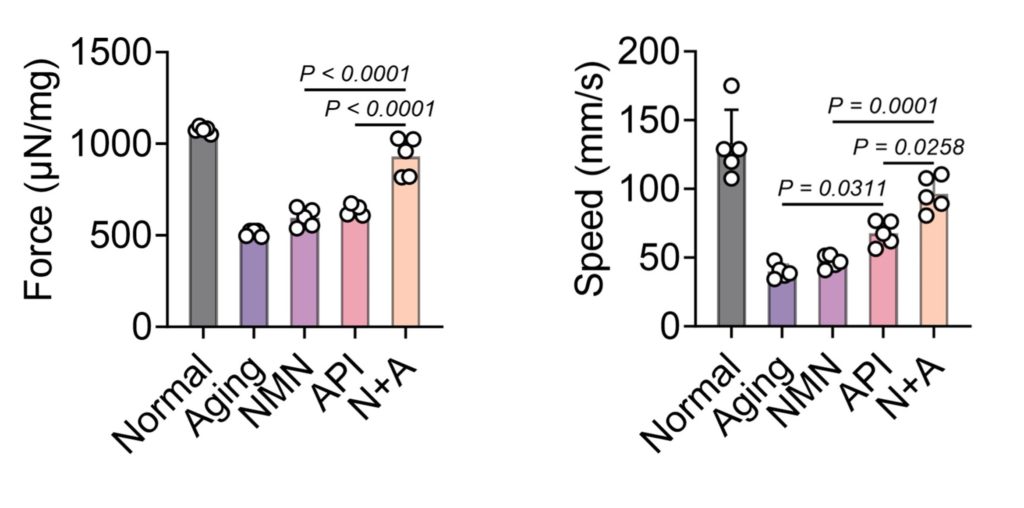
Furthermore, the researchers tested whether N+A’s effects on tissue regeneration translate to better physical function. They found that treated aged mice had strength levels similar to those of young mice and moved with greater speed. These findings suggest that N+A can restore physical performance by mitigating cartilage, bone, and muscle degeneration.
NMN + Apigenin Elevates NAD+ and Reduces Cellular Senescence
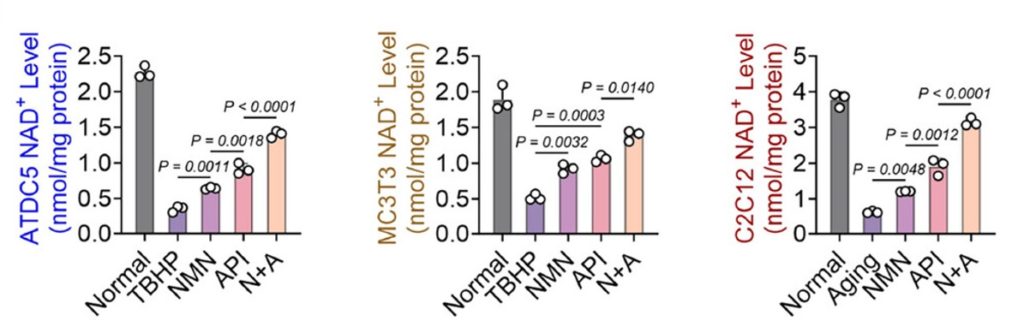
Stem cells can develop into many different cell types through a process called differentiation. Once they commit to a cell type, they become precursor cells. The Soochow University researchers examined precursor cells that give rise to cartilage, bone, and muscle tissue. To simulate aging, they exposed the cells to a compound that causes cellular damage, which led to a sharp drop in NAD+ levels. However, treating the cells with NMN or apigenin partially restored NAD+ levels, and the combination produced the largest increase.
The damaged precursor cells also showed an increase in the CD38 enzyme. Research suggests that CD38 increases with age and may be a major reason for NAD+ decline. High CD38 is linked to senescent cells, which secrete molecules that damage tissue. These secreted molecules, known as the SASP (senescence-associated secretory phenotype), include signals that hinder stem cell and precursor cell function. The researchers found that NMN and apigenin reduced cellular senescence, with the strongest effect seen when the two were combined.
Crucially, the damaged precursor cells produced less ATP (adenosine triphosphate), the molecule our cells use for energy. ATP, produced by mitochondria, is critical for stem cell and precursor cell differentiation. The researchers found that NMN or apigenin helped to restore ATP production by improving mitochondrial health, and combining them led to a greater rise in ATP and mitochondrial rejuvenation.
These findings suggest that NMN and apigenin boost NAD+ by increasing its synthesis and blocking its breakdown. N+A supports healthier mitochondria, leading to the production of more ATP for stem cell and precursor cell function. At the same time, N+A reduces cellular senescence, which allows stem cells and precursor cells to flourish. These cells can then regenerate tissues.
NMN + Apigenin Benefits Mediated by Gut Microbiome
The gut microbiome consists of many different strains of bacteria that can be either harmful or beneficial to the entire body. Research shows that, with age, the composition of the gut microbiome shifts more towards harmful bacteria than beneficial bacteria. With this in mind, the Soochow University researchers examined the gut microbiome of aged mice treated with N+A. They found that N+A increased strains of bacteria thought to be beneficial and decreased bacteria that can become harmful in large numbers.
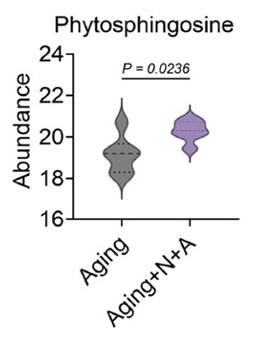
Gut bacteria secrete metabolites that enter the bloodstream and affect our physiology. For this reason, the researchers sought to determine if one of these metabolites could account for the rejuvenating effects of N+A. They identified a metabolite called PHS (phytosphingosine). Remarkably, administering PHS to aged mice led to similar anti-aging effects as N+A. Namely, PHS prevented cartilage, bone, and muscle degeneration while reducing cellular senescence. Moreover, PHS improved the strength and speed of aged mice.
Combining NMN with Apigenin to Additively Elevate NAD+
The findings of the Soochow University researchers suggest that NMN or apigenin can prevent age-related cartilage, bone, and muscle degeneration, leading to improved physical capacity. Moreover, combining NMN and apigenin appears to increase the effects of either anti-aging compound alone.
However, whether this occurs in humans will require further study. While preliminary results suggest that boosting NAD+ can improve the physical capacity of older adults, larger studies are needed for confirmation. Also, the effects of boosting NAD+ on tissue regeneration in humans have not yet been studied. Still, it remains possible that combining NMN with apigenin can prevent or even reverse tissue degeneration and physical decline in humans.
 Comments