


NMN Counters Brain and Muscle Aging by Targeting Blood Vessels, New Study Shows
NMN (nicotinamide mononucleotide) improves the survival, memory, and endurance of mice with low blood vessel NAD+ (nicotinamide adenine dinucleotide) levels.
Highlights
- Humans and mice share the same age-dependent blood vessel alterations (elevated asparagine endopeptidase and C/EBPβ proteins) in brain and muscle tissue.
- These alterations shorten the lifespan of mice while lowering blood vessel NAD+ levels and worsening memory and endurance.
- NMN counters the decrements in memory, endurance, and lifespan caused by these blood vessel alterations.
Blood vessels traverse our entire body, providing a conduit for delivering nutrients and oxygen to our cells. It follows that aged, or altered, blood vessels can potentially wreak havoc on other organs in the body.
In a new study published in Science Advances, researchers in China reveal that specific blood vessel alterations disrupt brain and muscle function in mice. Notably, the alterations were shown to reduce NAD+ levels and shorten lifespan. However, correcting this disruption or supplementing mice with NMN restored NAD+ levels, improved brain and muscle function, and increased survival. The findings suggest that maintaining blood vessel health could potentially promote longevity, as well as brain and muscle health.
Blood Vessel Lining Altered Similarly in Brain and Muscle with Age
The inner walls of our blood vessels are lined with a single layer of cells called endothelial cells. Our endothelial cells are in constant contact with our blood and regulate the passage of oxygen and nutrients into our cells. However, with age, our endothelial cells change, and whether these changes occur similarly across all tissues remains incompletely understood.
A notable example of an age-related change to endothelial cells involves a protein called C/EBPβ. C/EBPβ, a transcription factor, binds to DNA and modulates the activation of genes. Studies have shown that C/EBPβ increases with age and turns on pro-inflammatory genes in the brain, contributing to neurodegenerative disorders.
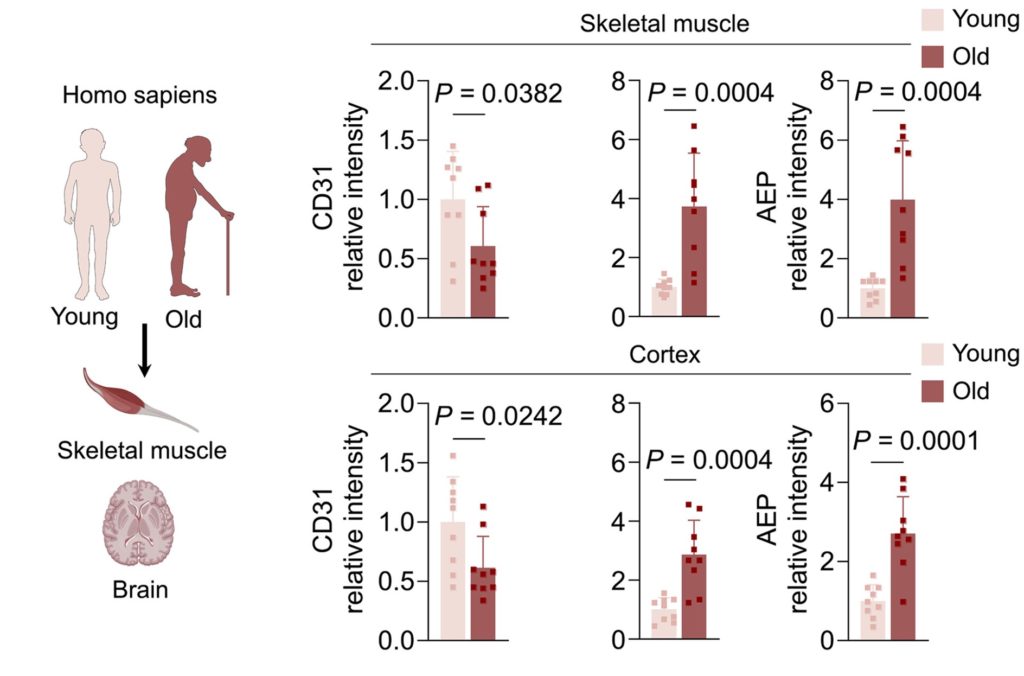
To examine the effects of aging on endothelial cells, the researchers in China examined muscle and brain tissue donated from young and older adults. They used fluorescent dyes to assess the endothelial cells within each tissue. Since the enzyme AEP (asparagine endopeptidase) becomes activated by C/EBPβ, the researchers measured the abundance of both C/EBPβ and AEP.
In both muscle and brain tissue, they found that older adults had fewer endothelial cells. What’s more, the older adults exhibited higher levels of C/EBPβ and AEP, suggesting these changes may contribute to blood vessel aging. Similar results were observed in young versus old mice. These findings show that age-related changes to endothelial cells, such as the increase in C/EBPβ and AEP, occur in brain and muscle tissue.
Blood Vessel Alterations Shorten Lifespan, Worsen Memory and Endurance, and Promote Cellular Senescence
To more closely examine the role of C/EBPβ and AEP in endothelial cells, the researchers engineered mice that have the AEP gene constantly activated, but only within endothelial cells. These AEP mice were designed to mimic the elevation in AEP observed in aged endothelial cells.
The researchers found that, compared to normal mice, the AEP mice had shorter lifespans. The AEP mice were also frailer, meaning they were more vulnerable to disability, disease, and death. Furthermore, the AEP mice exhibited worse memory and endurance than normal mice.
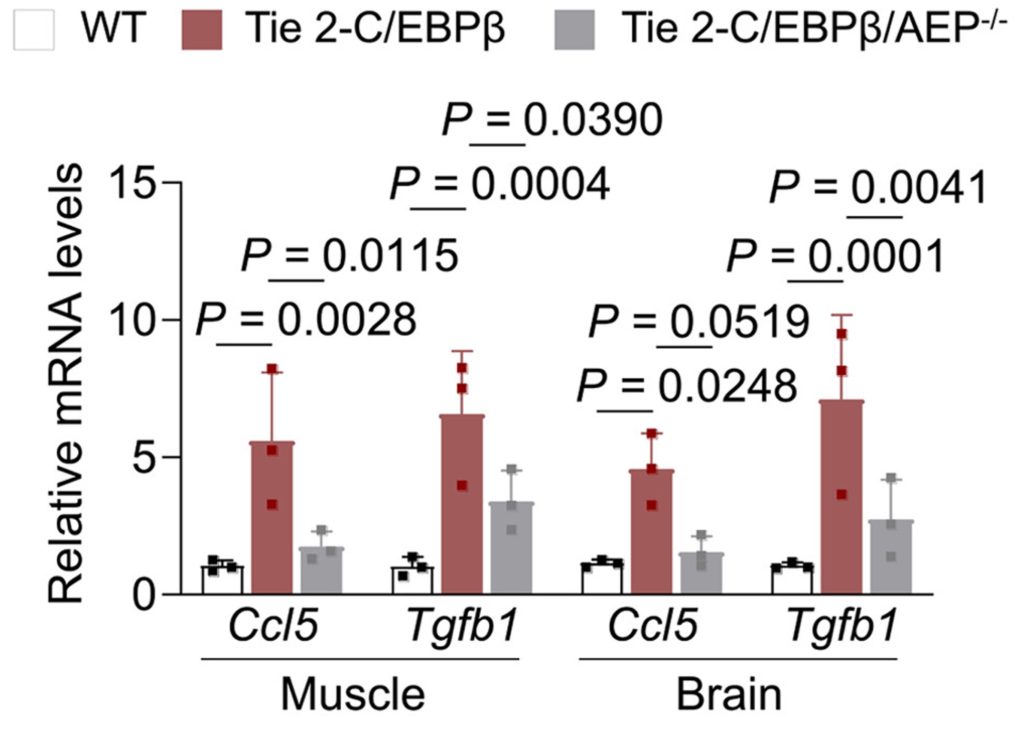
Additionally, the AEP mice had higher levels of genes related to senescent cells. Senescent cells are considered an underlying driver of aging because they secrete molecules known to support chronic inflammation and tissue damage, called SASP factors. The researchers found that AEP mice had higher levels of SASP factor genes. However, genetically deleting AEP from the AEP mice prevented the increase in SASP factor genes.
NMN Counters the Pro-Aging Effects of Altered Blood Vessels
To determine how endothelial cell C/EBPβ and AEP could be shortening the lifespan of mice while promoting frailty and worsening memory and endurance, the researchers experimented further. They found that AEP directly cleaves NAMPT (nicotinamide phosphoribosyltransferase), a crucial enzyme that synthesizes NAD+. Accordingly, the AEP mice showed a reduction in muscle and brain NAD+ levels.
The researchers next sought to explore the effect of restoring NAD+ with either NMN or CP#11A, a compound developed by the researchers to block the AEP enzyme. Both NMN and CP#11A were shown to replenish muscle and brain NAD+ levels in AEP mice, with CP#11A having a stronger effect. NMN and CP#11A also reduced senescent cell genes and improved blood vessel function in both the brain and muscle.
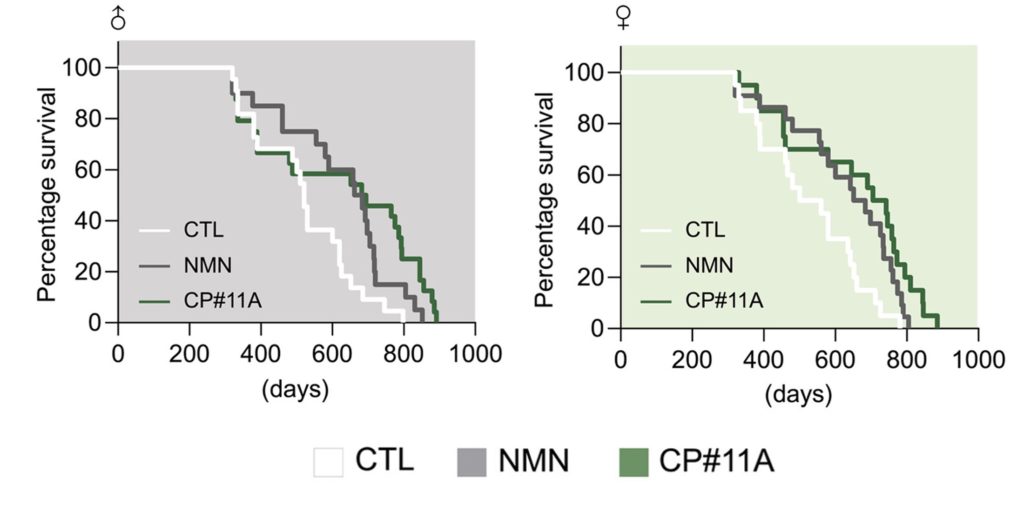
Furthermore, the researchers found that NMN and CP#11A prolonged the lifespan of AEP mice, alleviated frailty, and improved memory and endurance. Together, these findings suggest that NMN can counter the pro-aging effects of overactive C/EBPβ and AEP within mouse endothelial cells.
Taking NMN to Maintain Blood Vessel Health
Previous studies have shown that NMN improves vascular, muscle, and brain health in animals that model human aging. These past studies suggest that restoring NAD+ may counteract several age-related conditions, including diminished physical capacity and cognitive impairment. However, the age-related processes leading to low NAD+ levels in various tissues has not been fully elucidated.
This study reveals that, in older adults, C/EBPβ becomes significantly elevated within the endothelial cells of brain and muscle tissue. According to experiments in mice, C/EBPβ activates AEP, which degrades NAMPT, leading to a reduction in endothelial NAD+. In turn, the reduction in blood vessel NAD+ appears to contribute to diminished physical capacity, cognitive impairment, and a shorter lifespan.
Mitigating Chronic Inflammation
Moreover, elevations in C/EBPβ have also been shown to increase inflammation, which could also account for the shortened lifespan, diminished physical capacity, and cognitive impairment. One of the root causes of cardiovascular, brain, and muscle aging is thought to be chronic inflammation. It follows that reducing inflammation, and other root causes of aging, within blood vessels may delay the aging of other organs, such as the brain and muscle.
Interestingly, C/EBPβ-induced inflammation has been shown to be mediated by a high-fat diet in mice. This points to studies showing that certain foods, like saturated fat, promote chronic inflammation. While further studies are needed for confirmation, it’s possible that consuming fewer pro-inflammatory foods and getting regular exercise (which also counters chronic inflammation) may prevent blood vessel NAD+ depletion by reducing inflammation.
Model: 10-month-old mice with C/EBPβ turned on specifically in endothelial cells (Tie 2-C/EBPβ Tg/Tg mice)
Dosage: 500 mg/kg/day of NMN in drinking water
 Comments