


NMN-Producing Probiotics May Outperform NMN Itself in Combating Age-Related Decline, Suggest New Study
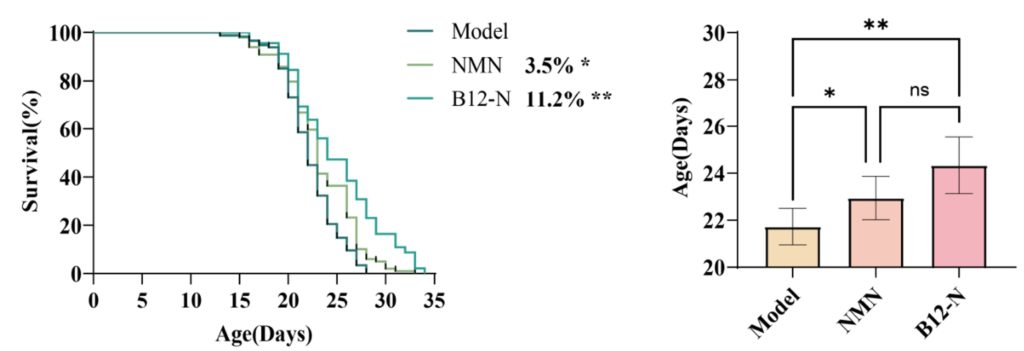
While NMN (nicotinamide mononucleotide) increased lifespan by 3.5%, NMN-producing gut bacteria from humans increased lifespan by 11.2% and enhanced sensory perception more than NMN in nematodes that model dementia.
Highlights
- By isolating probiotics from the fecal samples of long-lived individuals, researchers found that the B12-N strain of Ligilactobacillus salivarius produces far more NMN than the other probiotics tested.
- The B12-N strain of Ligilactobacillus salivarius counters dementia-associated deficits more than NMN itself in nematodes that model dementia.
- NMN alone and the B12-N strain of Ligilactobacillus salivarius improve the longevity and health of dementia model nematodes.
Neurodegenerative disorders like Alzheimer’s disease (AD), the most common form of dementia, can dramatically shorten our lives. In this respect, preventing or treating AD could prolong the lifespan of millions of individuals. However, there is still no cure for AD, and treatments that slow disease progression carry risks, including brain swelling and potentially fatal bleeding.
In a new study published in Foods, researchers from China showed that the NAD+ precursor NMN countered the decline associated with AD in a nematode (C. elegans) model. Moreover, they found that NMN-producing gut bacteria outperformed NMN itself in countering aspects of decline. These findings suggest that NMN-producing gut bacteria may provide additional benefits beyond those of NMN alone.
Identifying NMN-Producing Probiotics from Long-Lived Individuals
To identify strains of NMN-producing gut bacteria, the China-based researchers isolated bacteria from the fecal samples of long-lived individuals. They screened over 600 strains of bacteria and found that 116 synthesize NMN. To compare NMN output, 20 probiotics (beneficial bacteria) were chosen from the 116 strains. They found that a strain of bacterial species Ligilactobacillus (Lgb.) salivarius called B12-N clearly produced the highest level of NMN.
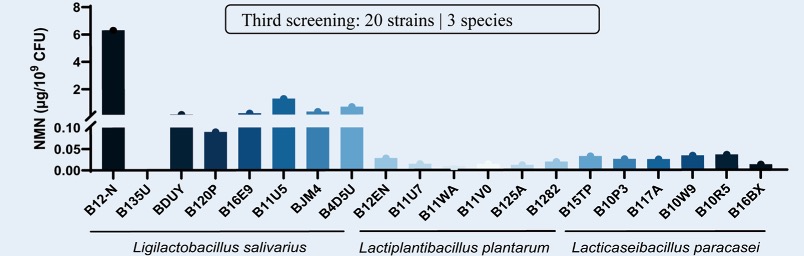
NMN-Producing Probiotic Counters AD-Associated Sensory Deficits More Than NMN Itself.
To compare the anti-aging effects of NMN and the NMN-producing probiotic, the researchers fed nematodes either NMN or the B12-N strain of Lgb. salivarius. Having measured the NMN output of the bacteria, they used this amount to match the dose given to the NMN-only group.
To model AD, the researchers used nematodes genetically modified to produce human amyloid-beta (Aβ) in neurons. This peptide—a short chain of amino acids—accumulates in the brains of people with AD and disrupts communication between neurons.
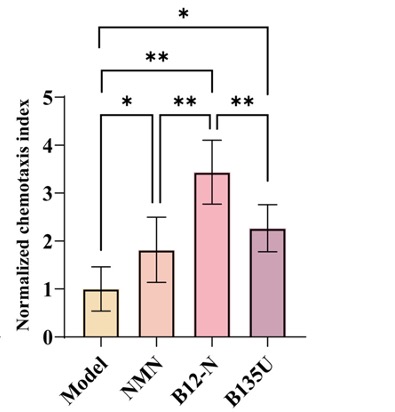
To assess sensory function, the researchers tested the nematodes’ ability to detect and move toward a chemical attractant. Compared with healthy nematodes, those modeling AD responded less strongly. Feeding them B12-N largely prevented this deficit. Moreover, NMN alone and B135U, the strain of Lgb. salivarius found not to produce NMN, also improved the response, but neither was as effective as B12-N.
These findings suggest that B12-N counters AD-associated deficits in nematodes more effectively than NMN alone. B135U’s benefits also suggest that Lgb. salivarius may have protective effects independent of NMN production.
NMN-Producing Probiotic and NMN Improve the Longevity and Health of AD Model Nematodes.
Considering the link between AD and longevity, whereby AD increases the risk of early mortality, the researchers measured the lifespan of nematodes treated with either NMN or B12-N. They found that NMN increased the average lifespan of the AD model nematodes by 3.5%, while B12-N increased their lifespan by 11.2%. However, the difference was not statistically significant, so NMN and B12-N may have similar effects on the lifespan of AD model nematodes.
Hallmarks of Aging and AD
Scientists have identified several biological deficits that may drive AD and age-related decline. One of these hallmarks, autophagy (the degradation and recycling of unwanted cellular material), may prevent the accumulation of Aβ. Indeed, the researchers found that NMN or B12-N reduced Aβ aggregates in the head region of AD model nematodes. Moreover, both treatments increased autophagy, suggesting a mechanism by which the aggregates were reduced.
Studies have shown that Aβ is associated with another hallmark of aging known as oxidative stress, which damages cells. Oxidative stress occurs when our antioxidant defenses cannot neutralize excessive levels of reactive oxygen species (ROS). The researchers found that NMN or B12-N decreased ROS levels in AD model nematodes. Based on these findings, NMN or B12-N may prolong the lifespan of AD model nematodes by targeting autophagy, oxidative stress, and Aβ, which is considered a hallmark of AD.
NMN and NMN-Producing Probiotics Counter Age-Related Decline
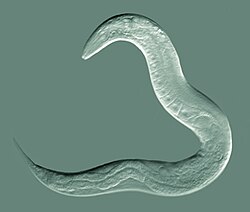
Nematodes eat bacteria, their primary food source, using a neuromuscular organ called the pharyngeal pump. When nematodes are not feeding, it contracts at a rate of about 1 pump per second. The pumping rate serves as a critical indicator of nematode health.
The researchers found that the pharyngeal pumping rate decreased with age in the AD model nematodes. However, the AD model nematodes treated with either NMN or B12-N maintained their pumping rate. The researchers also found an age-related decrease in motility that was mitigated by NMN or B12-N. These findings suggest that NMN or B12-N can improve the health of AD model nematodes by countering crucial aspects of age-related decline.
Combining NMN with Probiotics for Additive Beneficial Effects
The study suggests that NMN and NMN-producing probiotics can reduce AD-like pathology and improve health and longevity in nematodes. However, nematodes are cold-blooded microscopic worms that lack backbones (invertebrates) and differ substantially from humans. Thus, similar studies using AD models more closely related to humans, such as rodents, may further validate the relevance of these findings to human health and longevity.
Studies linked to these findings have already been published. For example, we have previously reported on a study showing that NMN alleviates AD-like pathology in AD model mice. Moreover, the NAD+ precursor NR (nicotinamide riboside) was associated with slowing the progression of AD in humans. However, NR was accompanied by other compounds (i.e., L-carnitine, N-acetylcysteine, and serine) as part of a cocktail.
Moreover, previous studies have shown that combining NMN with probiotics and other compounds counters AD-like pathology. For example, one of these studies showed that combining L. plantarum, NMN, and lactulose (a synthetic sugar) alleviated AD-like pathology in AD model mice. Thus, it would seem that NMN and probiotics provide additive effects against AD-like pathology. Still, testing NMN-producing probiotics in rodents will add another layer of confidence to the results found in nematodes.
 Comments