


Oxygenaging: A New Framework Linking Oxygen Delivery, Mitochondria, and Aging
A new aging framework describes how age-related breakdowns in oxygen use drive cellular damage and functional decline, pointing to the rebalancing of oxygen utilization as a target for longevity interventions.
Highlights
- National Institute on Aging scientists propose a framework called Oxygenaging to describe aging as a progressive malfunction of systemic oxygen transport to cells and use by cell powerhouses (mitochondria).
- The central idea is that health depends on the body’s capacity to dynamically match oxygen supply to metabolic demand under changing conditions.
- The scientists propose Oxygenaging to bridge aging at the molecular level with whole-body physiology by emphasizing interactions between oxygen transport to cells, tissue oxygen levels, mitochondrial function, and cellular resilience.
You probably have not thought about your last breath of oxygen since you took it. That is the point: in a young, healthy body, oxygen delivery is so well tuned that it happens automatically, adjusting instantly to whatever you need, whether you are asleep or sprinting for a bus. A new framework proposed by researchers at the National Institute on Aging and collaborators, published in Aging Cell, argues that this quiet, automatic system is one of the first things to break down as we age and that its breakdown may help explain much of what we call aging itself. They call the idea Oxygenaging.
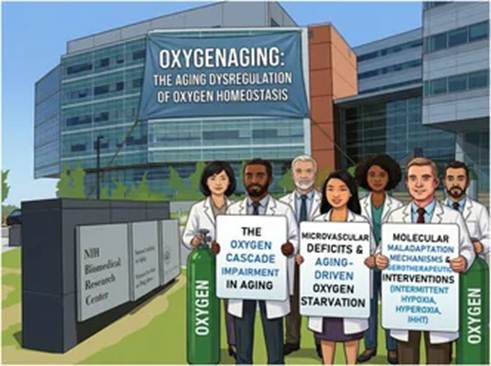
The Oxygen Cascade: A Long, Delicate Relay Race
Every cell in your body runs on oxygen, but the oxygen molecules you inhale have a long journey to make before they can be used. Researchers call this the oxygen cascade: air moves into the lungs, oxygen crosses into the bloodstream, the heart pumps that blood through ever-smaller blood vessels, and finally oxygen diffuses out of the smallest capillaries into tissue, where it reaches the mitochondria (the tiny structures inside cells that use oxygen to generate energy).
At each step of this relay, the concentration of oxygen drops a little more, like a baton being passed down a line of runners who are each a bit further from the start. In a young body, every leg of that relay is tightly coordinated: lungs, heart, blood vessels, and cells all adjust supply to match demand in real time. The authors describe this as a form of resilience—the ability to keep the whole system balanced even under stress, like exercise, illness, or high altitude.
Three Breakdowns That Converge With Age
According to the new framework, aging chips away at this coordination through three separate but overlapping problems:
- Oxygen cascade impairment: the lungs and cardiovascular system become less efficient at moving oxygen from the air into the blood and out to the body.
- Microvascular dysfunction: the smallest blood vessels, which deliver oxygen directly to tissue, become stiffer, sparser, or less responsive.
- Molecular maladaptation: even when oxygen does arrive at a cell, the internal machinery that senses and responds to oxygen levels starts to malfunction.
Each of these problems has been studied individually. What is new here is the argument that they do not act in isolation; they compound one another, so that an aging body ends up simultaneously delivering less oxygen and using it less well.
The Cellular Alarm System That Will Not Turn Off
The most striking part of the framework involves a molecular alarm system your cells use to detect low oxygen, built around a protein called HIF-1α (hypoxia-inducible factor). In a young, well-oxygenated cell, a set of enzymes called PHDs, together with a protein called VHL, continuously break HIF-1α down, keeping it at low levels—because there is no emergency to signal.
The researchers describe how, with age, this alarm system starts firing even when there is no real shortage of oxygen—a state called pseudohypoxia. They point to a decline in a molecule called NAD⁺, which is essential for cellular energy metabolism, as one route into this state: falling NAD⁺ reduces the activity of an enzyme called SIRT1, which in turn lowers VHL levels through a separate pathway from the usual oxygen-sensing route. The net effect is the same: HIF-1α accumulates and cells behave as if they are starved of oxygen, whether or not they actually are.
This chronic, false alarm is not harmless. The paper links it to a cascade of downstream problems: mitochondria start leaking electrons that should have been used cleanly to make energy, which fuels oxidative stress; iron regulation goes awry, contributing to a form of cell damage called ferroptosis; and the alarm signaling itself reshapes which genes get turned on or off.
Why Frame It This Way at All?
Aging research already has a well-known list of underlying processes, often called the hallmarks of aging, including mitochondrial dysfunction and cellular senescence (the buildup of dysfunctional cells in tissues), among others. Rather than adding oxygen to that list as one more independent hallmark, this paper proposes something different: that faltering oxygen delivery and use is a physiological thread running through and amplifying many of the existing hallmarks at once. In that sense, Oxygenaging is less a new item on the list and more a lens for looking at the whole list together, organized around a system the body has always depended on to detect and respond to oxygen levels.
Could This Point to Treatments?
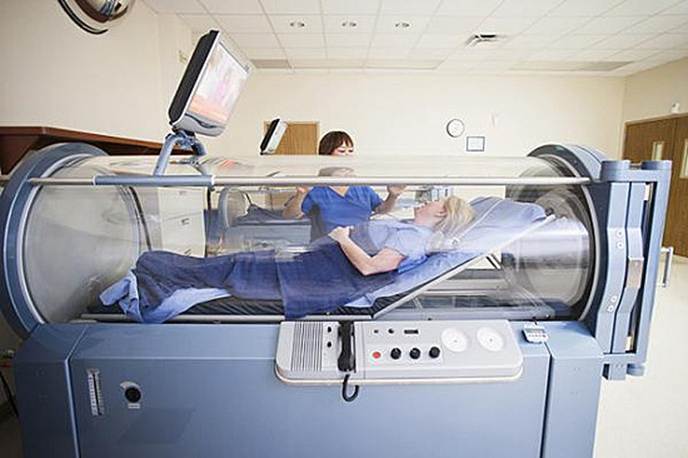
The paper is a scientific perspective rather than a clinical guide, but it does discuss several interventions already being studied for their effects on this oxygen-related biology, including exercise, controlled intermittent hypoxia (brief, repeated exposure to lower oxygen levels), and hyperbaric oxygen sessions (a treatment in which a person breathes in 100% oxygen inside a pressurized chamber). Other established aging intervention candidates included in this list are caloric restriction (reducing calorie intake while ensuring proper nutrition), rapamycin (an immunosuppressant drug repurposed for longevity purposes), and metformin (a diabetes medication). The common thread the authors highlight is that these approaches all seem to influence the balance between how much oxygen a cell has, how much energy it needs, and how well its mitochondria adapt, suggesting a shared mechanism behind several very different interventions that are otherwise studied separately.
None of this amounts to a proven aging intervention protocol, and the authors are careful to frame Oxygenaging as a conceptual model meant to guide future research, not a treatment plan. But by tying oxygen physiology, blood vessel health, and cellular alarm signaling into a single story, the framework gives researchers a more unified way to ask why aging bodies struggle to get and use enough oxygen, and where in that long relay race it might be possible to intervene.
 Comments