


Plant Compound Restores Muscle Strength During Aging by Reactivating Muscle Stem Cells
Plant compound diosgenin improves muscle strength and endurance in aged mice by reactivating muscle stem cells and restoring SIRT1 signaling.
Highlights
- Diosgenin improves muscle strength, endurance, and muscle fiber size in aged mice.
- Treatment reactivates satellite cells, the stem cells responsible for repairing skeletal muscle.
- Diosgenin targets SIRT1 enzymes, activating a pathway involved in muscle metabolism and healthy aging.
Skeletal muscle carries its own built-in repair system. Tucked alongside muscle fibers are satellite cells, a population of adult stem cells that normally remain inactive until injury or stress signals them to divide and help rebuild damaged tissue. As we age, these cells become fewer and less capable of multiplying and developing into new muscle, gradually weakening the muscle’s ability to repair itself.
This loss of regenerative capacity contributes to sarcopenia, the age-related decline in muscle mass, strength, and physical function. In a meta-analysis of nearly 100,000 older adults, people with sarcopenia had a 93% higher risk of falls and more than twice the risk of fractures compared with those without the condition.
One potential target is SIRT1, a metabolism-sensitive protein that activates PGC-1α, a regulator of muscle metabolism and regenerative signaling. During aging, declining NAD+ levels reduce SIRT1 activity, which can disrupt PGC-1α signaling and impair satellite cell function.
In a recent study published in Aging Cell, researchers tested whether diosgenin, a naturally occurring plant compound found in Dioscorea species, could restore this pathway and improve aging muscle. They found that diosgenin improved muscle strength and endurance, reduced signs of muscle aging, and reactivated satellite cells by targeting SIRT1.
Diosgenin Restores Muscle Strength and Reduces Muscle Atrophy
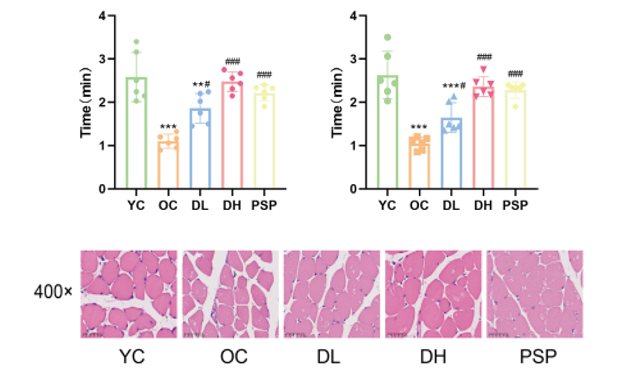
The researchers first tested diosgenin in naturally aged mice to determine whether the compound could improve the physical features of sarcopenia. Eighteen-month-old male mice, roughly equivalent to 56-year-old humans, received either 30 or 90 mg/kg of body weight of diosgenin once daily for eight weeks. Two-month-old mice, roughly equivalent to 18-year-old humans, provided a young comparison group.
Aged mice showed clear declines in muscle function before treatment. They had lower grip strength, shorter swimming endurance, smaller calf muscles, and thinner muscle fibers compared with young mice.
Diosgenin improved each of these measures. After eight weeks, treated mice maintained their grip for longer and swam longer during a weighted endurance test. Their calf muscle index also increased, and microscopic analysis showed larger muscle fibers. The higher diosgenin dose produced the greatest improvements.
Treatment also reduced p16, p21, and p53, proteins associated with cellular senescence, a state in which damaged or aging cells stop dividing but remain active in the tissue. Together, the findings showed that diosgenin improved both muscle performance and the physical deterioration that develops in aging muscle.
Diosgenin Reactivates the Stem Cells That Repair Aging Muscle
The researchers next examined satellite cells to understand how diosgenin could restore muscle tissue. These cells normally remain inactive until muscle needs repair, when they begin dividing and developing into new muscle cells. Aging reduces both their number and regenerative capacity.
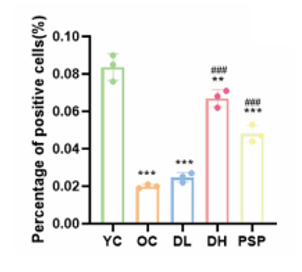
The researchers tracked satellite cells using Pax7, a protein associated with the satellite cell population, and Ki67, a marker of actively dividing cells. Aged mice had fewer cells positive for both markers, indicating that fewer satellite cells were actively proliferating.
Diosgenin reversed much of this decline. Treatment increased the number of satellite cells and the proportion that were actively dividing, suggesting that diosgenin prompted dormant satellite cells to become active and produce new cells for muscle repair.
The newly activated cells also showed signs of developing into mature muscle. Diosgenin increased proteins involved in muscle-cell differentiation and muscle fiber formation, suggesting that treatment supported both satellite cell proliferation and their progression toward new muscle tissue. These changes may help explain why diosgenin improved muscle function in aged mice.
Diosgenin Activates a Pathway Linked to Muscle Regeneration
The researchers next investigated how diosgenin produced these effects and identified SIRT1 as a key part of the process. SIRT1 helps regulate metabolism and muscle repair, but its activity declines with age.
Diosgenin restored SIRT1 levels in aged muscle and activated PGC-1α, a protein that works with SIRT1 to support energy metabolism and muscle regeneration. These changes coincided with greater satellite cell activity.
The researchers then blocked SIRT1 to see whether diosgenin still worked. Many of its benefits weakened, including its ability to promote satellite cell growth and muscle cell development and reduce markers of cellular senescence. This suggests that diosgenin depends, at least in part, on SIRT1 to produce its effects.
Additional experiments found evidence that diosgenin binds directly to SIRT1, providing a possible explanation for how the compound activates this pathway. Together, the findings suggest that diosgenin helps aging muscle regain some of its ability to repair itself by reactivating cellular signals that become less active with age.
Restoring Muscle Regeneration May Help Combat Age-Related Muscle Loss
Sarcopenia is often defined by the muscle mass and strength that older adults lose, but the current study draws attention to another part of muscle aging: the gradual deterioration of the cellular system responsible for repairing muscle. Satellite cells spend much of their lives dormant, forming a reserve that muscle can activate when it needs repair. With age, these cells become less capable of multiplying and forming new muscle. Diosgenin restored several parts of this regenerative system in aged mice while also improving strength, endurance, and muscle structure.
The involvement of SIRT1 also connects the findings with broader aging research. SIRT1 depends on NAD+, a metabolic molecule whose levels decline with age. Lower NAD+ availability can reduce SIRT1 activity and interfere with pathways involved in energy metabolism and tissue repair, providing one possible link between metabolic aging and declining muscle regeneration.
Diosgenin is a naturally occurring compound found in plants of the Dioscorea family and has previously attracted interest for its effects on metabolism and other aging-related processes. The current study adds evidence that the compound can directly interact with SIRT1 and influence the stem cells responsible for maintaining skeletal muscle.
The findings remain preclinical, and researchers have not yet established whether diosgenin produces similar effects in humans. Still, the study suggests that maintaining muscle during aging may depend partly on preserving its ability to repair itself. Therapies that keep satellite cells functional could offer a new approach to slowing the loss of muscle strength and physical function that accompanies aging.
Model: Naturally aged 18-month-old male C57BL/6J mice, with 2-month-old male mice serving as young controls.
Dosage: 30 mg/kg/day (low dose) or 90 mg/kg/day (high dose) of diosgenin, administered orally by gavage for eight weeks.
 Comments