


Protein Supplement Extends Life, Boosts Strength, and Reduces Biological Age, According to New Study
Supplementation prolongs the life of worms, boosts the strength of mice, and reduces the biological age of humans.
Highlights
- Supplementing with collagen-related amino acids, in the correct ratio, prolongs the lifespan of worms more than collagen supplementation.
- The collagen-related amino acids reduce fat and increase strength in mice.
- In humans, the collagen-related amino acids lower biological age and improve skin.
Scientists are finding that collagen levels decline with age, resulting in skin, bone, and muscle weakness. Age-related collagen decline may even lead to a shorter lifespan. Considering this dilemma, Swiss researchers explored the effects of supplementing with collagen-related formulations on health and longevity, as published in NPJ Aging.
Collagen-Mimicking Formulation Enhances Longevity
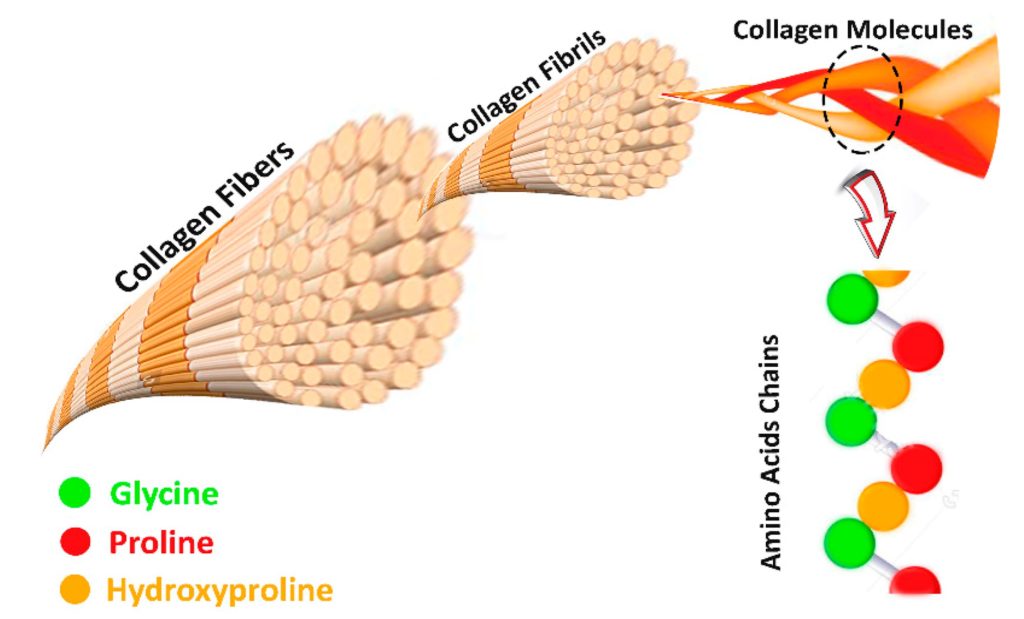
Collagen, the most abundant protein in the body, is composed of amino acids, the building blocks of proteins. It forms a triple helix structure and is primarily composed of three amino acids called glycine, proline, and hydroxyproline. Depending on the type of collagen (of which there are 28), the ratio of glycine, proline, and hydroxyproline can vary.
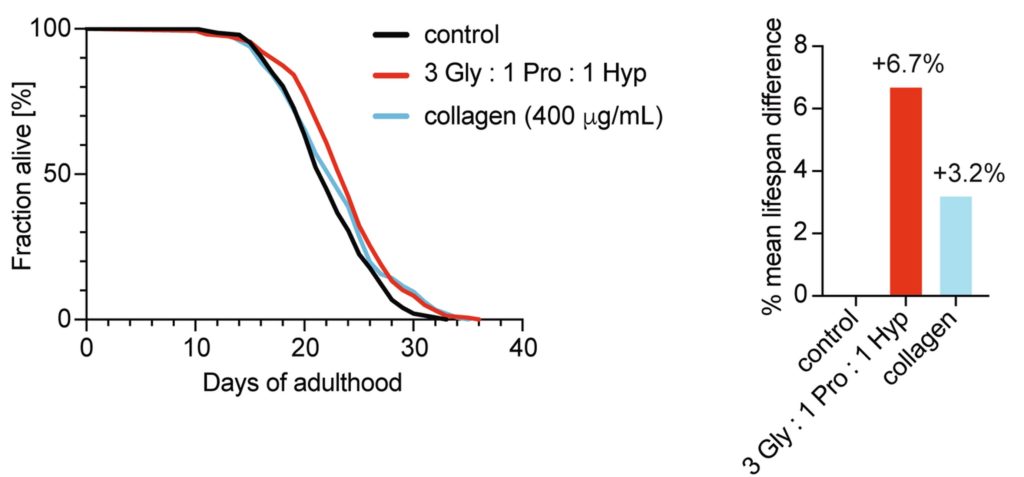
Previous studies revealed that collagen supplementation extends the lifespan of rats and flies. To look deeper into collagen’s effects, the Swiss researchers experimented with tiny, transparent soil worms called C. elegans. By feeding the worms collagen, the researchers increased the worms’ natural collagen production and prolonged the worms’ lifespan by 3.2%.
Surprisingly, however, natural collagen production was increased further by feeding the worms an amino acid formulation that mimics a complete collagen protein. This collagen-mimicking formulation was designed to maximize natural collagen production. It consisted of 3 parts glycine, 1 part proline, and 1 part hydroxyproline (3 Gly : 1 Pro : 1 Hyp).
Crucially, the collagen-mimicking formulation more than doubled the lifespan-extending effects of normal collagen. These findings suggest that supplementing with glycine, proline, and hydroxyproline in a 3:1:1 ratio can stimulate natural collagen production and prolong the lifespan of worms more than ordinary collagen protein.
Additive Effects with Alpha-Ketoglutarate
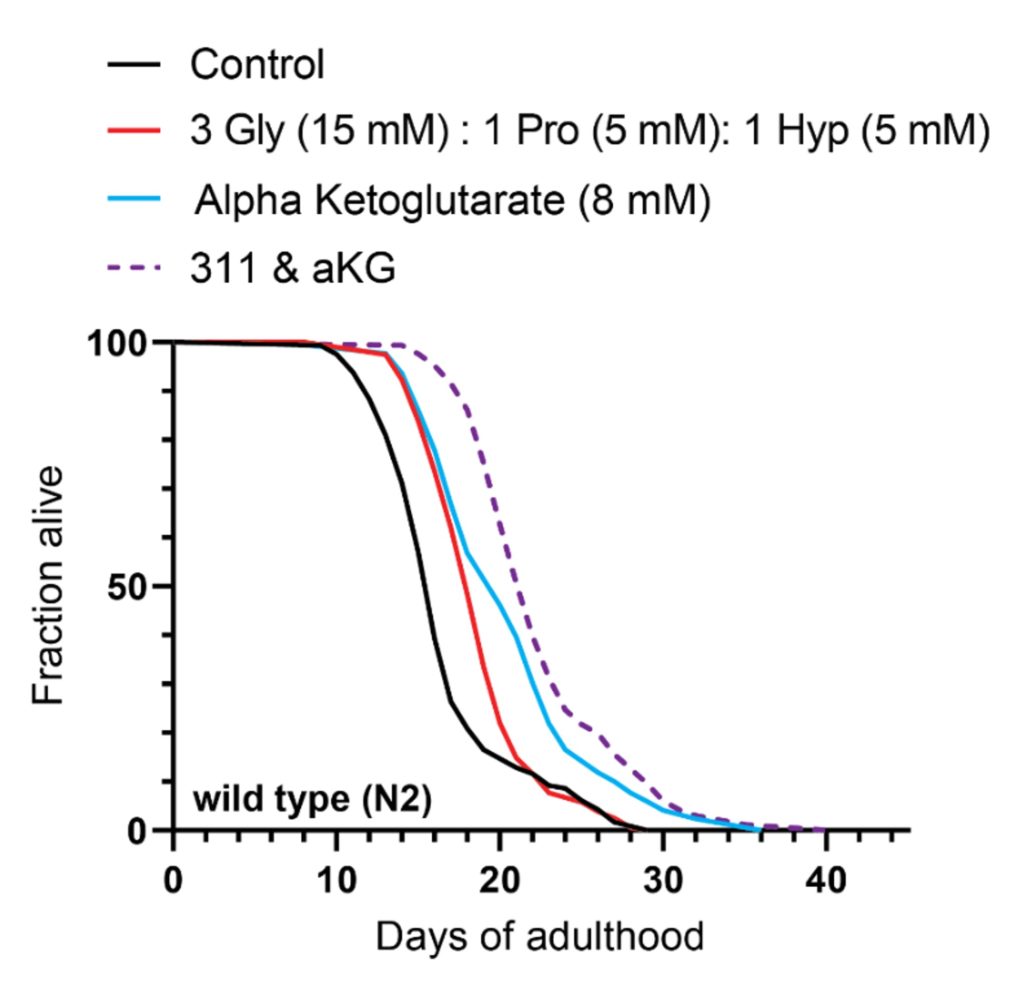
Alpha-ketoglutarate is a naturally occurring metabolite linked to collagen synthesis. It has been shown to stimulate collagen production in human skin cells and prolong the lifespan of worms and mice. For these reasons, the Swiss researchers explored the effects of combining alpha-ketoglutarate with the collagen-mimicking formulation.
Intriguingly, combining alpha-ketoglutarate with the collagen-mimicking formulation additively extended the lifespan of worms. That is, while the collagen-mimicking formulation extended the worms’ lifespan by two days, and alpha-ketoglutarate extended the worms’ lifespan by three days, combining the two extended the worms’ lifespan by five days.
Collagen-Mimicking Formulation Reduces Fat and Boosts Strength
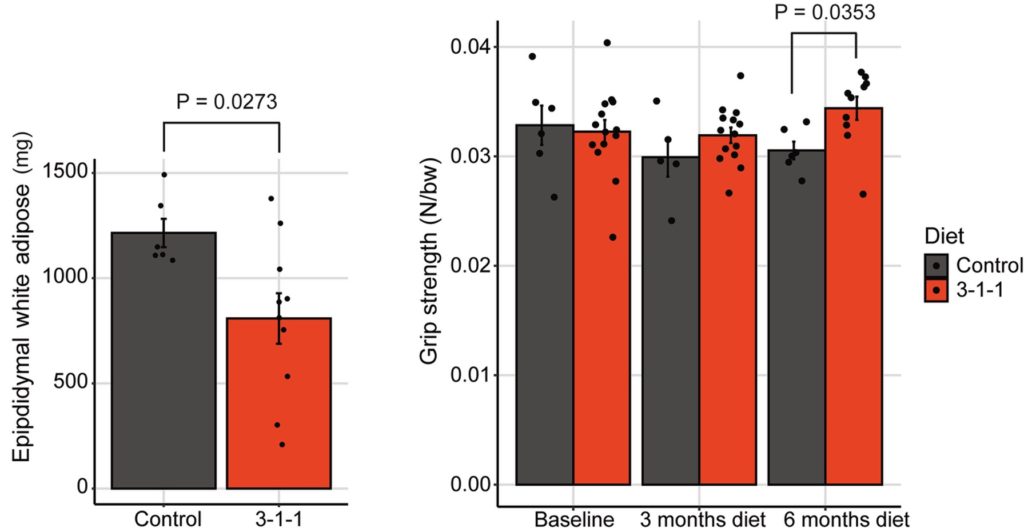
Compared to worms, mice more closely model humans. However, conducting longevity experiments on mice, with a lifespan of two to three years, can be time-consuming. So, while the Swiss researchers did not conduct longevity experiments on mice, they assessed several health parameters associated with longevity.
They found that the formulation reduced fat tissue and increased grip strength after six months of supplementation. The improvement in strength could be attributed to stronger tendons and ligaments, which collagen production may promote. Nevertheless, the formulation did not counteract frailty, physiological decline that increases vulnerability to illness and disease.
Collagen-Mimicking Formulation in Humans
Upon finding that the collagen-mimicking formulation was safe in mice, the researchers moved on to human subjects. They added the following ingredients to the formulation:
- Vitamin C (48 mg): An essential vitamin that supports collagen synthesis.
- Astaxanthin (4 mg): An antioxidant previously shown to improve skin elasticity in humans and prolong the lifespan of worms, flies, and mice.
- Alpha-ketoglutarate (1 g): A naturally occurring metabolite that may work synergistically with the collagen-mimicking formulation (shown above).
After three months of supplementation with this formulation, the participants, ranging from 35 to 68 years of age, saw improvements in skin hydration, texture, and elasticity, but not wrinkles.
The researchers also assessed biological age—the age that reflects the state of our cells, organs, and tissues. Compared to our chronological age (actual age), our biological age can be higher or lower. A lower biological age is predictive of a longer lifespan and fewer chronic age-related diseases, such as heart disease and dementia.
With that said, 6 months of supplementing with the collagen-mimicking formulation lowered the average biological age of the participants by 17 months. Together, these findings suggest that collagen supplementation can counteract skin aging and reduce biological age. Notably, this human experiment is limited by the absence of a placebo group.
Conflict of Interest
A recent analysis of 23 human trials revealed that only studies receiving funding from pharmaceutical companies showed collagen to counteract skin aging. Studies not receiving funding from pharmaceutical companies did not show collagen supplementation to counteract skin aging. The authors of this analysis concluded,
“There is currently no clinical evidence to support the use of collagen supplements to prevent or treat skin aging.”
The current study did not appear to receive funding from pharmaceutical companies, but some of the researchers who conducted the study are co-founders, employees, and/or shareholders of companies that sell collagen supplements. Therefore, the skin aging results may be received with caution.
Combining Interventions for Synergistic Effects
Studies exploring how collagen and its constituent amino acids enhance longevity may prove interesting. It’s possible that collagen’s lifespan-extending effects occur for reasons other than stimulating natural collagen production. Proline alone has been shown to prolong the lifespan of yeast and worms, while glycine has been shown to extend the lifespan of worms and rodents.
It follows that combining proline and glycine may potentially reap synergistic effects on extending lifespan. Furthermore, keeping in mind that combining glycine, proline, and hydroxyproline (collagen-mimicking formulation) with alpha-ketoglutarate additively extended the lifespan of worms, the number of anti-aging intervention combinations is endless.
Indeed, as the field of longevity research has progressed, several studies have found that combinatory interventions have greater effects than single ones. For example, one study showed that combining two FDA-approved drugs additively extends the lifespan of mice. The additive effects are attributed to targeting multiple aging pathways.
In this regard, scientists at Seragon are ahead of the game, grasping the concept of synergy years ago. Their flagship product, Restorin, contains interventions designed to target a multitude of cellular aging pathways, generating synergistic effects. Considering the profound effects of combinatory interventions, we may see more products like Restorin on the market in the future.
Participants: Healthy adults who exercise routinely
Dosage: 5 g L-glycine, 1.7 g L-proline, 1.7 g L-hydroxyproline, 1 g calcium alpha-ketoglutarate, 4 mg astaxanthin, and 48 mg vitamin C
 Comments