


Semaglutide (Ozempic) Counters Lung Aging and Senescent Cells, New Study Shows
Semaglutide, the generic name for Ozempic, eliminates pesky, age-promoting senescent cells and counteracts life-shortening lung disease in mice.
Highlights
- Semaglutide counters lung scarring and increases the survival of mice that model age-related lung disease.
- At the cellular level, semaglutide reduces senescent cell markers and other markers of cellular and tissue damage.
- The effects of semaglutide were shown to be mediated by several factors, including enzymes called sirtuins, which depend on NAD+ to function.
Obesity, often driven by chronic excess calorie intake, can accelerate biological aging at the cellular level. Semaglutide has drawn widespread attention as a treatment for obesity because it suppresses appetite, reduces overeating, and promotes weight loss. Because maintaining a healthy weight is associated with a longer lifespan, these effects could potentially contribute to healthier aging. However, it remains unclear whether semaglutide offers anti-aging benefits beyond those attributable to weight loss itself.
At the cellular level, aging involves several processes, including the accumulation of senescent cells—which are triggered in response to stress or damage. Studies show that senescent cell accumulation promotes inflammation and tissue destruction. Moreover, obesity and other chronic diseases are associated with a greater burden of senescent cells, while reducing that burden has been proposed to delay disease progression. Researchers in China therefore examined whether semaglutide could reduce senescent-cell accumulation and, in turn, influence age-related disease.
In a new study published in Biochemical Pharmacology, the Chinese researchers investigated the effect of semaglutide on an age-related lung disease called pulmonary fibrosis. They found that semaglutide reduced lung scarring, improved lung function, and increased survival in mice. Notably, the mice gained weight, suggesting that these benefits were not driven by weight loss. The researchers linked the effects to a reduction in senescent cells. The findings hint at semaglutide’s influence on aging-related processes independent of weight loss.
Semaglutide Counters Lung Scarring and Increases Survival in Mice
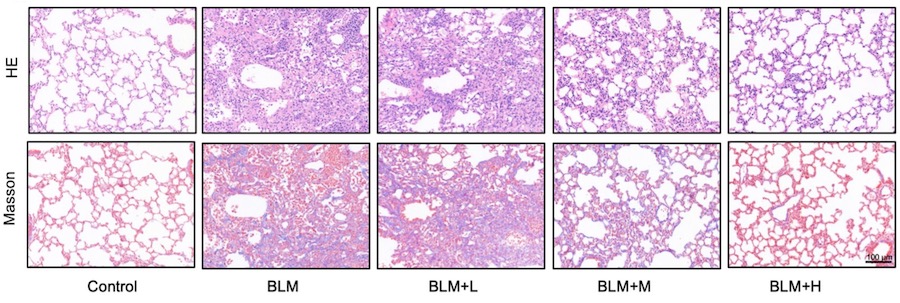
Pulmonary fibrosis is a chronic disease marked by progressive scarring of the lungs, which can lead to shortness of breath and unintended weight loss. For people with idiopathic pulmonary fibrosis—the most common form—the median survival is estimated to be 3 to 5 years. To test semaglutide’s effects on this age-related disease, the researchers gave mice a chemotherapy drug (bleomycin) commonly used to induce lung fibrosis in experimental models. They then treated the mice with low (10 μg/kg), medium (30 μg/kg), or high (100 μg/kg) doses of semaglutide.
Remarkably, semaglutide substantially reduced bleomycin-induced lung fibrosis in mice. Treatment also improved lung function (breathing) and survival, indicating that semaglutide may have therapeutic potential for pulmonary fibrosis. The results suggest that semaglutide could hold promise as a future treatment for pulmonary fibrosis, although the findings must first be confirmed in people.
Semaglutide Targets Senescent Cells and Oxidative Stress
Several cellular and molecular processes are known to underlie biological aging, including senescent cells. These processes are intricately linked, and normal cells can become senescent cells in response to oxidative stress. Oxidative stress occurs when our cellular antioxidants are unable to overcome reactive molecules, and these molecules, such as reactive oxygen species (ROS), react with and damage critical cellular components like DNA. In a vicious cycle, senescent cells also promote oxidative stress.
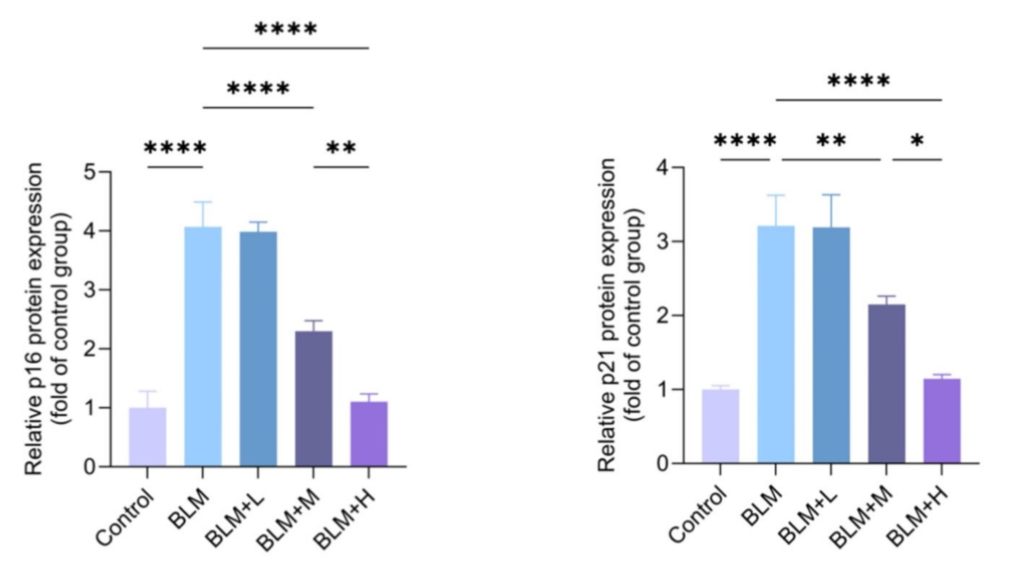
By analyzing the lung tissue of the pulmonary fibrosis model mice, the researchers found that semaglutide treatment reduced signs of cellular senescence and oxidative stress. Specifically, they found that semaglutide reduced oxidative damage to lipids (the fats that make up the cell membranes) while increasing cellular antioxidant enzymes. Moreover, they showed that semaglutide reduced proteins called p16 and p21, which are associated with senescent cells.
Semaglutide Works Through Sirtuins
In mouse lung cells, the researchers found that the anti-senescent and anti-oxidative effects of semaglutide are mediated by Hsf1 (heat shock factor 1). Hsf1 activates the genes for heat shock proteins, which protect cells from stressors like heat and oxidative stress. In the mice that model pulmonary fibrosis, the researchers used genetic techniques to silence Hsf1 in lung tissue. This blocked the anti-scarring effects of semaglutide, suggesting that the benefits of semaglutide are mediated by Hsf1.
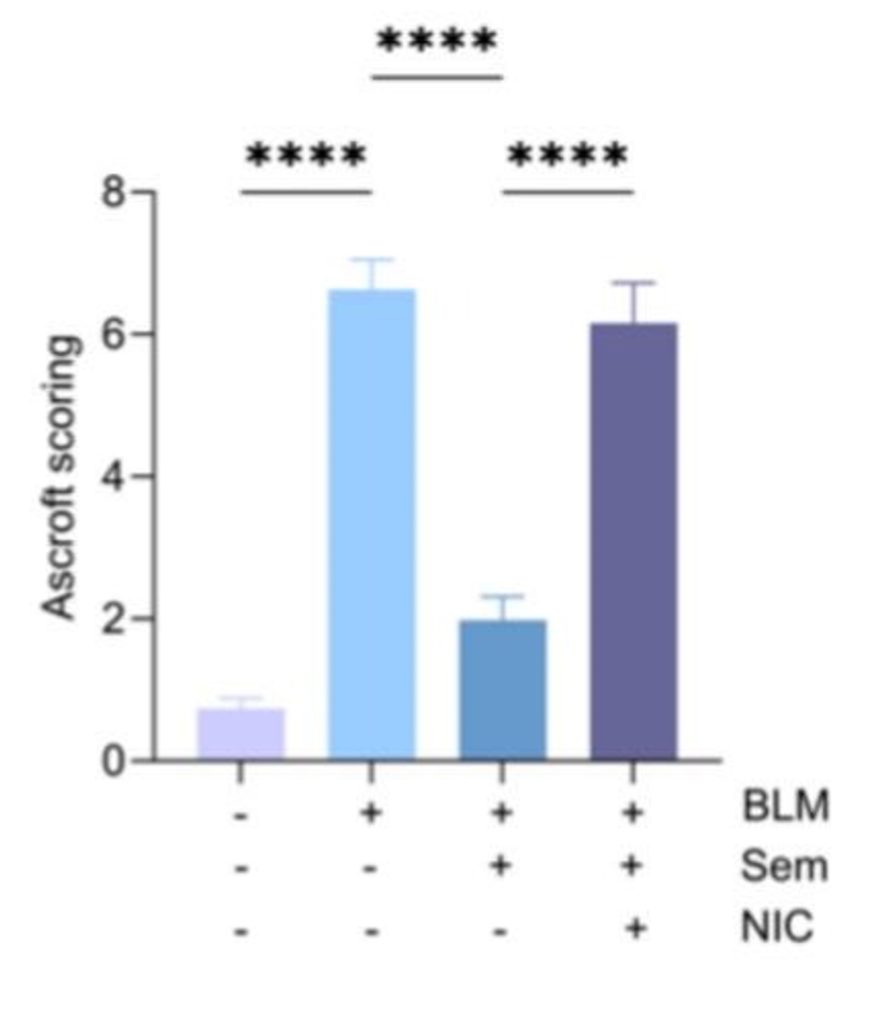
In mouse lung cells, the researchers also found that Hsf1 is activated by sirtuin-1, an enzyme associated with protecting cells against stressors like oxidative stress and DNA damage. In the pulmonary fibrosis model mice, the research team used an NAD+ precursor called nicotinamide to inhibit sirtuin-1. Nicotinamide blocked the anti-scarring, anti-senescent, and anti-oxidative effects of semaglutide, suggesting that sirtuin-1 plays a notable role in mediating the benefits of semaglutide.
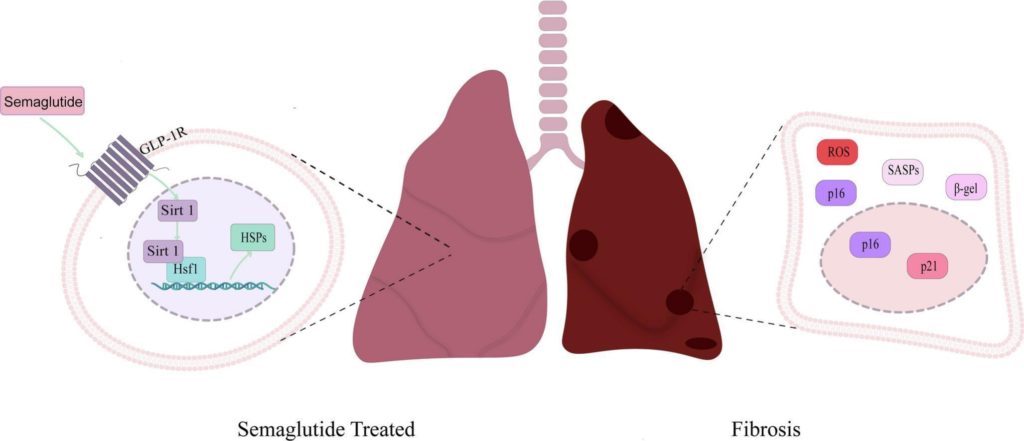
The study suggests that semaglutide may protect against lung scarring by activating GLP-1 receptors and, in turn, a cellular stress-response pathway involving sirtuins and Hsf1. This pathway appeared to reduce oxidative stress and markers of cellular senescence, including p16 and p21—changes that may otherwise contribute to fibrosis. Future research in naturally aged mice will be needed to determine whether semaglutide produces similar benefits in a model that more closely resembles age-related lung disease.
Targeting Senescent Cells with Senolytics to Counteract Lung Aging
Senescent cells can resist apoptosis, the body’s built-in process for removing damaged or unnecessary cells. Under normal circumstances, the immune system helps clear these cells. But as immune function declines with age, senescent cells can persist and accumulate in tissues.
Senolytics are drugs designed to selectively eliminate senescent cells by disabling the survival pathways that help them resist apoptosis. In a small, early study of people with idiopathic pulmonary fibrosis, a senolytic combination of dasatinib and quercetin improved measures of physical function, including walking distance, gait speed, and chair-stand performance. Lung function did not improve over the short study period, however.
Larger, controlled trials will be needed to determine whether senolytics—or treatments such as semaglutide that may reduce senescence-related processes—can safely slow or treat IPF.
Model: C57BL/6 mice exposed to bleomycin to induce pulmonary fibrosis
Dosage: Injections of 10 μg/kg, 30 μg/kg, or 100 μg/kg of semaglutide
 Comments