


Short Bursts of Mild Stress Reverse Aging and Behavioral Deficits, New Study Finds
Researchers in Korea discovered that repeated short-term mild stress normalizes key brain pathways and clears chronic stress-like signatures in the aging brain of mice.
Highlights
- Mild bouts of stress reverse elevations in stress hormone levels in aged mice.
- This repeated, mild stress exposure also increases the will to survive in aged mice.
- Mild stress exposure increases the sociability of aged mice.
What doesn’t kill us makes us live longer. However, whether it makes us stronger is another question. Chronic stress, for instance, exacerbates the gradual molecular, cellular, and physiological changes that occur with aging. It follows that chronic stress doesn’t make us stronger; it makes us physically weaker.
While stress seems unavoidable, a new study explores how to mitigate the social and emotional deficits it leads to. As published in Experimental & Molecular Medicine (EMM), researchers from Ewha Womans University in Seoul show that mild stress exposure reverses the molecular and behavioral effects associated with chronic stress in aged mice.
Mild Bouts of Stress Rejuvenate Stress Hormone Levels
To model stress, the researchers placed mice into a tube to restrain their movement. The researchers defined chronic stress, subchronic stress, and mild stress based on how long the mice were trapped in the tube:
- Chronic stress: mice were restrained for 2 hours/day for 14 days.
- Subchronic stress: mice were restrained for 2 hours/day for 7 days.
- Mild stress: mice were restrained for 5 minutes/day for 14 days.
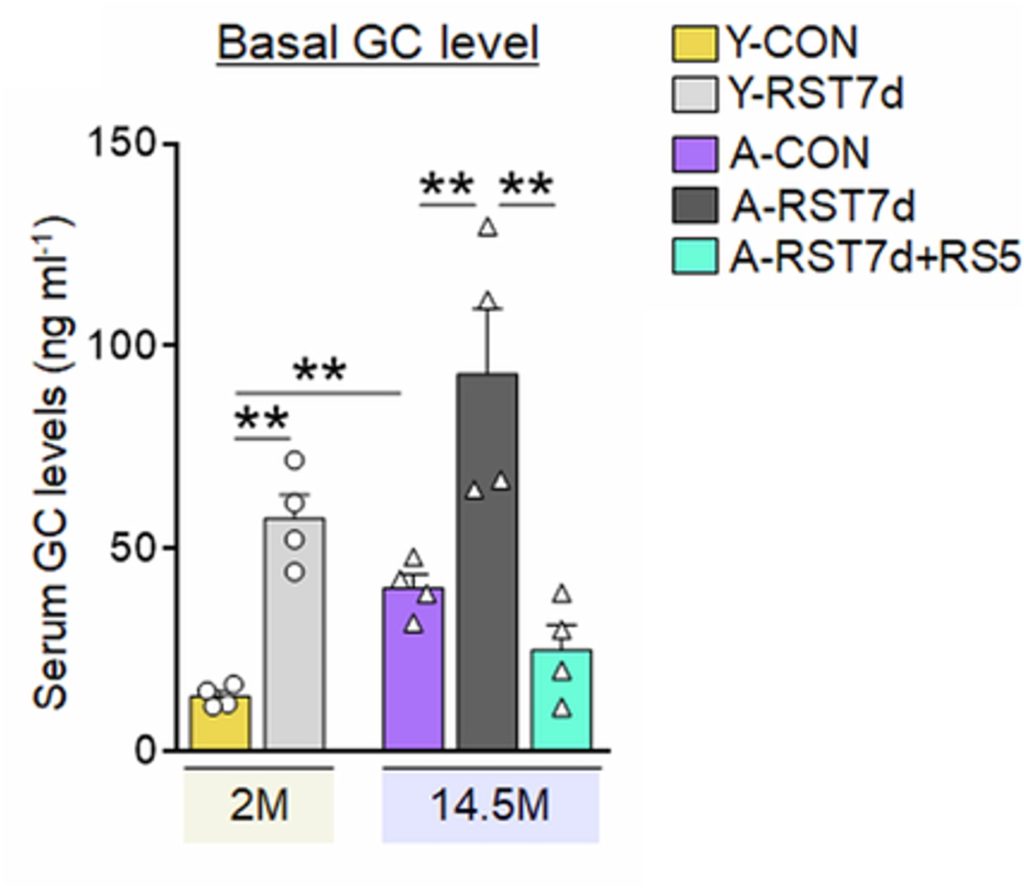
They found that subchronic stress raised stress hormone (glucocorticoid: the mouse equivalent of cortisol) levels in both young and aged mice, with a greater increase in the older mice. Remarkably, however, mild stress exposure brought the aged mice’s stress hormone levels back down to those seen in young mice.
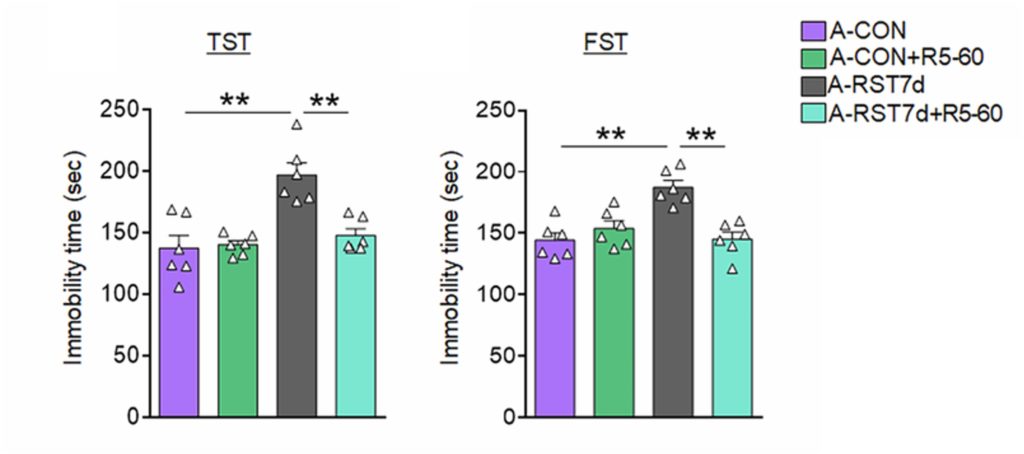
Subchronic stress also induced emotional and social behavioral deficits in the aged mice. Interestingly, these behavioral deficits were only observed in young mice exposed to chronic stress, but not subchronic stress. Still, mild stress exposure via tube restraint reversed the emotional and social behavior deficits observed in the aged mice.
Mild Bouts of Stress May Increase Will to Survive
To investigate another form of mild stress that doesn’t require restraint, the researchers placed the mice’s cage on a rocker for 5 minutes/day for 14 days. This form of mild stress exposure led to reduced stress hormone levels and improved behavior in young mice.
Moreover, simply administering a low dose of stress hormone to the young mice every day for 14 days had similar effects, including improvements in behavior. These findings suggest that repeated exposure to mild stress, no matter the trigger, can improve resilience against chronic stress.
In aged mice, mild stress exposure via gentle cage rocking also reduced stress hormone levels and improved behavior. For example, when hung by the tail or pushed into a pool of water, aged mice exposed to mild stress tried longer to escape, suggesting a greater will to survive.
Mild Bout of Stress Improves Sociability
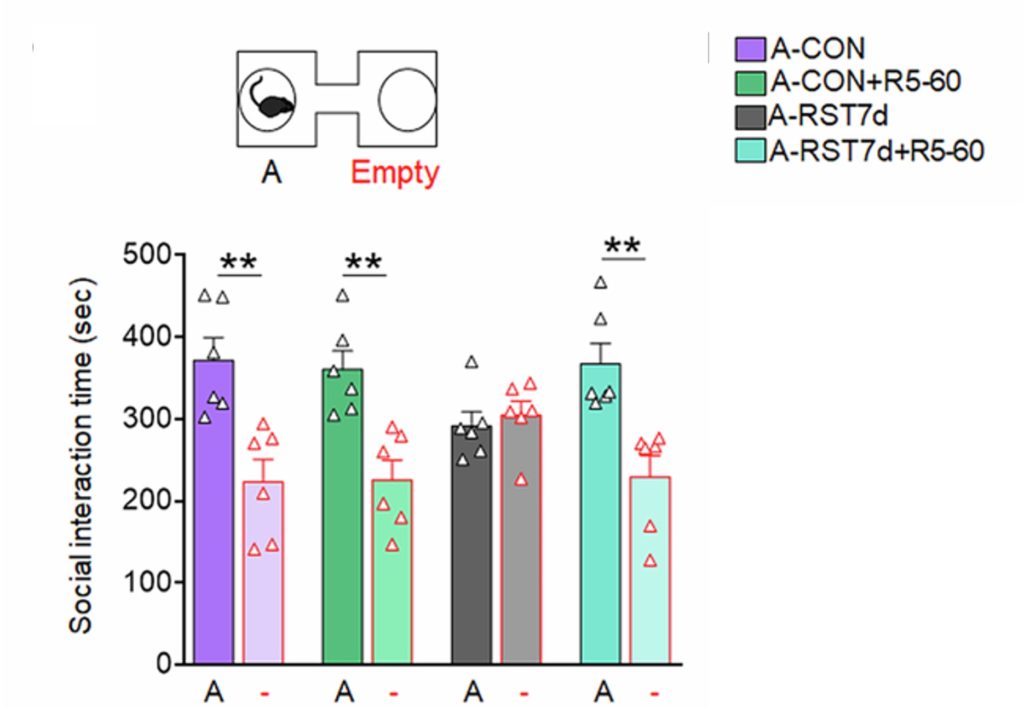
To measure sociability, the researchers placed the mice within a passage connecting two chambers. One chamber contained another mouse while the other was empty. They found that unstressed aged mice, whether exposed to mild stress or not, spent more time in the chamber with the other mouse. However, subchronic stress caused the aged mice to spend equal amounts of time in both chambers, suggesting less sociability. Nevertheless, mild stress exposure via gentle cage rocking reversed the effects of subchronic stress.
To measure social memory, the researchers added a mouse to the second chamber. Now, one chamber contained a familiar mouse while the other contained a new mouse. The researchers found that only the aged mice exposed to mild bouts of stress spent more time with the new mouse. One hour later, another new mouse replaced the second mouse, and 24 hours after that, a fourth mouse replaced the third new mouse. In each instance, only the aged mice exposed to mild stress spent more time with the new mouse, suggesting improved sociability and memory of familiar mice.
The Korean researchers also examined which brain regions were activated in response to mild stress. They found several activated regions, but focused on the ventral subiculum (vSub) for its involvement in regulating stress and coping with emotions. The vSub, part of the hippocampus (a structure critical in converting experiences into memories), projects connections to other regions of the brain, including those involved in reward, motivation, emotion, and stress. By stimulating the vSub in living mice, the researchers were able to reduce stress hormone levels and mitigate the behavioral deficits induced by subchronic stress in aged mice.
Can Controlled Stress Help Us Manage the Stress of What We Cannot Control?
The study raises the possibility that brief, manageable challenges can have effects very different from those of relentless strain. Whether the same approach improves emotional and social well-being in older humans remains to be tested.
Still, exercise offers a familiar example of this principle, known as hormesis—a manageable dose of stress stimulates adaptations that help the body withstand future challenges. A brisk walk, a bike ride, or a strength-training session temporarily challenges the body and mind. Repeated over time, with adequate recovery, those demands help build fitness and support health and longevity.
Heat exposure through sauna bathing is another potential example. Studies have linked regular sauna use to cardiovascular benefits and lower mortality, although the longevity findings are largely observational and do not establish that sauna use itself extends life.
The takeaway is not that more discomfort makes us stronger. Perhaps what makes us stronger is not simply surviving stress, but experiencing it in manageable doses.
 Comments