


Stem Cell-Derived Exosomes Restore Liver Function During Aging by Reviving the Cell’s Recycling System
Stem cell-derived exosomes improve liver function and metabolism during aging by restoring autophagy, the cell’s natural recycling system.
Highlights
- Stem cell-derived exosomes restore liver function and improve insulin sensitivity in aged mice.
- Treatment reduces liver fat accumulation and markers of cellular senescence.
- Restoring autophagy drives many of the metabolic benefits, linking cellular recycling to healthier liver aging.
The liver is one of the few organs capable of remarkable regeneration. It stores nutrients after a meal, releases energy between meals, detoxifies thousands of compounds, and continually adjusts how the body processes fats and sugars. Those responsibilities depend on billions of liver cells functioning efficiently every day. As people age, however, that metabolic flexibility gradually declines. Fat begins to accumulate within liver cells, insulin becomes less effective, and the risk of conditions such as metabolic dysfunction-associated steatotic liver disease (MASLD), formerly known as nonalcoholic fatty liver disease, rises steadily.
Much of this decline stems from a gradual breakdown in cellular maintenance. Healthy cells constantly recycle damaged proteins, worn-out organelles, and excess lipid droplets through autophagy, an intracellular cleaning system that helps maintain normal metabolism. As autophagy slows with age, cellular waste accumulates, lipid metabolism becomes disrupted, and liver cells begin to exhibit features of senescence – a state in which cells permanently stop dividing and begin releasing inflammatory molecules that disrupt the function of surrounding tissue.
Researchers have recently begun investigating whether exosomes – tiny membrane-bound vesicles released by cells – could restore these maintenance pathways. Unlike transplanted stem cells, exosomes cannot divide or permanently integrate into tissues. They instead deliver proteins, RNA, and other signaling molecules that influence the behavior of neighboring cells. In a new Aging Cell study, scientists tested whether exosomes isolated from human umbilical cord mesenchymal stem cells could improve age-related liver dysfunction by restoring autophagy.
Stem Cell-Derived Exosomes Restore Liver Function and Metabolic Health
The researchers first administered stem cell-derived exosomes to naturally aged mice every three days for twelve weeks. Imaging confirmed that the exosomes accumulated primarily in the liver after injection, making the organ a logical target for treatment.
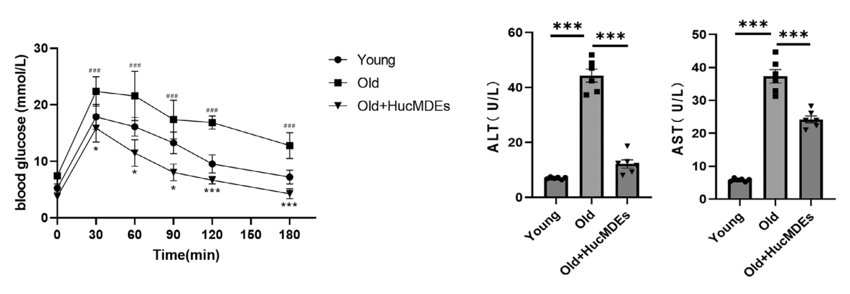
Compared with untreated aged mice, animals receiving exosomes weighed less, cleared glucose from the bloodstream more efficiently, and became more sensitive to insulin. Blood tests also showed lower levels of alanine aminotransferase (ALT) and aspartate aminotransferase (AST), two enzymes commonly used to evaluate liver injury. Circulating triglycerides and total cholesterol also declined, indicating that the treatment improved systemic metabolism in addition to liver function.
The improvements extended to the liver itself. Microscopic examination revealed healthier tissue architecture, fewer lipid droplets, and greater glycogen storage, suggesting the aging liver had regained some of its capacity to store and manage energy. Markers of cellular senescence – a state in which cells permanently stop dividing and release inflammatory molecules that impair tissue function – also fell, while proteins involved in lipid metabolism shifted toward a healthier profile. The exosomes reduced SREBP1, a protein that promotes fat production, and increased PPARα, which helps cells break down fatty acids for energy.
Stem Cell-Derived Exosomes Directly Rejuvenate Aging Liver Cells
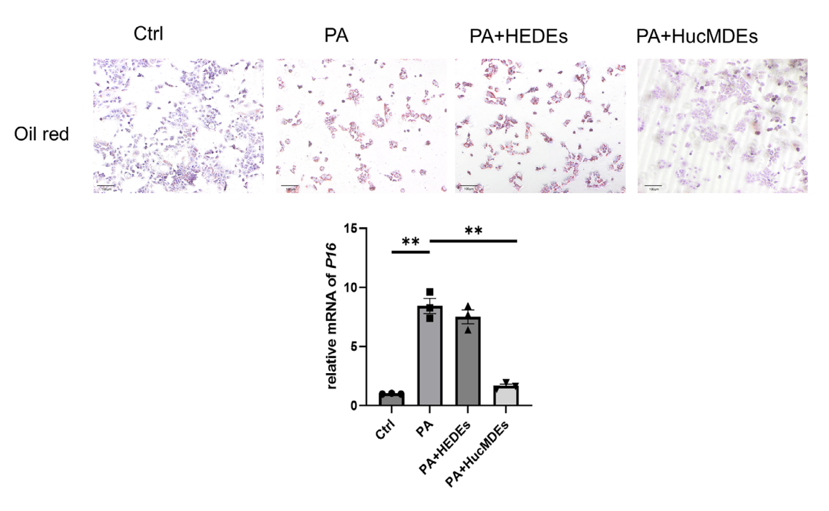
To determine whether these effects occurred directly within liver cells, the researchers exposed cultured mouse hepatocytes to palmitic acid, a saturated fatty acid commonly used to model lipid accumulation and cellular aging.
Cells treated with stem cell-derived exosomes accumulated fewer lipid (fatty, oily, or waxy organic compounds) droplets, produced less of the senescence-associated proteins P16 and P21, and restored the expression of genes involved in healthy lipid metabolism. Exosomes collected from ordinary fibroblasts (the most common cells in connective tissue) produced little improvement, suggesting the therapeutic effects were specific to exosomes released by mesenchymal stem cells (adult cells that can differentiate into different types of tissues) rather than extracellular vesicles in general.
Restoring Autophagy Drives the Therapeutic Response
The researchers next asked why the exosomes produced such widespread metabolic improvements. Their attention turned to autophagy, the intracellular recycling system responsible for breaking down damaged cellular components before they accumulate.
Markers of autophagy declined substantially in aged mouse livers and in cultured liver cells exposed to palmitic acid. Treatment with stem cell-derived exosomes reversed those changes, increasing autophagic activity and restoring the normal progression of cellular recycling. Fluorescent imaging confirmed that liver cells generated more functional autophagosomes after treatment, providing visual evidence that the recycling process had become more active.
The strongest evidence came when the researchers deliberately blocked autophagy. They inhibited key autophagy genes using small interfering RNA and separately treated cells with drugs that prevent different stages of the recycling process. Under those conditions, many of the exosomes’ protective effects were greatly reduced. Liver cells once again accumulated fat, markers of senescence increased, and normal lipid metabolism deteriorated. When the researchers blocked autophagy, many of the exosomes’ protective effects disappeared. This finding indicates that autophagy is required for much of the therapeutic response.
Healthy Aging Depends on Cellular Maintenance
Many age-related metabolic diseases develop gradually rather than appearing suddenly. Long before liver function begins to fail, damaged proteins, dysfunctional mitochondria, and excess lipids slowly accumulate because the cellular systems responsible for removing them become less efficient. Similar declines in autophagy have been reported in aging muscle, brain, heart, and kidney tissue, suggesting that impaired cellular housekeeping is a common feature of aging across multiple organs.
The current study supports that concept. Stem cell-derived exosomes restored one of the liver’s natural maintenance systems by increasing autophagy. As cellular recycling improved, liver fat declined, insulin sensitivity increased, and markers of cellular senescence decreased. When the researchers blocked autophagy, many of those benefits largely disappeared, demonstrating that restoring cellular recycling was central to the therapeutic response.
Although these findings were obtained primarily in mice and cultured liver cells, they add to growing evidence that maintaining cellular quality-control systems may help preserve organ function throughout aging. Future studies will determine whether stem cell-derived exosomes produce similar effects in humans, but the work suggests that preserving the cell’s own maintenance systems could delay many of the biological changes that eventually lead to metabolic disease.
Model: Naturally aged male C57BL/6 mice (18 months old)
Dosage: 5 μg/g (5 mg/kg) of human umbilical cord mesenchymal stem cell-derived exosomes (HucMDEs) was administered by tail-vein injection every 3 days for 12 weeks.
 Comments