


Study Shows Orchid Compound Helps to Alleviate Osteoarthritis and Cell Aging
Dendrobine, a compound found in orchids, was shown to decrease osteoarthritis progression in rats and reduce inflammatory cell aging (senescence).
Highlights:
- Dendrobine decreases osteoarthritis progression and improves bone structure parameters in rats.
- Treating inflamed chondrocytes – cells that make cartilage – with dendrobine decreased cartilage degradation, increased cartilage production, and decreased cell senescence.
- The effects of dendrobine seem to work by decreasing reactive oxygen species (proinflammatory molecules) and inhibiting proinflammatory proteins.
Osteoarthritis is the most common form of joint disease leading to cartilage breakdown and bone changes as patients age. Cartilage is a strong, flexible tissue that protects bones from rubbing against each other in joints. There is evidence to suggest that inflammation may play a role in the initiation and progression of osteoarthritis and cartilage breakdown. Previous research has shown that dendrobine can reduce inflammation, and a new study shows that it can help alleviate osteoarthritis progression.
The study, out of Wuhan University in China and published in the International Journal of Molecular Sciences, focused on male rats who had surgery to mimic osteoarthritis. The rats were given either dendrobine or placebo. The scientists found that the rats given dendrobine had decreased inflammation, degradation, and osteoarthritis progression. The researchers also saw in cell studies of chondrocytes that dendrobine can help inhibit cartilage degradation and promote cartilage production. Additionally, it inhibited inflammatory signaling from aged cells, as well as aging in chondrocytes. Reactive oxygen species (ROS) – molecules that contain oxygen that are highly reactive and cause cellular stress – were also reduced with dendrobine treatment, suggesting that dendrobine works to decrease osteoarthritis through its effects on ROS and other proinflammatory proteins.
Dendrobine Alleviates Osteoarthritis Progression in Rats
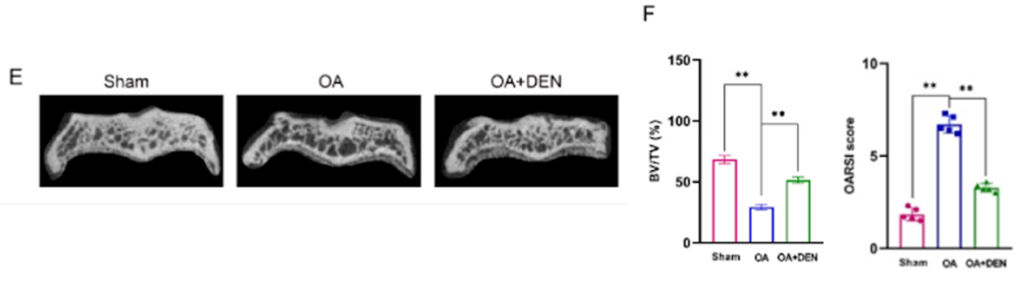
The researchers performed surgery on male rats to induce osteoarthritis. Following surgery, some of the rats received dendrobine and some placebo. The extent of osteoarthritis was significantly decreased in those rats treated with dendrobine, as compared to those given placebo. Furthermore, various bone structure parameters were improved with dendrobine treatment, including an increased ratio of bone volume to tissue volume, suggesting that dendrobine helps protect bones. Additional tissue staining revealed that cartilage destruction and inflammation were reduced with dendrobine treatment. Chondrocyte senescence was also shown to decrease with treatment in the rats.
Dendrobine Prevents Chondrocyte Degradation due to ROS Effects
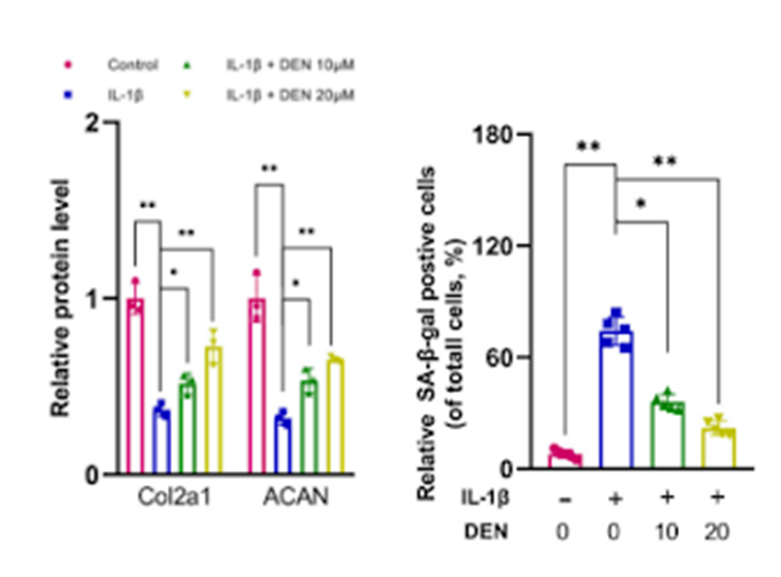
Cartilage is considered to be an extracellular matrix protein – non-cellular components that help provide structural support for cells and initiate various biological processes via both chemical and mechanical cues – mostly made up of collagen proteins. As mentioned previously, cartilage is mainly made by chondrocytes in the joints, and is degraded with osteoarthritis. Having seen improvements in the rat model of osteoarthritis, Chen and colleagues investigated the effects that dendrobine has on inflamed chondrocytes in culture. Dendrobine was found to inhibit extracellular matrix degradation and increase extracellular matrix production in inflamed chondrocytes, similar to the effects seen in the rats. Furthermore, the production of inflammatory age-related proteins, as well as actually aged (or senescent) cells, were decreased in the chondrocytes with dendrobine treatment.
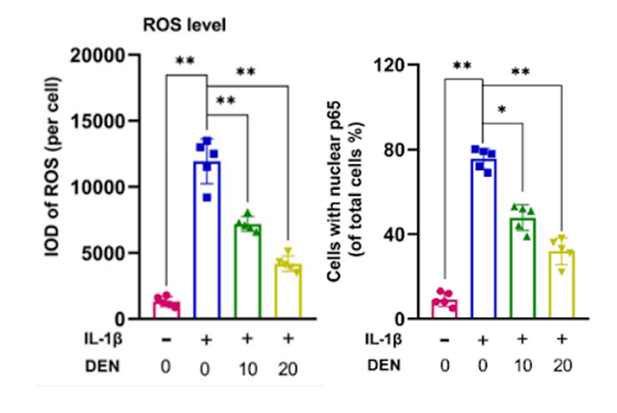
Senescence and ROS production are linked as increased ROS leads to inflammation and cellular senescence. Having seen the effects of dendrobine on senescence in chondrocytes, Chen and his team looked at ROS levels in the inflamed chondrocytes. They found that with dendrobine treatment, ROS levels were improved, as was mitochondrial dysfunction (which can lead to increased ROS production). Additionally, dendrobine affected other proteins shown to regulate ROS and inflammatory senescent cells (such as those seen in osteoarthritis). Dendrobine prevented p65 (one of a group of proteins known as NF-κB) from initiating a pro-inflammatory signaling process, suggesting that dendrobine benefits osteoarthritis by decreasing ROS and NF-κB- mediated inflammation.
“[Dendrobine] inhibited…senescence…in chondrocytes and alleviated the progression of [osteoarthritis] via the ROS/NF-κB axis, which provides innovative strategies for the treatment of [osteoarthritis],” the investigators wrote.
Dendrobine and Inflammation
Chen and colleagues show here that the anti-inflammatory and anti-senescence effects of dendrobine may hold promise for those suffering from osteoarthritis. Dendrobine has long been utilized by Chinese medicine practitioners for various ailments, and it has only recently come to be utilized by researchers over the last two decades.
Dendrobine has been shown to benefit many other conditions, including UV-induced retinal damage, gestational diabetes, and Parkinson’s disease, suggesting that dendrobine may be useful in many other instances, and our utilization of it in aging requires more study to fully discern all its possible benefits. More research, as well as clinical trials, are needed before proclaiming dendrobine to be of any utility in people.
Model: 8-week male Wistar rats
Dosage: 20 mg/kg/d dendrobine by oral gavage daily for 8 weeks
 Comments