


Survive the Next Decade: Why One Immunologist Thinks AI Could Add 50 Years to Your Life
Immunologist Derya Unutmaz makes the case that AI-driven advances in cancer care, prevention, and age reversal could arrive fast enough that staying healthy through the next decade may be the best longevity strategy of all.
Highlights
- Dr. Derya Unutmaz argues that AI is compressing biological research, drug discovery, and clinical testing so fast that medicine could significantly extend lifespan within roughly a decade.
- He expects AI to move medicine to personalized prevention and treatment, using things like earlier disease prediction and on-demand therapies, with cancer as a key example of a disease he thinks could become curable.
- He also believes aging can be prevented and eventually reversed, but says it will take serious engineering and careful validation rather than a miracle pill or treatment.
Dr. Derya Unutmaz has a line he repeats often: try not to die in the next 10 years. It sounds like a joke, but he means it. Unutmaz is an immunologist and aging researcher at The Jackson Laboratory, and he has been one of the scientists with early access to OpenAI’s models. He argues that AI is about to compress biology’s timelines so dramatically that people alive in the mid-2030s may get to keep living for a very long time.
In a podcast interview with biochemist Rhonda Patrick, Patrick asked him to unpack that claim. What follows is his case, plus topics he went over that may deserve a raised eyebrow.
The Core Argument: Escape Velocity
Unutmaz’s starting point is that humans think linearly and technology does not. We assume the next decade will look like the last one. He thinks it will look more like the last century, and he compares it to telling someone in 1900 that smallpox and tuberculosis would stop killing people.
The second point is what Aubrey de Grey calls longevity escape velocity, the hypothetical point where medicine improves fast enough that each year you live adds more than a year to your remaining life expectancy. Unutmaz’s example: you are diagnosed with an incurable cancer with a year or two left, but a new therapy arrives during that window, and one year of life turns into ten.
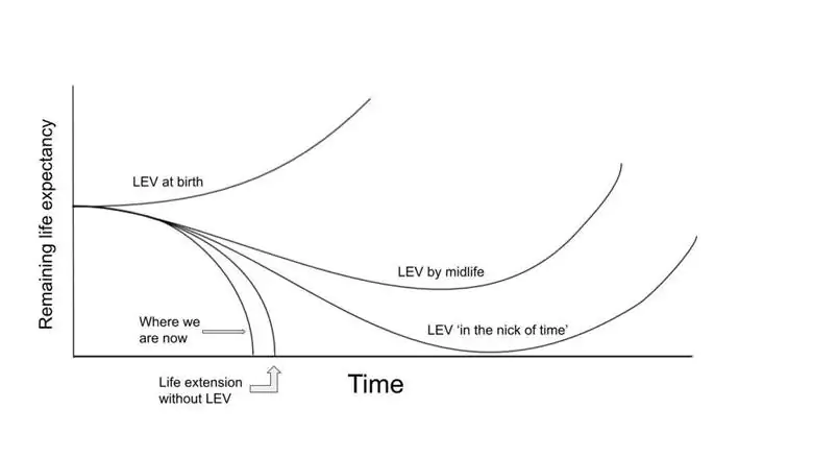
He puts that threshold roughly 8 to 10 years away. Within 15 to 20 years, he expects we could reverse aging outright, so an 80- or 90-year-old could return to something like a 30- or 40-year-old’s biology. That’s where adding 50 years to one’s lifespan comes from. Patrick’s show notes are careful to call this a forecast, not a quantitative prediction.
AI Is Already Changing the Lab
Unutmaz’s optimism rests on what he sees in his own work. Biology now produces millions of data points per experiment, and the bottleneck has shifted from generating data to understanding it. He describes handing a huge RNA-sequencing dataset to a top reasoning model and getting back a 40-page report in about 112 minutes. It covered not just which genes changed but what the pattern might mean and which experiment to run next. Work like that used to take a PhD student months.
He also tests the models against experiments his lab has already finished, asking them to predict the outcome. Older models got 80 to 90 percent right. With the newest one, he says, the match was about 98 percent, close to what his own 30 years of lab intuition would have predicted. He calls that “mind-boggling.”
Digital Twins and Faster Trials
The obvious objection, which Patrick raised, is that you still have to test drugs on humans, and that takes years. Unutmaz’s answer is the digital twin: a simulation of an individual built from their genetics, metabolism, immune system, microbiome (the gut microbial composition), and clinical history. With enough data and computational capacity, you could simulate how a drug would affect a specific person, run trials on a small, well-chosen group of patients, and cut trial timelines from years to months. He bets we will get to the point where this is a reality in 5 to 10 years, and he also pictures “treatment on demand,” where an AI analyzes your biology and a facility manufactures a drug for you within a week.
He compares the path to self-driving cars, which have to be validated against rare, high-stakes scenarios before people trust them. Biology will take longer, he says, because it is so much more complex. Aging may be the easier case relating to biology, since we can measure outcomes like muscle function and skin quality quickly.
Medicine: From Sick Care to Prevention
Unutmaz thinks it is already becoming unethical for physicians not to use AI, and that it may eventually count as malpractice. His reasoning is that advanced models now diagnose and propose treatments at or near specialist level, and some can flag breast cancer on imaging years before a radiologist would.
His practical advice is to use the latest AI models that use some degree of reasoning rather than the older fast, instant ones. For everyday diagnosis, he says the top models from OpenAI, Anthropic, and Google are all strong, with differences mattering mainly on rare or research-grade problems. On the debate over general versus specialized models, he sides with generalists, because medicine is holistic and a model that understands radiology, RNA, and proteins together can put an EKG (an instrument that records electrical activity of the heart) in context.
Both speakers were most enthusiastic about prevention. They discussed a study from a database from patients in the UK in which models trained on blood proteins and other data predicted many diseases, including cancer and neurodegeneration, years before diagnosis. Unutmaz calls today’s system “sick care” and imagines a personal AI health coach that continuously tracks your biological markers partially indicative of health status. He wears a continuous glucose monitor himself, despite not being diabetic, to catch insulin resistance early. The show notes add a caveat: predicting a disease is not the same as proving that intervening early will change the outcome.
Cancer: Closer Than It Looks?
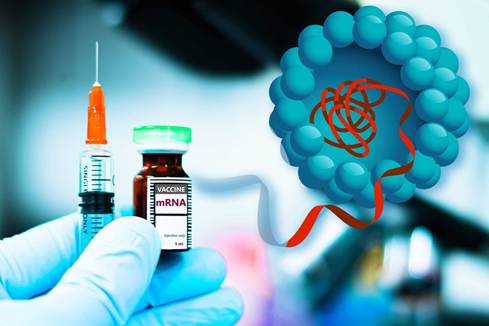
Cancer is really hundreds of diseases, and Unutmaz explains why it is sometimes difficult to treat: tumor cells are our own cells, so anything that kills them tends to hurt healthy tissue too. Immunotherapy, targeted smart drugs, and personalized mRNA vaccines (vaccines that teach your cells how to make a harmless piece of a protein from a virus or cancer cell, triggering an immune response) are changing that. His favorite example is a case from Australia where a man used AI to design an mRNA vaccine for his dog’s melanoma, and the tumor began to regress.
Scale that up, he says, and AI can model mutations and screen millions of compounds to produce treatments matched to each tumor. He predicts that cancer becomes curable within a decade. That is the boldest claim in the conversation, and it’s a prediction rather than something demonstrated today.
Aging: Prevention First, Reversal Second
Unutmaz sees aging as a loss of biological information and resilience, not simple wear and tear. Biology is constantly repairing itself, and at some point that program degrades. He expects prevention to arrive before reversal, so younger people might maintain their resilience while older people would need heavier repair work.
He points to a few hints that this is possible:
- Animals with natural advantages. Elephants have extra copies of the tumor-suppressor gene p53, and naked mole rats live decades longer than similar rodents.
- Supercentenarians. Only a few hundred people worldwide reach 110. He asks what’s “right” about them and whether it could be engineered into everyone else.
- Cellular reprogramming. Yamanaka factors (a specific set of four proteins that can turn mature cells into stem cells) can wind a cell’s age back in the lab, and partial reprogramming (where three out of four Yamanaka factors are used to rejuvenate cells) is entering human trials, including for the eye.
He does not expect a single miracle pill or treatment, though. Reprogramming does not fix every hallmark of aging, and a rejuvenated cell in an old body, with an old microbiome and accumulated mutations, may just age again. He calls full-body rejuvenation a serious engineering problem, one that will need better delivery tools than viruses, far more data, and far more computational analysis. In some cases it may mean replacing organs rather than repairing them.
Why He Is Not Afraid of AI
Patrick pressed him on the pessimistic view of AI, and Unutmaz flatly rejects it. In his framing, the real existential threat has always been humans, and AI is an enabler that gives people superpowers. He sees the main risk as humans misusing it. He also expects cheaper drug development to make treatments more accessible, not less, since AI-driven discovery and digital-twin trials could cut costs by orders of magnitude.
A Grain of Salt
Unutmaz is an optimist by temperament, and he says so. He has been writing about a singularity (a hypothetical moment when AI surpasses human intelligence) for 25 years, and he thinks his old timelines were too conservative. Some of his claims are strong: near-zero hallucinations (where AI makes up information), cancer solved within a decade, aging reversed within two. Those are forecasts, and history is full of confident biomedical forecasts that ran late. Even he says the data biology needs is mostly still uncollected, that trust in AI-generated medicine has to be earned, and that validation cannot be skipped.
What You Can Do Now
The most actionable idea, discussed near the end of the episode and in the show notes, is the mini digital twin. You do not need a futuristic simulation. Start by organizing your own health data with dates: labs, imaging, medications, wearable readings. That gives future AI tools a personal baseline to work from. The show notes stress doing it with attention to privacy and clinical safeguards.
Beyond that, the message is a mix of the familiar and the new. Keep yourself healthy enough to benefit from what is coming, use AI as a second opinion rather than a replacement for your doctor, and treat prediction as a prompt to act, not as a verdict.
 Comments