


The Aging Brain May Be Adapting, Not Just Declining—Here’s What That Could Mean for Brain Health
Researchers propose that aging shifts the brain toward accumulated knowledge and big-picture thinking, suggesting that cognitive longevity may involve nurturing these strengths.
Highlights
- The hypothesis states that, with age, we naturally stop remembering every detail and shift towards “big-picture” thinking, which, evolutionarily speaking, ultimately helps the group or community as a whole.
- Evidence from various clinical studies, including MRI studies, shows that the brain shifts towards big-picture thinking in older adults, who sometimes perform better on certain memory recall tests.
- Incorporating this hypothesis, ways of supporting better brain health with aging are listed.
Forgetting the details of a conversation can feel like evidence that the brain is losing its edge. But what if some age-related memory changes reflect a shift in priorities—not simply a failing system?
In a new paper published in Perspectives on Psychological Science, University of Arizona researchers propose that brain aging represents a continuation of development. Their “adaptive-aging hypothesis” suggests that the brain gradually places less emphasis on recording individual experiences in precise detail and more on using accumulated knowledge to interpret the world.
From Remembering Details to Understanding Meaning
The framework centers on two interacting forms of memory. Episodic memory captures specific experiences: what happened, where it happened, and when. It depends heavily on a small brain structure called the hippocampus. Semantic memory encompasses knowledge, such as facts, word meanings, and concepts. Semantic memory is supported by the cerebral cortex, the outermost layer of the brain.
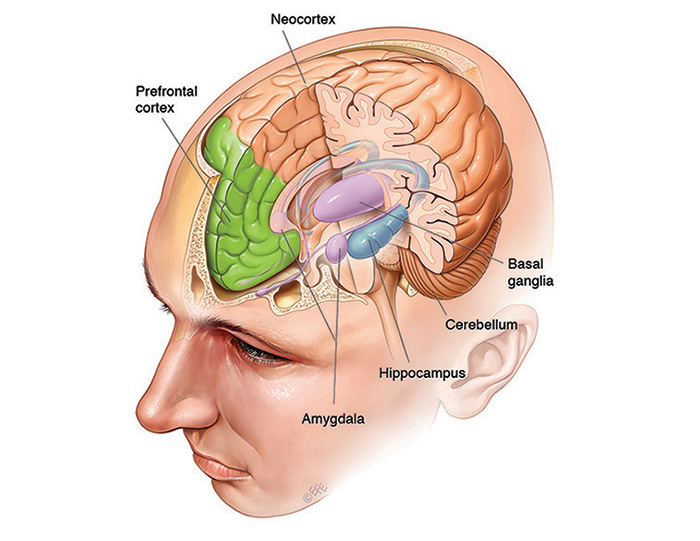
With age, episodic precision commonly declines, while semantic knowledge is relatively preserved. Older adults may remember the central meaning of an experience without retaining every contextual detail. The authors propose that this shift toward “gist” could reflect an evolved reallocation of brain resources toward the demands of later life.
For example, mentoring someone through a difficult decision may depend more on recognizing familiar patterns and communicating lessons than on recalling exactly when each lesson was learned. In the proposed framework, older brains become increasingly oriented toward applying and transmitting knowledge.
This does not mean the hippocampus switches off or that aging automatically produces wisdom. The authors explicitly acknowledge that wise reasoning also requires reflection, emotional regulation, and perspective-taking—not simply more years of experience.
What Supports the Hypothesis—and What Remains Unproven?
The researchers draw on human brain imaging, behavioral studies, and animal experiments. They explain that, during some memory tasks, older adults show reduced hippocampal activity (episodic) and increased recruitment of frontal cortex regions (semantic). Aging also alters processes that strengthen or weaken connections between neurons, although some forms of plasticity remain intact.
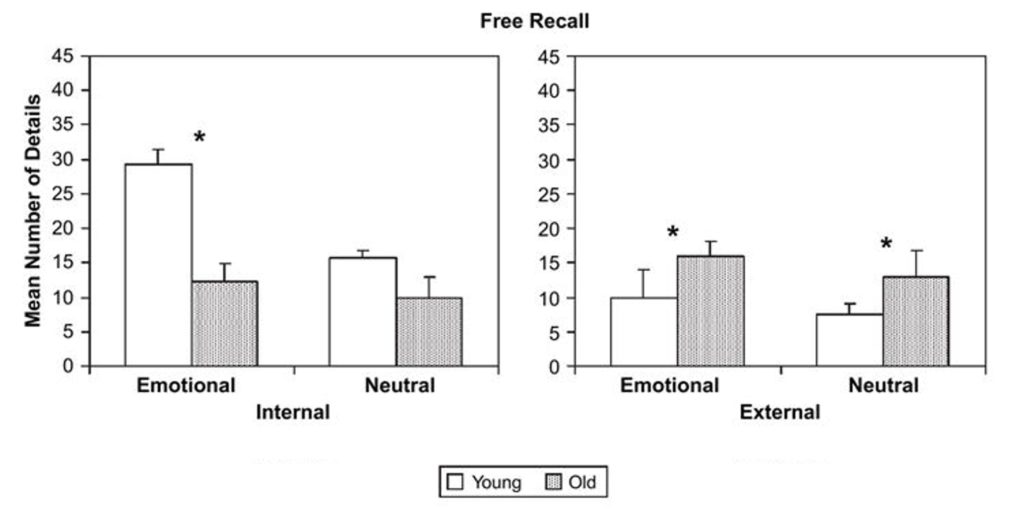
Traditionally, researchers have interpreted greater frontal recruitment as compensation: the brain brings in additional resources to offset declining function. The Arizona University researchers suggest that some of the same changes could instead reflect a developmental shift toward knowledge-based processing.
However, distinguishing between pathological compensation and natural development will require more than measuring different brain activity. Scientists still need to show that the proposed reorganization predicts meaningful benefits, such as better knowledge integration or social judgment, rather than merely accompanying improvements in semantic memory. Moreover, greater reliance on semantic knowledge does not mean cognitive performance becomes universally more efficient or resilient.
Ways of Supporting Brain Health
The paper’s practical implications for maintaining brain health fall into two categories: established approaches and promising activities that still need more testing.
Happy Body, Happy Brain
The authors emphasize that the strongest evidence for successful cognitive aging supports brain maintenance, including physical activity and addressing cardiovascular and metabolic risk factors. They cite the FINGER trial, which tested a combined program of diet, exercise, cognitive training, and cardiovascular-risk monitoring in older adults at risk of cognitive decline.
The priority is therefore not to replace established prevention strategies with “wisdom training.” Maintaining physical activity and working with healthcare professionals to manage relevant health risks remain central, even if some cognitive changes prove adaptive.
Build Knowledge, Not Just Recall Speed
The researchers suggest that learning vocabulary, storytelling, and knowledge-based games might strengthen the cortical (cortex) systems older adults increasingly use. These are proposed ways to support late-life cognition, not interventions proven by this paper to prevent dementia.
Practical examples include studying a subject that interests you, discussing a book, or explaining a newly learned concept in your own words. These activities translate the adaptive-aging hypothesis’ emphasis on accumulating and organizing knowledge into everyday opportunities.

Practice Organizing Information Meaningfully
The paper also highlights strategic memory approaches, including semantic clustering—grouping information by meaning—and mnemonic devices (e.g., using “Please Excuse My Dear Aunt Sally” for order of operations in math: Parentheses, Exponents, Multiplication, Division, Addition, Subtraction). Such strategies may help older adults draw on existing knowledge rather than depend entirely on remembering isolated details.
For example, organize a shopping list into categories or connect an unfamiliar concept to something you already understand. The aim is to give memories a meaningful structure.
Put Experience into Words
Structured autobiographical storytelling and perspective-taking are among the approaches the authors propose for supporting the brain’s hypothesized shift toward meaning and integration. Mentoring, recording family stories, or discussing lessons learned offer accessible ways to put these ideas into practice.
The specific ability of these tactics to reinforce adaptive brain reorganization remains untested. Still, they illustrate a broader principle: cognitive engagement can involve making sense of experience, not just performing better on memory drills.
Adaptation Is Not a Reason to Ignore Cognitive Decline
The authors make sure to distinguish the brain’s proposed developmental shift from the most common neurodegenerative disorder, Alzheimer’s disease (AD). In AD, memory systems are damaged, and semantic knowledge can be undermined. However, the University of Arizona researchers’ proposed shift does not justify dismissing worsening cognitive problems as beneficial adaptation.
They also speculate that artificially restoring hippocampal plasticity could sometimes destabilize established knowledge. When we recall a memory, it can become susceptible to change. The authors therefore propose that reducing hippocampal involvement in memory updating may help protect accumulated knowledge from distortion—a possibility that remains unproven. They also suggest that this shift could help conserve energy, given the hippocampus’s substantial energy demands.
For now, its most useful contribution is a broader goal for cognitive longevity: preserve brain health while continuing to develop knowledge, strategies, and opportunities to share experience—not simply measure success by how closely an older brain resembles a younger one.
 Comments