


Ways to Counter Age-Related Muscle Loss and Cognitive Decline
Cumulative evidence shows that skeletal muscle communicates with the brain via certain molecules and that dysfunctional communication from muscle wasting accelerates cognitive impairment with age.
Highlights
- An age-related loss in muscle mass and strength (sarcopenia) frequently occurs with cognitive decline in older adults, and growing evidence suggests these conditions share underlying biological contributors.
- Evidence points to chemical contributors called myokines mediating communication between muscles and the brain, and how sarcopenia disrupts this communication to accelerate cognitive impairment.
- Some interventions—such as exercise, a magnetic brain stimulation procedure, and compounds like NAD+ precursors—show potential to modulate myokine signaling and preserve muscle function and cognition.
Sarcopenia, a progressive disorder with low muscle strength as a key feature, affects 10% of older adults and 45% of those aged 80 years and older. In parallel, dementia affects over 57 million people globally, and a condition that often precedes it, mild cognitive impairment, has a prevalence of 23.7% in the aged population.
Interestingly, the co-occurrence of sarcopenia and cognitive impairment is now described under the umbrella term ‘cognitive sarcopenia.’ This comes, in part, because although the underlying pathological mechanisms of sarcopenia have been framed in the past as solely a disorder of the muscles, growing evidence positions the musculature as an organ system that signals via chemicals to influence how the brain ages.
Along these lines, the chemical signalling from muscles to the brain comes in the form of myokines—small proteins or chains of protein building blocks (amino acids)—which muscles secrete in response to their contraction. Accumulating evidence points to impaired myokine signaling from muscles with age, as occurs with sarcopenia, in part driving age-related cognitive impairment.
Characteristics of Cognitive Sarcopenia
Five biological characteristics, all targetable with interventions, depict cognitive sarcopenia. They are as follows:
- Impaired myokine signaling
- Chronic, low-grade systemic inflammation (inflammaging)
- Dysfunction of the cell’s powerhouses (mitochondria) in the muscles and brain
- The reduced ability of muscle to increase protein synthesis in response to exercise training and protein intake (anabolic resistance)
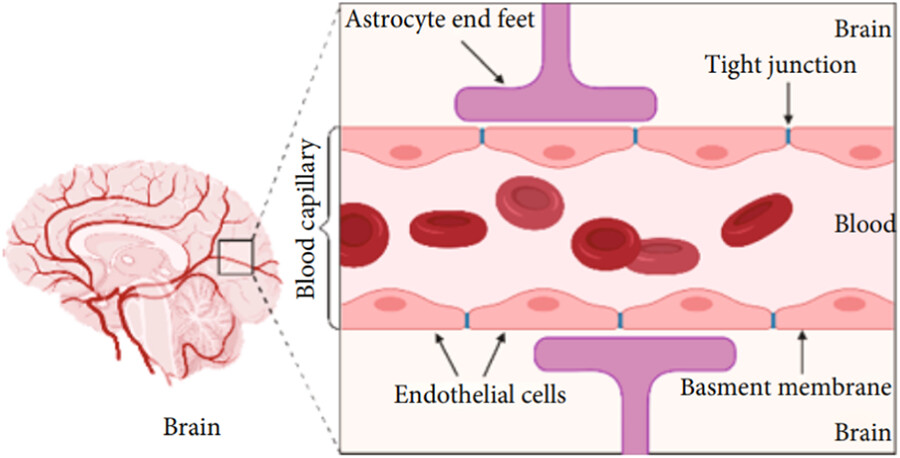
- Disruption of the blood-brain barrier (a highly selective, semipermeable barrier between the brain and circulation comprised mostly of blood vessel cells)
More Details on Myokines
Skeletal muscle is the largest organ system that secretes substances into the body to act on distant target tissues. As such, it secretes a complex of myokines, metabolites, and types of RNAs, among other molecules, to act on the muscle itself, along with tissues outside the vicinity of muscles. Many of the signaling molecules secreted from muscle cross or modulate the blood-brain barrier to influence neuroplasticity (the brain’s ability to change its structure, function, and connections in response to experience, learning, and injury). Because myokines act as critical signaling molecules between the muscle and brain, more details on myokines secreted during muscle contraction follow:
Irisin
Irisin consists of a chain of amino acids and is synthesized and secreted during muscle contraction. Human studies that examined irisin levels in circulation reported a positive correlation between irisin levels and multiple domains of cognitive function. Further human trials that compare groups with increased blood irisin levels and low irisin levels will be required to validate irisin’s potential to enhance older adults’ cognition.
BDNF
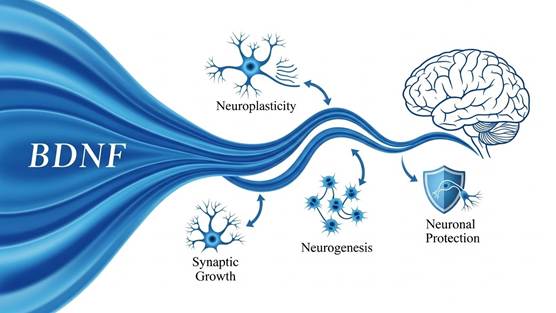
Brain-derived neurotrophic factor (BDNF) is a protein produced in and secreted by skeletal muscles (as well as certain neurons). In animal models, it supports the survival and growth of neurons, especially in brain regions critical for learning and memory. Human studies suggest BDNF promotes cognitive function and the production of new neurons (neurogenesis) in a brain region critical for learning and memory (the hippocampus).
Cathepsin B
Cathepsin B is a muscle-derived enzyme that crosses the blood-brain barrier in animal models and stimulates increased brain BDNF and the production of new neurons. Human research has shown that its levels increase with treadmill running, which is associated with memory improvement. More human studies are necessary to confirm cathepsin B’s impact on memory and overall cognitive performance.
IL-6
Interleukin-6 (IL-6) is an inflammatory protein secreted by skeletal muscles, yet its short-term effects can be beneficial. When exercise induces spikes in IL-6 levels over short periods, this triggers metabolic adaptations, promoting muscle repair and reducing inflammation. However, persistently elevated IL-6 levels over longer durations drive inflammaging, sarcopenia, and cognitive decline.
IGF-1
Insulin-like growth factor (IGF-1) supports the preservation of neurons, and its declining levels with age compromise muscle building and the function of the hippocampus. Research shows that chronic exercise increases circulating IGF-1, which may help prevent age-related cognitive decline.
Preventive Strategies That Target Muscle-Brain Communication
Exercise
Aerobic exercise (sustained activity that uses large muscle groups and raises your heart rate and breathing), along with resistance exercise (where muscles contract against a force), are interventions most consistently supported by research for upregulating myokine secretion in older adults. For example, a human study involving older adults directly attributed exercise-induced changes to irisin, BDNF, and IL-6 levels to improvements in cognitive function. As for how much exercise is necessary for beneficial effects from increased myokines, an analysis of human studies suggests that 150 minutes or more of moderate to vigorous exercise a week produces the largest increase in markers of neuroprotection. Importantly, evidence linking exercise to myokine-mediated neuroprotection is compellingly strong.

Protein
Research supports that dietary protein supplementation, coupled with exercise, amplifies the post-exercise muscle-building response. However, the effects of protein supplementation on myokine signaling remain mixed and need further investigation to confirm enhanced myokine signaling.
For reference, aged adults’ recommended daily protein intake is 1.0 g to 1.3 g of protein per kg of body weight per day. This means that, for an average-aged adult weighing about 195 lbs (88 kg), an optimal amount of daily protein will fall between 88 g and 114.4 g. This amount of daily protein may optimize the body’s muscle-building response when coupled with twice-weekly aerobic or resistance exercise.
Lecithin
Lecithin is a yellow-brownish substance composed of constituent molecules of fats, which serve as structural components of cell membranes. A study suggests that lecithin supplementation alleviates memory deficits and muscle decline in older adults, as well as in a mouse model of accelerated aging, via modulation of myokine signaling between muscles and the brain. Since evidence for lecithin’s role as a modulator of myokine signaling, cognition, and muscle decline rests on a single study, replicating these findings with further human trials will be necessary.
Probiotics
Probiotics are live microorganisms, usually specific bacteria, that provide a health benefit when applied in adequate amounts. Certain probiotic supplements, such as those with the bacterial species Bifidobacterium bifidum and Lactobacillus paracasei, show evidence of supporting myokine signaling between the muscle and brain and alleviating sarcopenia and cognitive impairment in a preclinical study. Further clinical trials will be necessary to confirm the translation of these effects to older adults.

Neuromodulation with Repetitive Transcranial Magnetic Stimulation
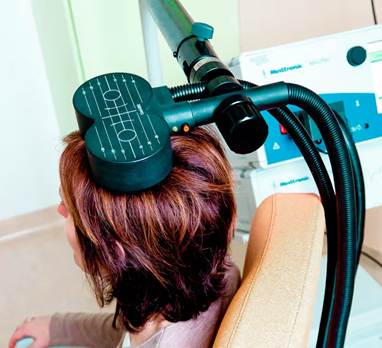
Repetitive transcranial magnetic stimulation (rTMS) is a non-invasive brain-stimulation treatment. In this procedure, a clinician places a coil containing an insulated conducting wire (electromagnetic coil) against the scalp. The coil delivers repeated, rapidly changing magnetic pulses that induce small electrical currents in brain tissue, altering activity in targeted neural circuits.
Research suggests that rTMS, particularly when combined with an exercise regimen, produces improvements in muscle strength, scores on an assessment of cognition, and BDNF levels in adults with sarcopenia and mild cognitive impairment. Further human trials will be necessary to confirm these effects as well as to pinpoint optimal rTMS treatment durations and frequency of treatments.
NAD+ Precursors
NAD+ (nicotinamide adenine dinucleotide) precursors, such as NR (nicotinamide riboside) and NMN (nicotinamide mononucleotide), could theoretically act on myokine-mediated signaling between muscles and the brain. The rationale behind this notion is strong biologically, but clinical trial evidence that these supplements prevent or treat sarcopenia and age-related cognitive decline remains preliminary.
As far as the biological rationale for NAD+ precursors goes, NAD+ is an essential molecule for mitochondrial cellular energy generation (in the form of ATP molecules). With aging, NAD+ availability can decline in muscles and the brain, reducing mitochondrial energy. Thus, lowered NAD+ availability with age can impair mitochondrial function (specifically hampering mitochondrial energy production) in the muscle and brain. In this regard, a plausible way that increasing NAD+ can improve muscle and brain mitochondrial function and ultimately alleviate sarcopenia and cognitive decline entails the following:
NAD+ restoration in muscle → better mitochondrial function → increased exercise capacity → improved myokine signaling → greater support for brain function
While research using rodents shows that NAD+ precursors can alleviate aspects of sarcopenia and cognitive decline with age, human trial data remains inconclusive. Thus, further trials will be necessary to unravel whether these precursors alleviate sarcopenia and cognitive decline.
What human trials of NAD+ precursors show:
| Domain | Human trial evidence | What it does not establish |
| NAD⁺ biology | NR and NMN can raise circulating NAD⁺ metabolites in older adults. pmc.ncbi.nlm.nih | That increased blood NAD⁺ equates to sustained muscle or brain NAD⁺ restoration |
| Muscle function | A small NMN trial in healthy older men reported signals for gait speed and some grip/performance measures, without a significant change in muscle mass. pmc.ncbi.nlm.nih | Prevention or reversal of clinically defined sarcopenia |
| Cognition | In a 10-week randomized NR study in older adults with mild cognitive impairment, blood NAD⁺ increased, but cognition did not improve. pmc.ncbi.nlm.nih | Treatment of MCI, Alzheimer’s disease, or cognitive decline |
| Broad outcomes | Several NR randomized trials have not shown consistent improvements in insulin sensitivity, energy expenditure, or exercise capacity. pmc.ncbi.nlm.nih | Routine “anti-aging” benefits from precursor supplementation |
The Framework of Myokine Signaling Between Muscles and the Brain
Myokine signaling between muscles and the brain, and its impairment associated with sarcopenia and cognitive decline, presents a framework for addressing these age-related conditions. Accordingly, some evidence points to exercise, protein supplementation, lecithin, probiotics, rTMS, and NAD+ precursors having the potential to enhance myokine signaling. In doing so, these interventions may alleviate muscle decline and cognitive impairments with age. Only new data that will likely come to light in the future can definitively tell whether these interventions preserve muscles and the brain as people age.
 Comments