


Creatine Powers Immune Cells Against Cancer in New UCLA Study
University of California, Los Angeles (UCLA) scientists find that creatine improves the capacity of immune cells to combat tumors in mice.
Highlights
- Creatine boosts the cellular energy levels of mouse immune cells.
- Supplementing mice that model cancer with creatine reduces tumor growth.
- Creatine boosts the anti-tumor capacity of human immune cells.
Perhaps the most researched supplement of all time, creatine is known for aiding in strength and mass gains. However, scientists are now finding that creatine may rejuvenate the immune system. In a new iScience study, researchers from UCLA show that creatine restores the cancer-killing capacity of immune cells.
Creatine Boosts Immune Cell Energy Levels
Our immune cells demand massive levels of energy to fight off tumors. Along those lines, creatine, which boosts cellular energy, was previously shown to suppress tumor growth. To explore this further, the UCLA researchers focused on dendritic cells, which are part of the immune system’s surveillance system. Dendritic cells can detect antigens on the surface of tumor cells and present them to other immune cells, which directly destroy the tumor cells.
The researchers found that, when stimulated with an antigen, dendritic cells increase their capacity to take up creatine. Upon finding this, the researchers supplemented dendritic cells with creatine, which was shown to increase immune cell survival and production of cellular energy, ATP (adenosine triphosphate). Creatine also increased the capacity of dendritic cells to activate T cells, which are the immune cells that directly destroy tumor cells.
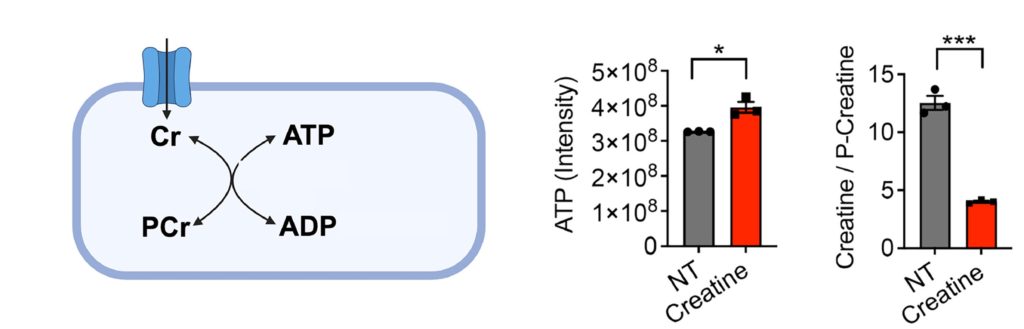
Creatine Suppresses Tumor Growth
To test the effect of creatine on living organisms, the researchers turned to mice that model cancer. To model cancer, researchers inject mice with cancer cells to induce tumor growth. Similarly, the UCLA researchers injected mice with skin cancer cells. Subsequently, the mice were treated with 10.5 mg/day of creatine for 13 days. Remarkably, this suppressed tumor growth and increased the number of dendritic cells within each tumor. These findings suggest that creatine powers dendritic cells against cancer.
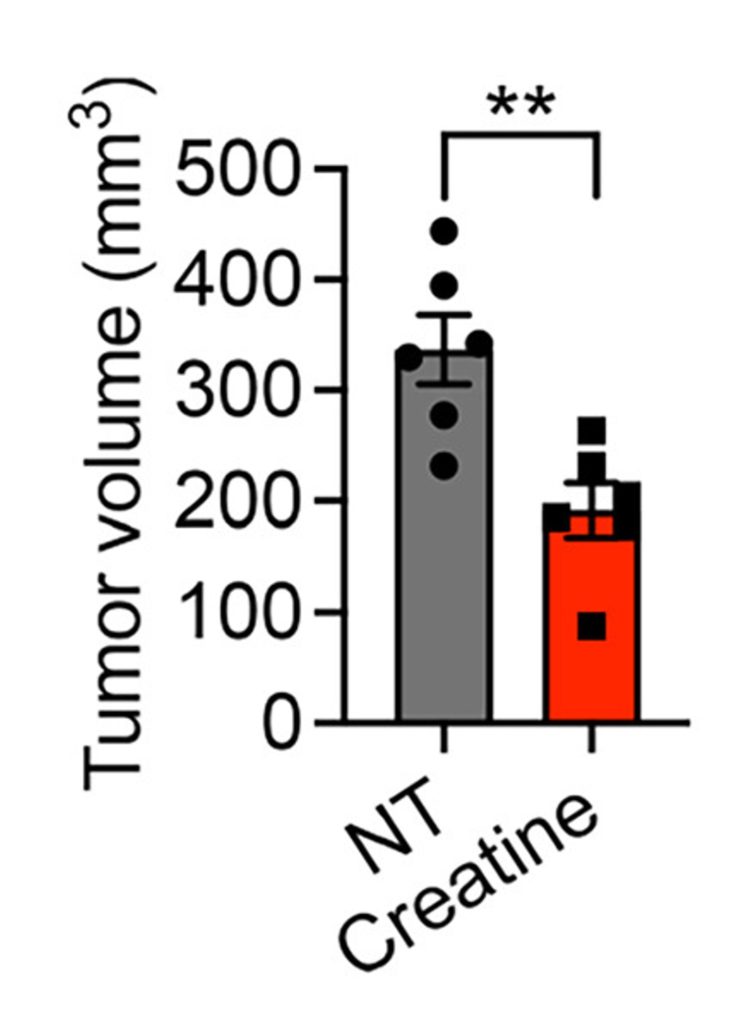
Creatine Boosts the Anti-Tumor Capacity of Human Immune Cells
To determine whether their results have any human relevance, the researchers examined dendritic cells from healthy adults. They found that creatine treatment increased the tumor-fighting capacity of the immune cells, as shown by various cell surface markers. They also showed that creatine increases the activation of T cells, a finding also shown by cell surface markers, including one called CD25. These findings suggest that creatine boosts the anti-tumor capacity of human immune cells.
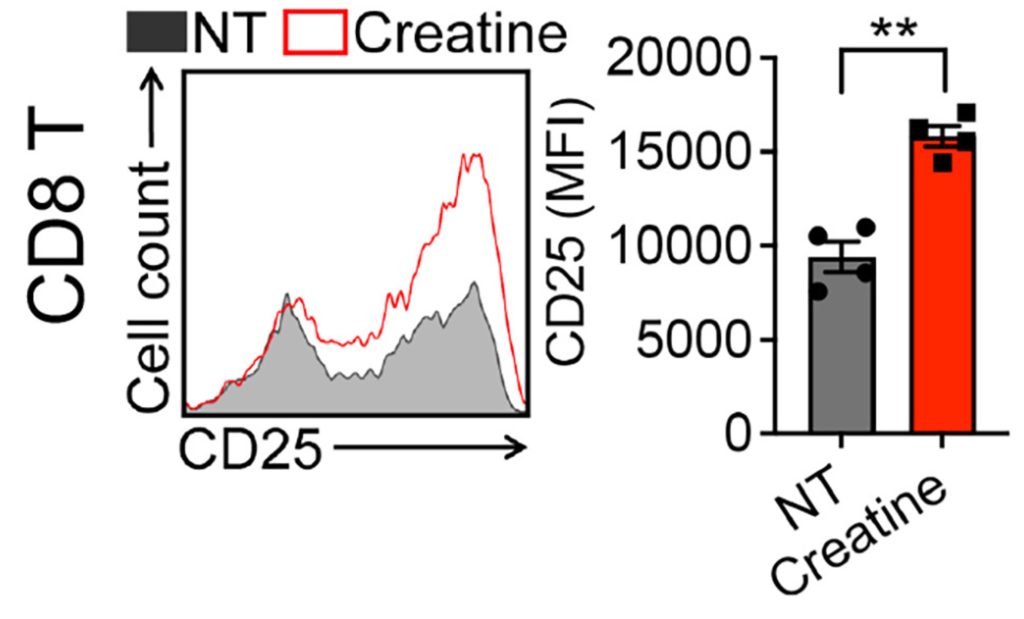
Taking Creatine to Slow Aging
Creatine is among, if not the most, researched supplement available. It has been used by many bodybuilders and gym enthusiasts to build muscle. This effect is just one of the ways creatine could slow aging. As we age, our muscles shrink, so creatine could potentially slow mass and strength loss. We have previously reported on a study showing that creatine can increase muscle strength and size in Alzheimer’s patients.
Furthermore, in an analysis of 10 studies, creatine was reported to improve memory, particularly in older adults. This means that creatine could potentially slow brain aging by maintaining memory with age. Creatine has also been shown to improve sleep, which is a fundamental pillar of health and longevity. Now, the UCLA researchers demonstrate that creatine may slow immune system aging and fend off cancer by rejuvenating dendritic cells. Together, these studies position creatine as a pro-longevity supplement that may slow aging.
Model: B16-OVA melanoma model mice
Dosage: 10.5 mg/day of creatine injections for 13 days
 Comments