


Foods Lacking Fiber Destroy Emotional Memories, New Study Shows
Fear-based memory impairments occur in aged but not young rats in response to multiple refined food diets that lack fiber, affecting circulating beneficial fats produced in the gut.
Highlights
- The aged brain is particularly vulnerable to fear-based memory impairments induced by processed food.
- Processed food also triggers mitochondrial dysfunction in the aged but not the young brain.
- Processed food reduces circulating short-chain fatty acids—signaling molecules from the gut microbiome that improve brain and mitochondrial health.
As the scientific evidence accumulates, it is now clear that certain diets promote chronic diseases and early mortality. With more scientists exploring the effects of mass-produced foods with long shelf-lives, we are gaining a more detailed explanation for how these foods cause physiological harm. Not only do certain foods increase the rate of cardiovascular, liver, and pancreatic deterioration, but they also affect the brain’s capacity to function normally.
In a new study, researchers at The Ohio State University demonstrate that refined diets, regardless of fat content, impair the brain’s fear-center, the amygdala. Crucially, they show that refined diets impair the amygdala’s mitochondria, which have dire consequences for the aging brain. Additionally, they show that the harmful effects of refined diets occur within just a few days, suggesting that chronically consuming refined foods could have far worse effects.
Aged Brains are Particularly Vulnerable to Fear-Based Memory Impairments
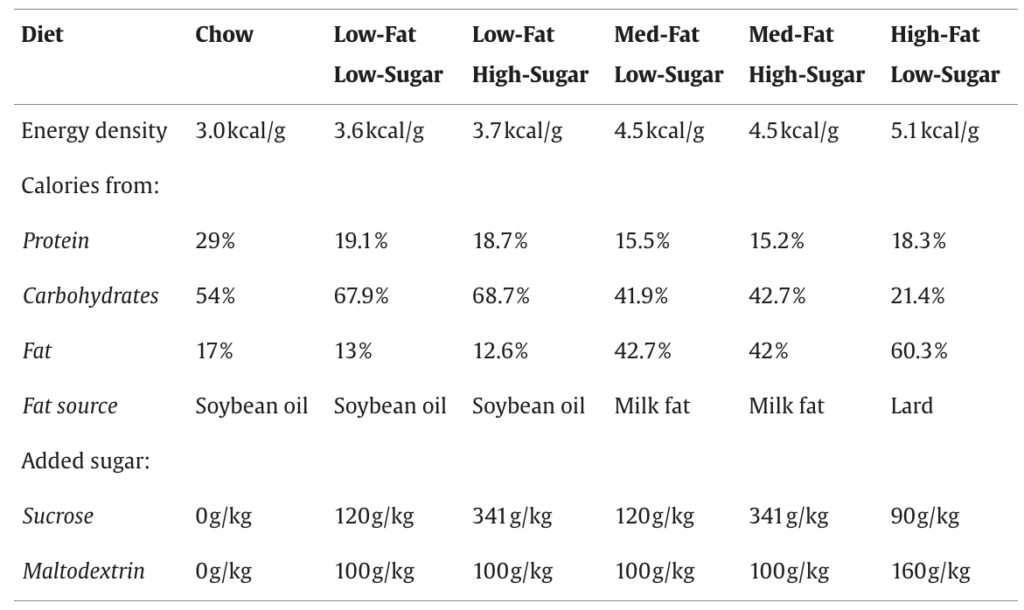
High-fat and high-sugar diets have previously been shown to contribute to memory impairments, but in separate studies. As a result, the contribution of each macronutrient (fat or sugar) in impairing memory is largely unclear. Moreover, most studies focus on young animals, whereas the effect of high-fat and high-sugar diets on aged animals is lacking. For these reasons, the Ohio State University researchers tested several diets with varying levels of fats and sugars on both young and aged rats. They began with a total of five diets, which were tested against a normal chow diet that lab rats usually consume.
Refined Diets Impair Memory
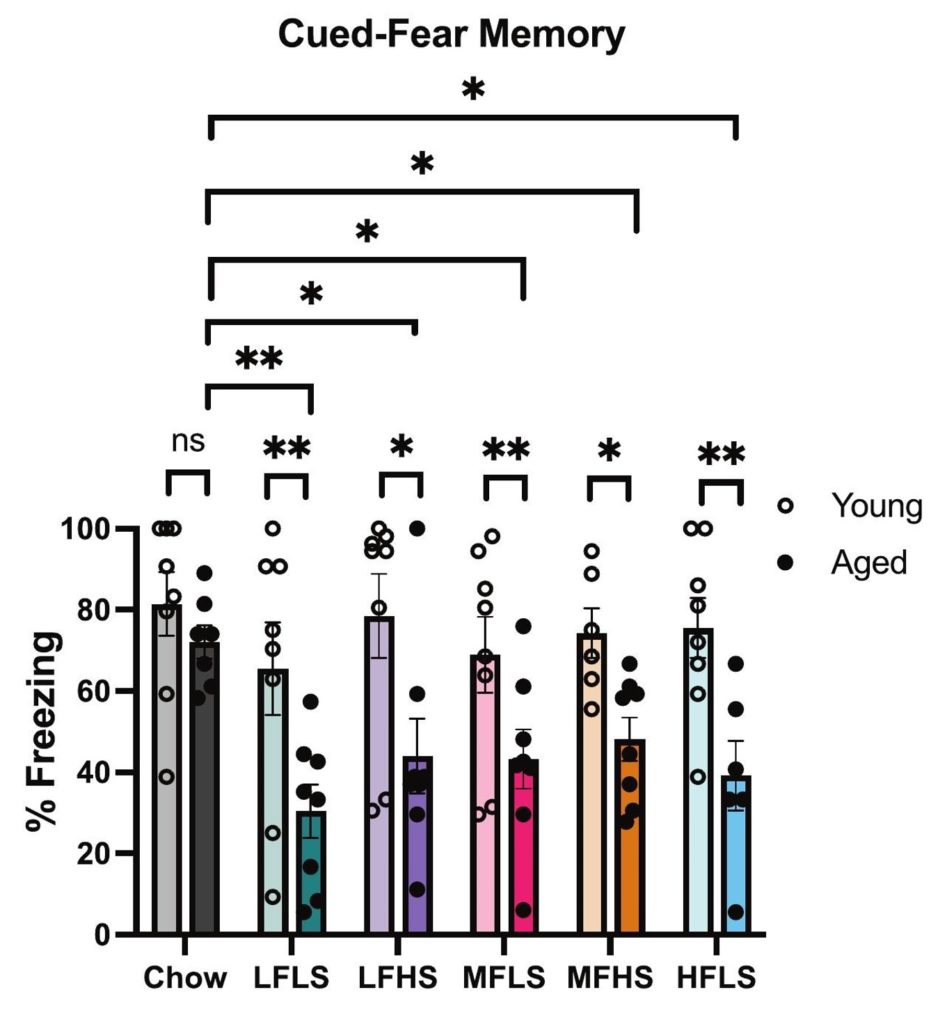
After consuming their respective diets for 3 days, the rats were subjected to an experimental paradigm designed to measure fear-based memories. The paradigm is a form of Pavlovian associative learning, where a neutral stimulus, a cue, is paired with an aversive stimulus. Called cued-fear memory, this type of fear-based memory is primarily dependent on the amygdala, which processes memories associated with emotional arousal.
For the test, rats were placed into a chamber with an electrified floor. The researchers then played an irritating sound and turned on the electric floor, shocking the rats’ paws. The sound was carefully timed before the paw shock so the rats would associate the sound with pain. According to the paradigm, this should have conditioned the rats to fear the sound. In turn, fear could be measured by how often the rats freeze, since they freeze when scared.
Four days after being conditioned to fear the irritating sound, the rats’ cued-fear memory was tested. In this case, the cue was the sound, and it was played once the rats were placed into a new environment (cage). Remarkably, it was found that, regardless of the refined diet, the aged rats froze less than the young rats in response to the sound. As less freezing indicates less fear, these findings suggest that age makes the amygdala especially vulnerable to fear-based memory impairments.
The Aged Amygdala Is Especially Susceptible to Mitochondrial Dysfunction
Our mitochondria utilize the oxygen we breathe to generate cellular energy. When mitochondria become dysfunctional, as with age, they become less efficient at utilizing oxygen and producing cellular energy. Without sufficient energy, cells malfunction and then begin to deteriorate, enter a state of senescence, or die. When it comes to brain cells, this can lead to neurodegeneration, cognitive impairments, and eventual dementia.
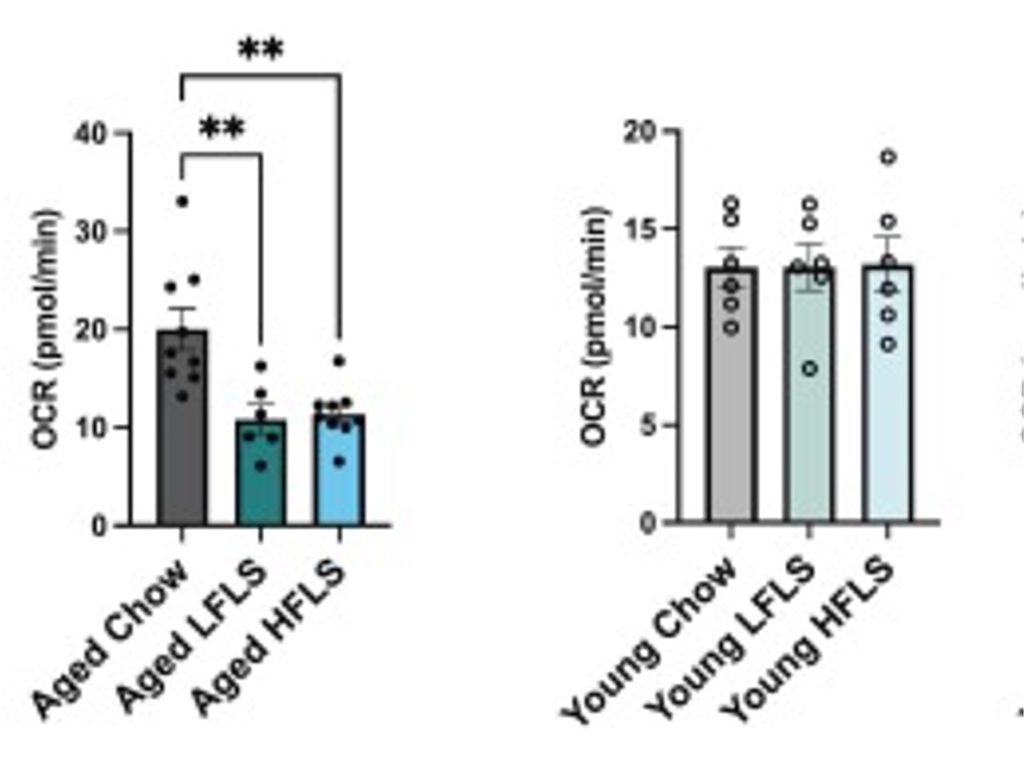
The Ohio State researchers assessed mitochondrial function by measuring the oxygen consumption rate of the amygdala and the hippocampus, where memories are consolidated. Since all the refined diets impaired fear-based memory, the researchers stuck with only two diets: the low-fat, low-sugar diet and the high-fat, low-sugar diet. It was found that both diets reduced oxygen consumption rates in aged but not young rats, suggesting that the amygdala and hippocampus of aged rats are susceptible to diet-induced mitochondrial dysfunction.
Refined Diets Exacerbate the Loss of Beneficial Gut Microbiome Signals
Low-fiber diets, such as the diets fed to the aged rats, are linked to mitochondrial dysfunction and the increased risk of cognitive impairments. Various microbes in our gut digest fiber and secrete short-chain fatty acids (SCFAs), which are beneficial fats that enter the bloodstream. SCFAs act as signaling molecules that can improve brain physiology. It follows that a lack of fiber can reduce circulating SCFAs, leading to impaired cognitive function.
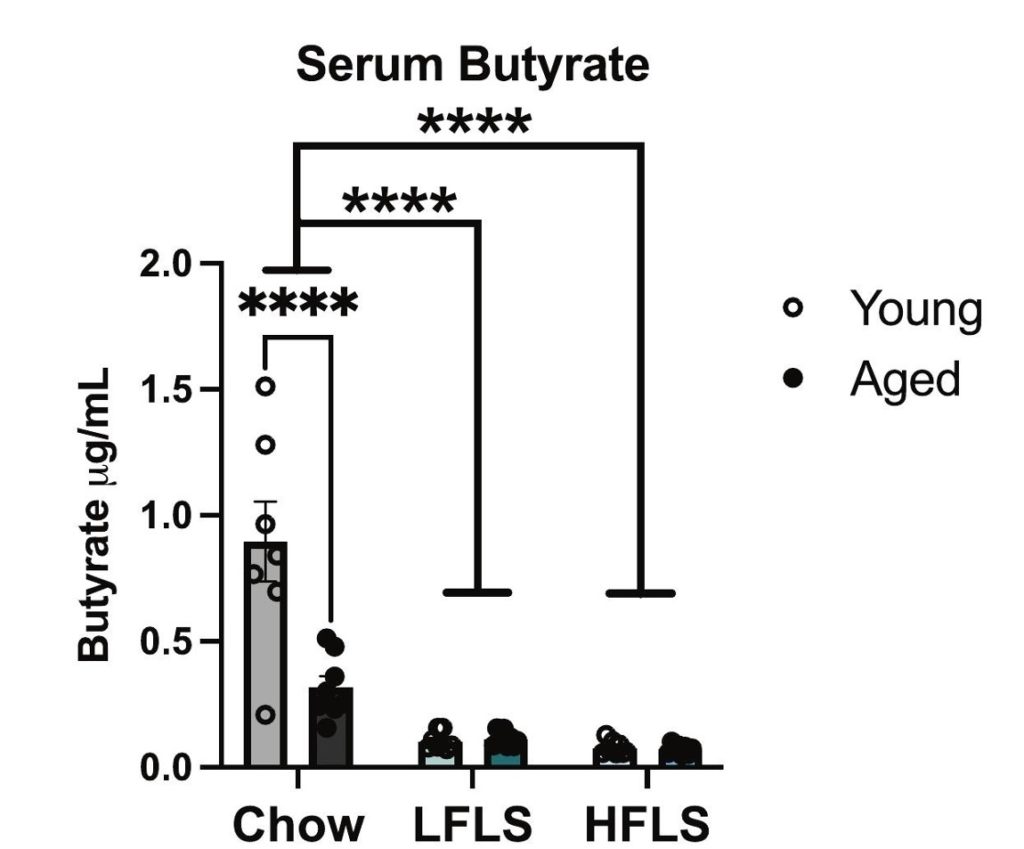
To gain insights into how refined diets can cause cognitive impairments and mitochondrial dysfunction, the Ohio State researchers measured SCFAs from the gut and bloodstream. Interestingly, they found that a key SCFA, called butyrate, was reduced by the refined diets in both young and aged rats. Moreover, the aged rats exhibited low butyrate levels even before the refined diets, suggesting that refined diets exacerbate age-related SCFA depletion.
Butyrate is known to improve mitochondrial function and reduce inflammation in the brain. What’s more, inflammation and mitochondrial dysfunction are underlying contributors to aging, including brain aging. Thus, based on these findings, it can be surmised that diets lacking fiber can alter the gut microbiome so that less butyrate is produced, leading to brain inflammation, mitochondrial dysfunction, and memory impairments.
The Consequences of an Impaired Amygdala
The amygdala is involved in emotional memories, such as memories associated with fear. These memories drive decision-making. Thus, an impaired amygdala may reduce the fear associated with making risky decisions.
“The amygdala is important for learning the association between something fearful and a bad outcome. And we found that all of the refined diets, whether they were high fat, high sugar, low fat, low sugar, it didn’t matter. They all impaired memory that’s governed by the amygdala,” said co-lead author Ruth Barrientos. “The amygdala plays a role in that kind of awareness and learning. Its vulnerability to a refined diet is therefore concerning for older adults who are at greater risk of financial exploitation and scams.”
The amygdala isn’t the only region of the body affected by processed foods, but as part of the brain, it affects our mood and perception. For optimal brain health, cognitive function, and emotional regulation, completely avoiding or limiting processed foods that lack vitamins, minerals, and fiber is a must, especially during the latter stages of life.
With that said, it’s possible that supplementing with fiber, vitamins, and minerals may weaken the effects of processed food. Supplementing with SCFAs may also counteract the effects of processed foods. A recent study even showed that fish oil counteracts the pro-aging effects of processed foods. However, consuming a diet consisting of mostly single-ingredient foods, including fatty fish, fruits, vegetables, nuts, seeds, and whole grains, may be more effective.
Model: 24-month-old F344xBN F1 male rats
Dosage: Avoid refined foods lacking fiber
 Comments