


The New “Tri-Axis” Anti-Aging Model: Why NMN, PQQ, and EGT Work Better Together
Why single supplements often fail—and how NMN (nicotinamide mononucleotide), PQQ (pyrroloquinoline quinone), and EGT (ergothioneine) may restore mitochondrial health.
Highlights
- While NMN maintains mitochondrial function, PQQ generates new mitochondria, and EGT removes the toxic byproducts of elevated energy production.
- NMN provides the basis for the combo, but EGT and PQQ can be replaced with other similar compounds.
- Ultimately, multiple complementary compounds may be necessary to target the complexities of cellular and mitochondrial aging.
Our mitochondria power our cells, but they aren’t perfect. Like any other machine, repeated use leads to degradation, especially without proper maintenance. This degradation becomes particularly apparent in the latter years of life, after damage has accumulated.
Damaged mitochondria are linked to several leading causes of death, including heart disease, cancer, Alzheimer’s disease, and diabetes. Building on this concern, University of Auckland researchers examined evidence on natural compounds that may help alleviate mitochondrial damage. As published in Redox Biology, they argue that a combination of three compounds may support mitochondrial health with age.
NMN/NR
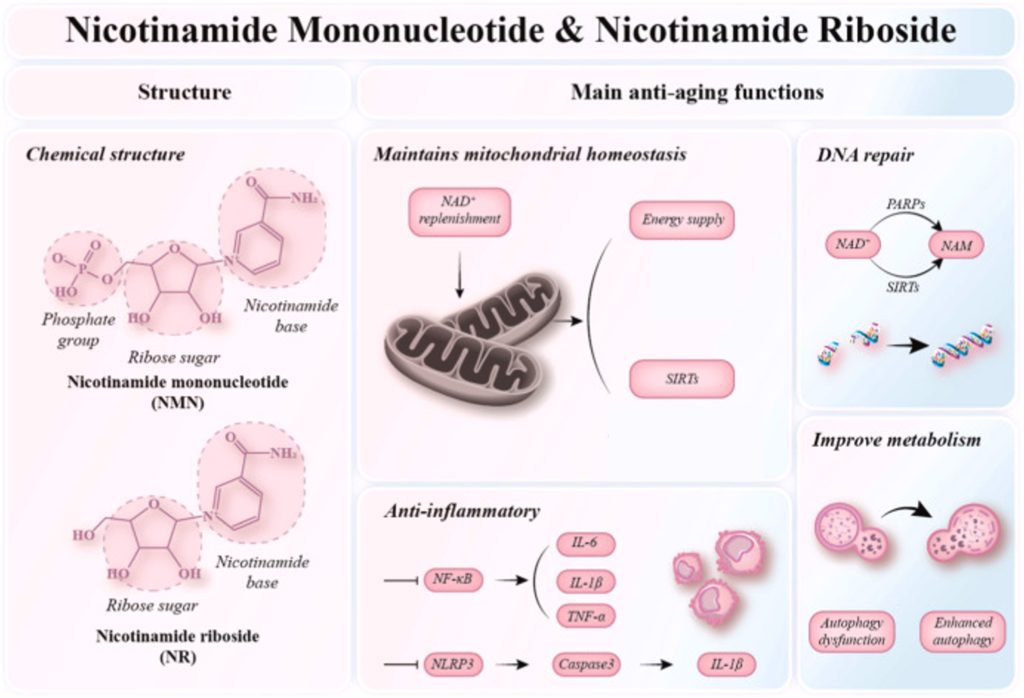
NMN and NR (nicotinamide riboside) are NAD+ (nicotinamide adenine dinucleotide) precursors that boost NAD+ levels. NAD+ helps mediate the production of cellular energy (ATP), including the energy produced by mitochondria. It also fuels enzymes called sirtuins, which help clear out and recycle unhealthy mitochondria through a process called mitophagy. This mitigates the generation of ROS (reactive oxygen species), which are molecules that cause damage to cells. Boosting NAD+ also reduces inflammation, aids in DNA repair, and supports autophagy, which clears out and recycles unwanted cellular material, similar to mitophagy.
PQQ
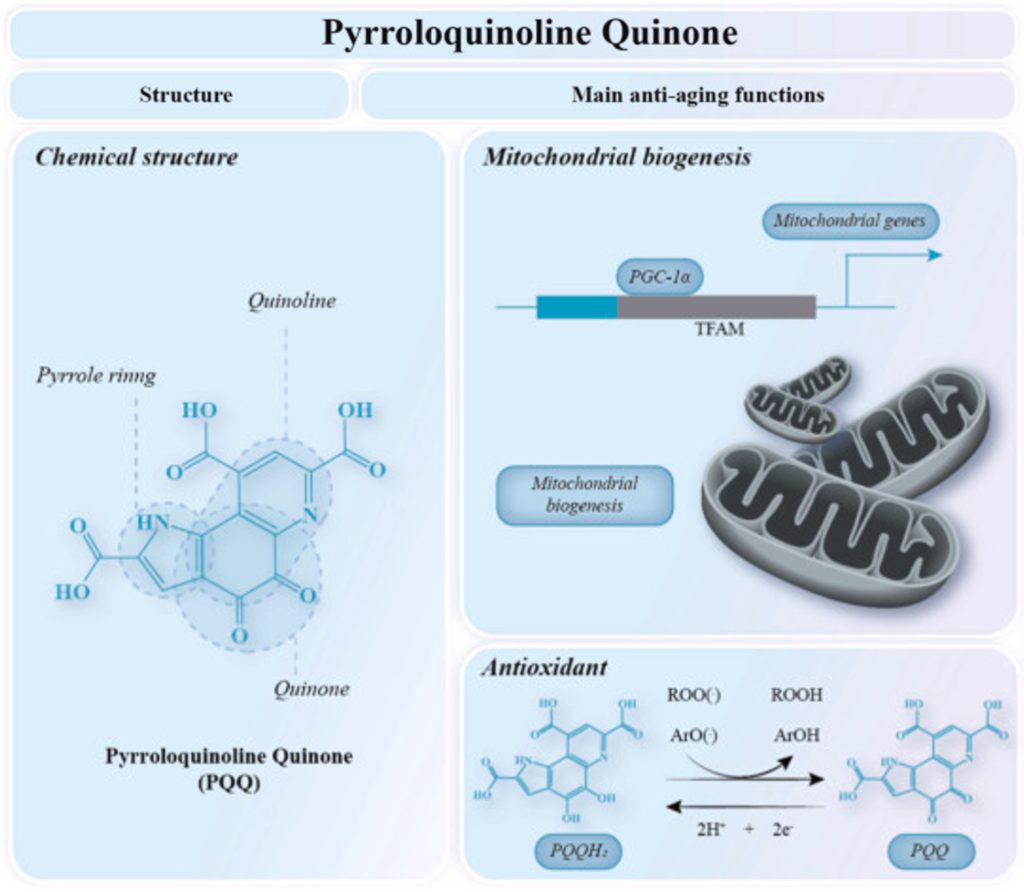
PQQ is a vitamin-like compound found in various vegetables, like celery and fermented soybeans. Studies show that PQQ enhances the generation of new mitochondria, a process called mitochondrial biogenesis. It does so by stimulating the body’s master nutrient-sensing molecule, AMPK. AMPK is usually activated in response to low energy, such as after an intense workout or while fasting. However, compounds like PQQ can also stimulate AMPK. When activated, AMPK increases the synthesis of NAD+, which fuels sirtuins. Sirtuins directly interact with the master regulator of mitochondrial biogenesis, PGC-1⍺. As an antioxidant, PQQ can also neutralize ROS and reduce the damage they cause to cells.
EGT
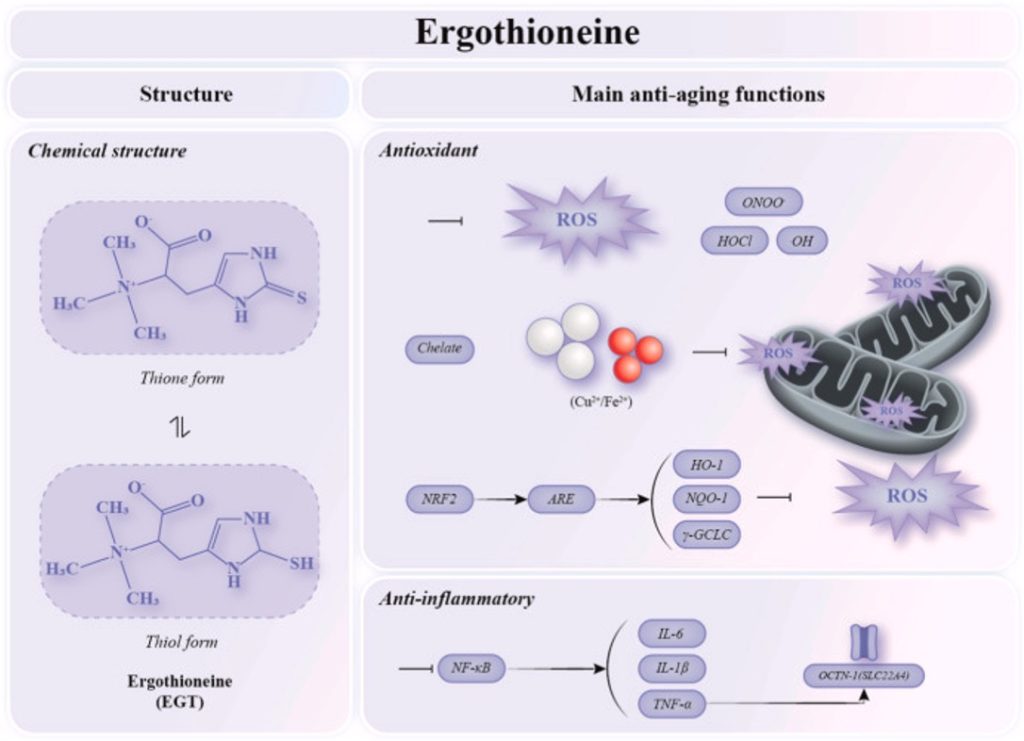
EGT was first isolated from the ergot fungus, where it gets its name. Among its dietary sources, mushrooms, like shitake mushrooms, are rich in EGT. It is a powerful antioxidant, and among the only known antioxidants to be actively transported into mitochondria. When mitochondria become unhealthy, such as with age, they produce excess levels of ROS that damage mitochondria, sustaining a cycle of damage. By neutralizing mitochondrial ROS, EGT can limit mitochondrial damage. At the same time, EGT also reduces inflammation.
Other Compounds with Similar Properties Could Modify the NMN/NR, PQQ, and EGT Stack
The University of Auckland researchers argue that NMN/NR, PQQ, and EGT may work synergistically to support key aspects of mitochondrial health. While boosting NAD+ may help restore age-related mitochondrial function, compounds with more targeted roles, such as PQQ and EGT, could enhance the benefits of NMN/NR.
Specifically, NMN/NR support mitochondrial function directly and provide fuel for sirtuins, both of which help maintain mitochondrial homeostasis. Because mitochondrial biogenesis declines with age, PQQ may further support the production of new healthy mitochondria by stimulating AMPK and increasing sirtuins. As mitochondrial activity rises, ROS production may also increase, so EGT can help neutralize excess ROS and protect mitochondrial health.
The researchers point out that other mitochondria-targeted compounds can potentially replace PQQ and EGT in the NMN/NR, PQQ, EGT combo. For example, antioxidants like coenzyme Q10 or alpha-lipoic acid could replace EGT in this stack. Urolithin A, which activates mitochondrial biogenesis, could replace PQQ. Moreover, additional compounds could further enhance the benefits of the stack, such as spermidine, which promotes autophagy.
The Need for Multi-Component Anti-Aging Interventions
Several patents describe multi-component strategies that include NMN/NR, PQQ, and EGT. Some include only NMN and EGT, aiming to improve metabolic efficiency while increasing antioxidant capacity to counter cellular aging. Others combine PQQ and EGT, proposing synergistic antioxidant effects that may improve sleep quality, support overall health, and delay aging. Patents that include NMN/NR, PQQ, and EGT describe how these compounds may complement one another to delay aging, reduce inflammation, and help maintain bodily function.
These patents emphasize the potential need for multi-factorial interventions that can target the complementary processes that drive aging at the cellular and molecular level. Some companies, such as Seragon Biosciences, have already released such interventions. Seragon’s Restorin includes components designed to boost NAD+, support mitophagy and mitochondrial health, and increase autophagy. A multi-component intervention similar to Restorin, SRN-901, has been shown to prolong the lifespan of mice by 33%.
Overall, this knowledge reinforces a broader theme in aging research: the most effective interventions may be those that target several interconnected drivers of aging at once. In that framework, NMN/NR, PQQ, and EGT are less like redundant ingredients and more like complementary tools, each addressing a different part of mitochondrial decline. That is why multi-component strategies such as SRN-901 may be especially promising, at least in animal models, for supporting mitochondrial health, resilience, and healthy aging.
 Comments