


Tomato Compound Improves Memory: New Mayo Clinic Study
Tomatidine, a compound found in green tomatoes, improves memory, counters frailty, and reduces age-promoting senescent cells in mice.
Highlights
- Tomatidine improves the health, physical performance, and memory of old mice.
- The tomato compound reduces cellular senescence in the liver, skin, and brain of old mice.
- Tomatidine reduces brain inflammation and blood-brain barrier damage in old mice.
As time passes, some of us accumulate more biological damage than others. Nevertheless, scientists are finding that this damage can be reduced, potentially leading to a healthier and longer life. They have identified several triggers of biological damage, including senescent cells. Studies have shown that a wide range of compounds, known as senotherapeutics, can alleviate the biological damage caused by senescent cells.
Now, researchers from the Mayo Clinic in New York have discovered that tomatidine acts as a senotherapeutic. In a new study published in EMBO Molecular Medicine, researchers show that tomatidine removes senescent cells from several organs in old mice. They also show that tomatidine counters memory impairments and physical deterioration. The findings suggest that tomatidine reduces the biological damage associated with aging.
Senescent Cells and Aging
The latest research suggests that senescent cells play a key role in protecting against cancer and promoting wound healing. However, with age, senescent cells are thought to accumulate and contribute to biological damage by secreting molecules known as the SASP (senescence-associated secretory phenotype). The SASP includes molecules that sustain chronic inflammation and tissue damage, which are both associated with biological aging.
Tomatidine Reduces Outward Manifestations of Aging
To find a serotherapeutic that can alleviate the burden of senescent cells, the Mayo Clinic researchers screened a small panel of natural compounds. In a lab dish, they found that tomatidine eliminated senescent cells without eliminating too many healthy cells. They then tested the effect of tomatidine on old mice. The mice were 21 months old, which is roughly equivalent to 62 human years. The old mice were given tomatidine in their food daily until they were 24 months old (~69 human years).
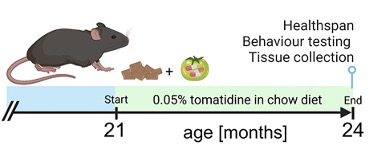
To assess the anti-aging effects of tomatidine, the researchers examined the mice’s healthspan. In humans, the latter years of life are often marked by poor health, including disability, disease, and other ailments. This reflects a shortened healthspan — the number of years lived in good health. For many people, lifestyle choices and other factors can reduce this period of healthy living.
With that being said, the researchers found that tomatidine prolonged the healthspan of old mice. This was shown by several factors, including a reduction in frailty, which is a condition involving heightened vulnerability to disability, disease, and death. Tomatidine also improved the coordination, motor function, and balance of the old mice.
Tomatidine Improves the Cognitive Function of Old Mice
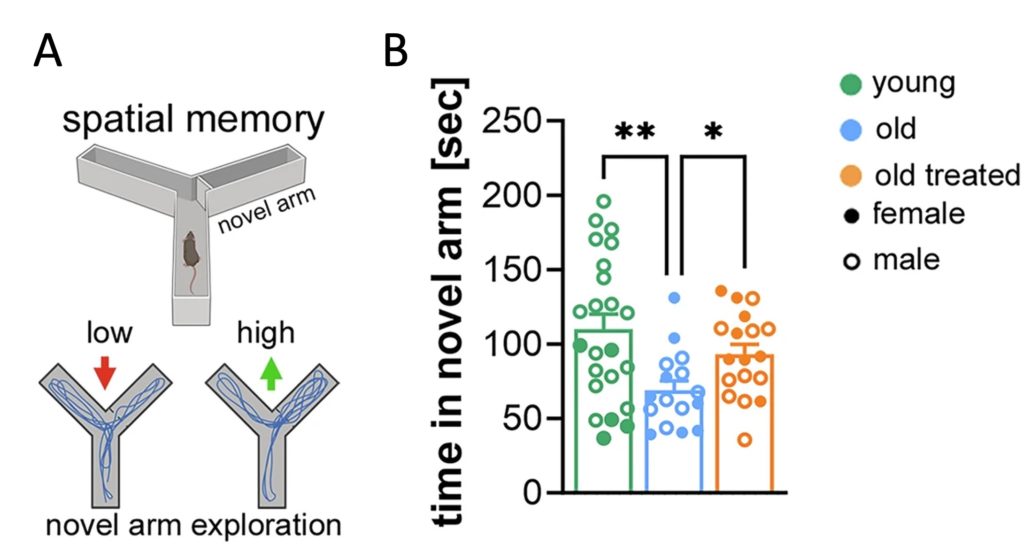
To assess cognitive function, the researchers ran two behavioral tests. The Y-maze test serves to assess spatial memory. When mice are presented with a new area to explore, they normally explore it for a longer duration than familiar areas. However, if they have no memory of the new area, they will explore all areas similarly. The researchers found that treated mice spent more time exploring the newly opened arm of the Y-maze, suggesting improved spatial memory.
Another Maze Test Showing Improved Memory
The second behavior test was also a maze, called the Stone T-maze. The Stone T-maze is a more elaborate maze, consisting of many T-shaped paths that are dead ends. For the Y-maze, the mice became familiar with the maze for about 1 hour and were tested 30 minutes later (when the novel arm was opened). For the Stone T-maze, the mice were trained to navigate the maze over three trials and tested the next day. The researchers found that the treated mice hit fewer dead ends within the Stone T-maze, suggesting improved spatial learning and memory.
Tomatine Reduces Cellular Senescence and Tissue Damage
Following the healthspan and behavior assessments, the researchers collected tissues from the old mice to look for signs of cellular senescence. Scientists commonly identify senescent cells by measuring two genes, p21 and p16, which force cells to stop dividing. The researchers found that treated mice had lower p21 and p16 levels in the liver and skin, suggesting that tomatidine reduces senescent cells in multiple organs.
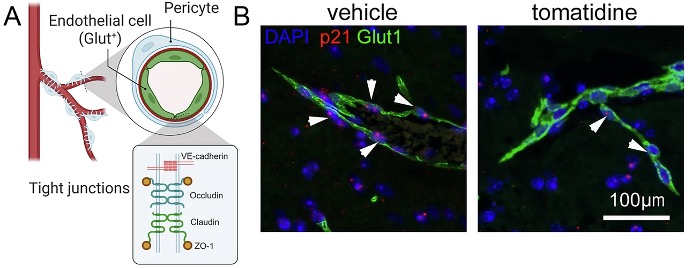
The researchers also examined the hippocampus, a brain region important for memory consolidation, and the blood-brain barrier (BBB), which protects the brain from pathogens and toxins. They found lower levels of p21 and p16 in both tissues, indicating a reduction in senescent cells. Additionally, the hippocampus had fewer pro-inflammatory markers, and the BBB showed fewer signs of deterioration. These findings suggest that tomatidine reduces cellular senescence, brain inflammation, and BBB damage, which could explain the improvements in cognition.
Are Senotherapeutics the Answer to Aging?
The latest research suggests that senescent cells accumulate with age in the brain and are involved in neurodegenerative diseases. Scientists have observed elevated levels of senescent cell markers (e.g., p16 and p21) in the brain tissue of older adults, and individuals with neurodegenerative diseases like Alzheimer’s disease (AD), Parkinson’s disease, and amyotrophic lateral sclerosis (ALS).
These findings have prompted researchers to test the safety and efficacy of senotherapeutics on individuals with AD. We have previously reported on studies showing that the senotherapeutic combination, dasatinib and quercetin, is safe and reduces inflammation that may promote improved memory in individuals with AD. Ongoing clinical trials will also test the effect of senotherapeutics on brain aging.
Senotherapeutics Are Promising
Whether tomatidine can effectively reduce cellular senescence in humans remains an open question. One of the limitations of current senotherapeutics is that they may eliminate healthy cells. Some senotherapeutics may also induce unwanted side effects, such as damage to the insulating fat that surrounds the connections between neurons (myelin), which was shown to occur in mice in response to dasatinib and quercetin.
Still, since senescent cells appear to contribute to brain aging and neurodegenerative diseases, likely by promoting inflammation and tissue deterioration, senotherapeutics offer a promising potential treatment. In the future, we may see senotherapeutic formulations designed specifically for the brain.
Model: Old mice
Dose: 0.05% tomatidine in food
 Comments